
Conversion therapy: LGBT groups Rainbow Project and HereNI silent on claims they are trying to criminalise church advocacy of celibacy

Leading LGBT groups have declined to comment on claims they are attempting to criminalise church leaders who would counsel celibacy or sexual abstinence among their flocks.
Christian public affairs charity the Christian Institute has levelled the charge at the The Rainbow Project and HereNI on the basis of their submission to a consultation on Alliance’s Private Member’s Bill which aims to ban 'conversion therapy'.
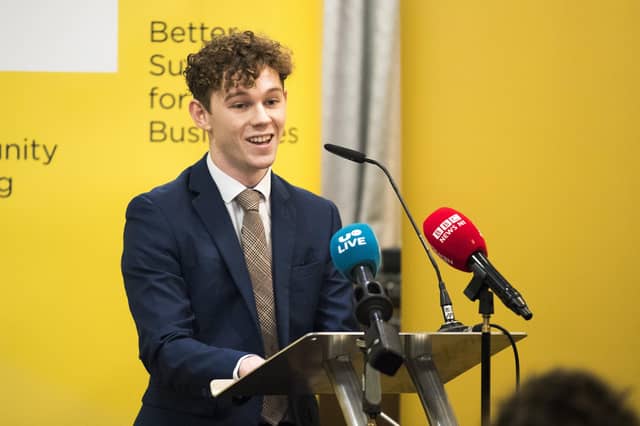
Alliance deputy leader Eoin Tennyson launched the bill in December because he was frustrated by delays at Stormont and Westminster to outlaw the practice.
He says conversion therapy can cause “real mental health consequences in terms of feelings of guilt, of shame, suicidal ideation and depression and anxiety”.
If passed, the bill could see pastors, counsellors or youth leaders who help anyone change sexual orientation or gender identity jailed for up to seven years.
In the Alliance Party consultation, respondents are asked if they support banning techniques intended to change “or suppress” a person’s sexual orientation or gender identity.
Rainbow and HereNI responded “yes” and added that the law should cover all LGBTQIA+ identities, including trans.
They explained: “Some conversion practices encourage lifelong celibacy or abstinence from engaging in same-sex relationships, rather than overtly encouraging a change of sexual orientation or gender identity. Both of these techniques should be covered [by the bill].”
However, the Christian Institute believes the measure could see clerics, youth leaders and small group leaders facing criminal charges over traditional ethics.
Deputy director Simon Calvert said: “The church has long taught that the unmarried should abstain from sex. Everyone knows that. The Rainbow Project have tipped their hand. They’ve made explicit what we always suspected: that ‘banning conversion therapy’ is about creating a speech crime to punish churches that teach mainstream Christian sexual ethics.”
The Rainbow Project, HereNI, Mr Tennyson and the Alliance Party all declined to comment.
However LGBT rights campaigner Peter Tatchell defended their position, saying the bill would not make it illegal to “mention abstinence as an option”.
“But it will rightly ban pressure on a LGBT+ person to abstain from sex – where it is motivated by opposition to homosexuality and with the aim of dissuading them from having a same-sex relationship,” he added.
“In these circumstances, the pressure to not have gay sex would be a form of conversion therapy because it would be seeking to prevent the expression of a LGBT+ sexual orientation.”
But UUP councillor Jeff Dudgeon, who successfully campaigned to decriminalise homosexuality in Northern Ireland, does not see why advocating celibacy should be criminalised.
“Given asexuality is now celebrated in the acronym LGBTQIA+ I don't see why encouraging it should be criminalised,” he said. “I oppose the bill. It won't go anywhere.
“The evidence base for the necessity of legislation is very thin and unconvincing. Old-style medical aversion therapy ended decades ago. Other coercive practices are already illegal.”
The Christian Institute recently launched a booklet, Proving Tricky, which says that similar bills have already failed in Scotland, The Republic of Ireland, Westminster, Sweden, the Netherlands, Austria and Finland.
This is because, it says, backers eventually realise such bills conflict with freedoms of religion, conscience and expression under the European Convention on Human Rights.
Christian Institute NI Policy Officer James Kennedy said: "We’ve taken legal advice on as many as nine proposals put forward around the UK, and each and every time the answer has come back that a law like this would defy human rights law."