
Conversion therapy Northern Ireland: Questions raised over legal advice given to MLAs in private
Questions have been raised about whether private legal advice given to MLAs on whether proposals to ban conversion therapy in Northern Ireland could infringe human rights.
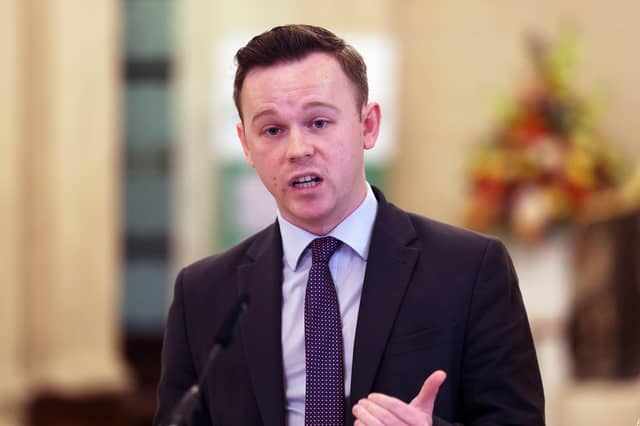

Alliance Deputy Leader Eoin Tennyson has introduced a private member’s Bill to ban gender or sexuality conversion practices, with offenders facing up to two years in prison.
The proposals have prompted several days of debate at Stormont.
On Thursday, MLAs on the Communities Committee received a private briefing from the Assembly’s Legal Services on the Bill’s compatibility with the European Convention on Human Rights (ECHR).
It is understood that plans to criminalise conversion practices in Westminster, Stormont and Holyrood have been delayed amid concerns about potential human rights implications.
Following the Stormont briefing this week, the committee agreed to send the legal advice to Mr Tennyson and formally request that similar sessions be held in public in future. The advice has not been disclosed, although there is speculation it may have been favourable to the Bill.
Northern Ireland Humanists Coordinator Boyd Sleator defended the proposed law, saying freedom of religion or belief is absolute, but the right to manifest a belief can be limited to protect others; He said LGBT+ people also have human rights, including the right to private life and freedom from degrading treatment.
Mr Sleator noted that Malta banned conversion practices in 2016, followed by Germany, France, Belgium, Spain and Norway, all bound by the ECHR.
However, Maltese courts earlier this year acquitted Matthew Grech, a former trustee of a Northern Ireland charity, of promoting conversion therapy. The magistrate said Maltese law does not prohibit such therapy where it helps an individual find “their inner peace”.
Mr Sleator said: “Banning conversion practices and respecting human rights go hand in hand. Everyone remains free to believe what they wish, to pray, and to preach.
“What no one is free to do is try to change who someone is or who they love. All the evidence shows this causes deep trauma and lasting harm in the process.”
He also cited Supreme Court restrictions on pro-life protests in abortion buffer zones as an example of rights being limited to protect others.
However, James Kennedy, policy officer for the Christian Institute in Northern Ireland, questioned the decision to keep the legal briefing private.
“Is something being kept from us that we ought to know?” he asked.
He said the institute had taken advice from several King’s Counsel on similar legislation, with each identifying “serious human rights problems”.
“If Stormont’s internal legal advice contradicts this, we need to know – and be told how that astonishing conclusion has been reached,” he said. If the advice agrees the Bill interferes with human rights, “Tennyson’s Bill needs to be scrapped or completely rewritten”.
DUP MLA Pam Cameron, a Communities Committee member, said her party had serious concerns about the Bill’s potential impact on parents and people expressing sincerely held religious beliefs.
"The criminal offences proposed are sweeping in scope and many of the key terms in the Bill are not defined,” she said “We have seen from the last Assembly mandate the dangers of forcing through poorly drafted laws and those mistakes should not be repeated.”
The Alliance Party, Mr Tennyson and the Rainbow Project were invited to comment.