
Culling foxes creates ‘chaos’ MLAs told as Stormont scrutinises hunting ban Bill
Culling foxes creates “chaos” in the eco-system, a Stormont committee has been told as it heard evidence about a proposed bid to outlaw hunting.
Concerns were also raised about the impact the Hunting with Dogs Bill – that would ban hunting wild mammals with dogs and trail hunting – would have on fallen stock services provided by hunts.
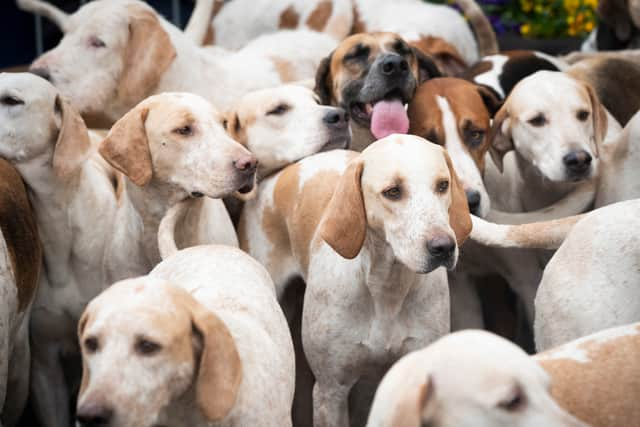

Alliance MLA John Blair previously proposed a Private Member’s Bill to ban hunting wild mammals with dogs but, in 2021, the Northern Ireland Assembly voted by 45 votes to 38 to reject it.
He relaunched this bid in April, introducing another Private Member’s Bill which also proposes prohibiting trail hunting.
On Thursday the Agriculture, Environment and Rural Affairs committee heard from Aideen Yourell who commended the assembly for bringing the Bill forward, and said the Irish Government has been a “complete laggard as regards to animal welfare”.
“I am just delighted that in the north of our country the assembly has progressed so much on animal welfare and I commend you on that and I hope the Republic will follow,” she said.
She described the Bill as “very comprehensive”.
Francis Ward, a representative from Stand with Foxes, has conducted surveys of hundreds of Irish farmers to gauge views on fox-hunting.
He said there was a “familiar pattern” where farmers that report the most issues with foxes are those “where there’s a lot of shooting of foxes in the area”.
“Culling has never been proven to be effective, in fact it accelerates breeding, and the reason why… farmers that do have issues with foxes is, where there’s culling, it creates chaos in the area.
“They accelerate their breeding, it creates chaos in the ecosystem because foxes are such a highly intelligent species and they’ve got huge emotional bonds as well, so, if all the foxes are killed in the area, you have a vacuum there where other foxes come in from other areas.
“It’s like food shortages or war here people go out and they clear out supermarkets, there’s looting, it’s the same with culling of foxes; it creates chaos”.
Chair of the committee, UUP MLA Diana Armstrong, asked about the welfare of “alternatives methods of trapping foxes” in the wake of a dog hunting ban such as poison, snares or traps.
Ms Yourell said she is “totally opposed to trapping foxes”.
“There’s no need, as Francis has pointed out, it causes chaos to kill foxes in an area,” she said.
“In 2022, they carried out a study on lamb deaths and the biggest killer of lambs was infection followed by difficult births and then it went down the list of different other reasons but it never mentioned at all predation.
“I don’t think there’s any need at all for trapping foxes or poisoning foxes or anything like that, just leave them alone.”
The committee also heard from a number of representatives from the Hunting Association NI.
Susan Vance Walford outlined reasons for support for hunting saying there is a “practical relationship between hunting and farming including pest control” and “the wider social and community contribution” that stems from the activity.
Ms Vance Walford also said they were concerned about the “economic impact” of a hunting ban.
The representatives discussed the fallen stock service offered by some hunts as a quick and low cost way for farmers to clear dead livestock, and how a hunting ban would impact the provision of that service.
Mr Blair asked: “Do you accept there are farmers who would be psychologically impacted or stressed by the prospect of having their fallen stock fed to the hounds and, therefore, that’s one of the reasons why they don’t use that service?”
Declan Feeney, huntsman of the East Down Foxhounds, responded: “what’s the alternative, it’s just going to be incinerated, it’s going to cost more money, it’s going to be bad for the environment, it’s fed – it’s disposed of in a proper way.”
Mr Blair then asked: “Do you accept as an organisation that there are farmers – many, many farmers – who would not have a hunt about the place?”
Mr Feeney said: “Yes, we accept that, so we try not and go near those farms but, in my hunt country, which is 18 miles square, I don’t have a big problem with that.
“There are some farmers, yes, they don’t want me so I don’t go on their land and we try not to.”
Ms Vance Walford said there “are farmers that do or don’t want us” and “there are arrangements in place and we, as an association, abide by those arrangements and abide by those wishes of people whose land we are on or are not on accordingly.”