
DAERA Nutrient Action Programme: UUP peer says NAP plans could reduce cattle herds by 30% and see many farmers go to the wall
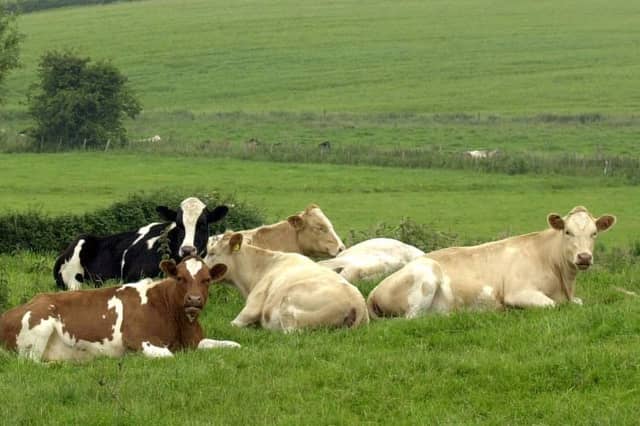

Dairy farmers could be forced to reduced their herds by 30% under new proposals by the Department of Agriculture - which could drive a significant number to the wall, it is claimed.
Ulster Unionist peer Tom Elliott made the claim in the midst of a political row over Agriculture Minister Andrew Muir's proposals to reduce well publicised water pollution problems in waterways and Lough Neagh.
The minister’s proposals for agriculture, the Nutrient Action Programme (NAP) consultation, has suggested cutting down on the amount of fertiliser farmers spread on their land due to concerns it is causing water pollution.
Mr Elliott said: “The problem is, if you sow less nitrogen, you grow less grass. So that means that, effectively, cattle farmers will have to reduce the number of livestock they have per hectare.

“So if this goes ahead, dairy farmers in particular would probably have to reduce their herds by about 30% in order to keep within the restrictions.
“The alternative is that they would need to buy or rent more land to feed their cattle – or buy more feed.
“That means your gross margin and your profits are going to be down by maybe 20 to 25%. The alternative is you lease more land, which again reduces your profits and gross margins.
“Some farmers could absorb that given time, but for others who have significant borrowings from the banks it would put a lot of them out of business because then they just couldn't afford to repay those loans.”

He also said the proposals include plans to require farmers to upgrade their slurry spreading machines to new equipment which sprays the slurry down towards the ground. The concern is that current models spray the slurry upwards, which releases too much ammonia into the atmosphere.
“The department keeps saying we need to rely on science on this. But according to Dr Sinclair Mayne these proposals aren't based on certain scientific evidence,” he said.
Dr Mayne was a senior Daera scientist and head of the Agri-Food and Biosciences Institute (AFBI) at Hillsborough last year, when he retired. He is now a senior scientific advisor with Agrisearch, and gave a keynote speech recently challenging the minister's plans.
According to Agrisearch, he said it was “essential that proposed new measures are based on robust science, based on peer reviewed scientific papers, rather than subjective assessment”.
Similar recommendations were evaluated previously “and rejected on the basis that the recommendations failed to take account of local grass growing conditions and were impractical for application at farm level”.
On Monday the Ulster Farmers Union met the Department of Agriculture and Rural Affairs (DAERA) and AFBI on the issue. Speaking afterwards, president William Irvine said: “We are not ruling out legal action.”
A DAERA spokesman responded that there are “processes in place” to ensure decisions are “informed by robust scientific evidence”.
If specific areas of concern emerge through the consultation, there are also processes in place to “resolve any points of scientific contention” such as independent expert advice and commissioning external peer reviewed research.
In a statement to the News Letter, Mr Muir said that in response to concerns, he has extended the consultation period by four weeks.
"No final decisions have been taken on what are merely draft proposals,” he said. “The Department is open to any other suggestions or plans and would encourage everyone to have their say in responding to the consultation before extended deadline of midnight on 24th of July.”
He plans to meet key stakeholders including the UFU and Dairy Council among others over the weeks ahead, he added.