
David Thompson: A question MLAs won't ask: is the community sector delivering on the millions we spend on it?
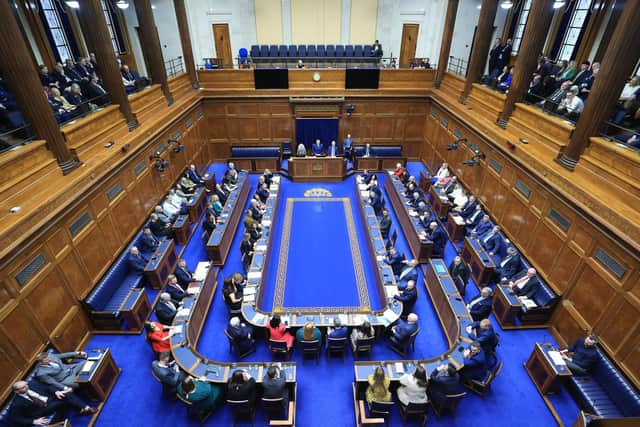
When the UK government announced changes to a funding scheme earlier this year there were near unanimous howls of protest at Stormont as politicians united to condemn “cuts” to the community and voluntary sector.
The story was that organisations dealing with some of the most vulnerable people in our society were having their funding cut by London – and the local parties weren’t having it.

A “funding cliff edge” loomed and grassroots organisations were about to have to lay off hundreds of staff, with catastrophic impacts.
There was widespread “anxiety and upset” claimed the BBC – with “day-to-day funding available to groups in NI drop from £25m per year to just over £9m”. Stormont couldn’t possibly ‘plug the gap’, it was said.
The BBC also reported the utterly absurd line from an unnamed “Stormont source” that the executive could “not afford to bail out the government” at a time when it is already under-resourced. Given the UK government’s constant bailouts for the executive, no political operative attempting to pull off that nonsense should have been granted anonymity.
All of this furore was based on the premise that the community and voluntary sector (CVS) is somehow just entitled to funding in perpetuity. But what was that money for – and what was being done with it?
As the News Letter reported at the time, the money was to get ‘economically inactive’ people back into work. That’s people who are neither employed nor seeking employment.
It is a big problem in Northern Ireland, and it needs to be addressed. The way the welfare state has operated has consigned generations in some areas to a life without hope or opportunity. It is a national disgrace, but some seem content enough to keep people there.
The UK government had decided that it no longer wanted to give the lion’s share of funding to the sort of “employment, skills and inclusion services” which had traditionally gobbled up most of the cash aimed at fixing this problem.
Instead, it wanted to build things. Capital projects were to get the bulk of the cash from the new Local Growth Fund (LGF).
MLAs argued that this wouldn’t meet Northern Ireland’s bespoke needs – we didn’t need more buildings, we needed funding for the CVS sector.
What nobody was talking about was what these organisations were actually being paid to to – let alone whether they were delivering on it.
The CVS sector in Northern Ireland is huge. It employs over 54,000 people – around 7% of the workforce. That’s more than double the UK figure of 3%.
With that comes influence. Particularly because many of these organisations are not only charities, but lobbyists.
In the increasingly circular world of Stormont politics, CVS groups will be simultaneously lobbying for policy change while getting paid by the department’s they’re lobbying to deliver government schemes.
Their stamp of approval is also highly sought after. The ‘co-design’ process which has been a feature of how Stormont governs for decades has seen ministers let some of these groups sign off policies. That may give the parties political cover, but it is is not healthy.
The DUP communities minister Gordon Lyons saw the issue with this and scrapped it soon after he took up office, saying he wouldn’t “outsource” policy to lobby groups. Ministers from other parties still crave such endorsements.
The umbrella organisation for the CVS sector is the Northern Ireland Council for Voluntary Action (Nicva). It’s not been shy about telling Stormont how to legislate.
The group, reliant on taxpayer funding, recently endorsed Sinn Fein’s proposed employment reforms – and did so in a promotional video for the Department for Economy.
Why? Because it they think it will sustain the CVS sector. Fair enough – but is it delivering?
As the News Letter reported this week – that is questionable. Under the UKSPF scheme which preceded the LGF, £26m was handed to CVS organisations in one year (2025/26) to get people back to work.
Just 2218 people ended up in work which lasted for at least six months – that’s just 16% of people signed up.
We only know this because we bothered to ask. MLAs seemed totally uninterested in whether that money was delivering results. Perhaps because they know these groups can do them political damage.
The current proliferation of CVS organisations delivering government strategies through piecemeal schemes cannot be a sustainable model. It grew out of EU funding schemes, and now we’re out there needs to debate about how our money is spent.
Yes, this sector employs people – but that alone isn’t justification for keeping funding ticking along in perpetuity. Many of these organisations do outstanding work, but that doesn’t mean they all do.
It also doesn’t mean that if you’re trying to tackle economic inactivity – this is the way to go about it.
They way Stormont is designed does not lend itself to normal political debate, but it is still extraordinary that not one single MLA questioned the spending on these groups.
Not because they think it’s a good way to spend public money, many privately don’t.
There must surely be political capital for any party which is willing to step outside the current political consensus about how our money is currently doled out – and whether we can do better.