
DUP leader slams 'masquerade of cooperation' from Irish government over Omagh bomb case
DUP leader Gavin Robinson has condemned a deal between Dublin and the Omagh Bomb Inquiry, saying it falls well short of what grieving families deserve.
The Memorandum of Understanding (MoU) comes ahead of the resumption of public hearings in the inquiry which is probing whether the Real IRA bomb attack in 1998 could have been prevented.
The attack killed 31 people.
Announced today, the agreement allows the inquiry’s chairman and members of his team to access material held by Irish authorities, and has been welcomed by Secretary of State Hilary Benn.
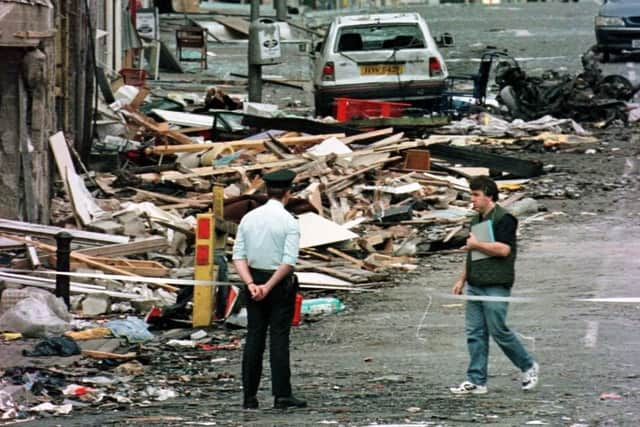

But Mr Robinson MP has slammed it as “state control masquerading as cooperation”, arguing that the inquiry still isn’t able to compel witnesses from the Republic to give evidence, and there’s no guarantee Irish authorities will provide “full disclosure”.
He said: “The painful truth remains, a terrorist atrocity that was planned and executed from the Republic of Ireland still lacks the scrutiny courts demanded.
“The families affected by the Omagh bombing have waited nearly three decades for answers. Their courage, dignity, and persistence deserve more than token gestures or legal frameworks that stop at the border.
“The Irish government’s continued refusal to establish its own inquiry undermines the search for truth and leaves a significant blind spot.
“The path to justice must not be constrained by jurisdictional limits. It must be complete and worthy of the lives that were lost.”
TUV vice chairman councillor Allister Kyle said the agreement will be judged on delivery rather than rhetoric.
“Innocent victims of republican violence across Northern Ireland can attest to how hollow Dublin’s words have been in the past,” he said.
“Particularly when it came to Kingsmills there were promises made but when it came to the inquests assistance from the Garda amounted to little more than some old newspaper clippings.
“Dublin likes to take upon itself the role of equality proofing the UK’s actions when it comes to legacy while all the time ignoring the active role the Irish Republic played in the IRA campaign of terror.
“If Omagh marks a turning point in this approach – and it is still an if at this point – then it must be only the beginning of Dublin facing up to its role in the terror visited upon Northern Ireland.”
Secretary to the Inquiry Sam Hartley said such agreements are not commonplace in inquiries.
“This formal agreement between the inquiry and the government of Ireland marks a significant step forward in allowing the Inquiry access to material, information and assistance from the government and agencies in Ireland,” he said.
“Agreements of this nature are not commonplace in inquiries. On behalf of the Inquiry, I express my gratitude to the government of Ireland for its repeated commitment to assist the inquiry.”
Secretary of State Hilary Benn said: “I welcome the Irish government's commitment to co-operate with the Omagh Bombing Inquiry through this memorandum of understanding.
“This is a very positive step that will help enable the independent Inquiry to do its job and provide answers for families.
“The Omagh bombing was a heinous atrocity committed by the Real IRA at a time when communities in Northern Ireland were looking forward to peace and stability.”
The Republic had been under pressure to establish its own public inquiry into the 1998 outrage.
Dublin has said it will fully co-operate with the UK inquiry into the bombing, which is operating out of Omagh, but stopped short of committing to a separate public inquiry.
All those who were killed were remembered during commemorative hearings at the inquiry earlier this year, and evidence was also heard from those injured and emergency workers.
The next phase of public hearings, due to start from June, will hear from core participants, including the PSNI and former chief constable Ronnie Flanagan.