
DUP MLA says party ‘reserves right’ to use veto against conversion therapy Bill
A DUP MLA has said her party “reserves the right” to deploy a veto mechanism against proposed legislation that would criminalise providing gender or sexuality conversion practices in Northern Ireland.
Those guilty of trying to change or suppress someone’s sexual orientation or gender identity could be jailed for up to two years under the provisions of the Private Member’s Bill tabled by Alliance Party deputy leader Eoin Tennyson.
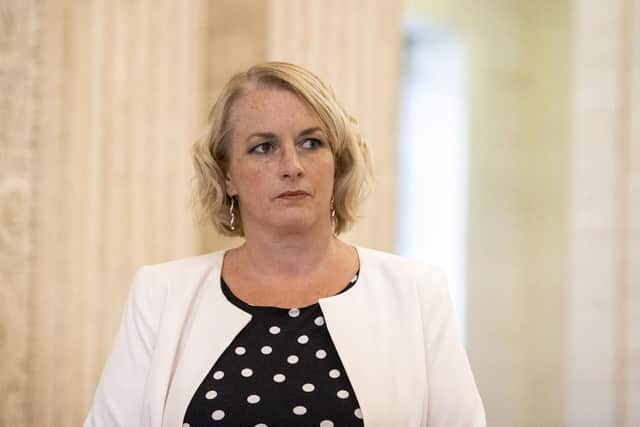

Mr Tennyson said the Bill would tackle a “specific and pernicious form of abuse” in society.
He has argued conversion practices are driven by a belief that LGBTQ+ people are ill and in need of a cure, describing “cruel and archaic acts” which “are a relic of a very distant past”.
However, unionist MLAs voiced opposition to the Bill, claiming it could potentially limit freedom of expression. They also highlighted that coercive practices and abuse were already criminal offences on the statute.
Some churches have also expressed concern, however some Christian organisations have backed the proposed legislation.
The Conversion Practices (Criminalisation) Bill is currently being scrutinised as part of the committee stage in the Assembly.
DUP MLA Pam Cameron claimed the Bill is “bad legislation”.
She told BBC Northern Ireland’s Sunday Politics programme it would have “serious implications”.
“This is harmful legislation. It is very muddled and confused,” she said.
“Are we really serious about locking people up for two years for having a view that you don’t agree with? These are very serious implications.”
Appearing on the same programme, Mr Tennyson said the legislation is necessary, arguing that while existing legislation may cover some aspects of experiences described by some, he said other areas such as talking therapies “fall into grey areas”.
“We know, based on growing evidence, that conversion practices are linked to anxiety, depression, suicide, and self-harm,” he said.
“They’re condemned by the British Medical Association and the Royal College of GPs, and virtually every major medical and health body in the UK.
“Which is why this legislation is necessary to protect people from harm on the basis of who they are or who they love.
“We absolutely have to have strong safeguards and get the balance right, and that’s what I’m determined to do.”
Asked would her party use a petition of concern to force a cross community vote on the Bill, Ms Cameron said they reserve that right.
“We absolutely reserve the right to use the petition of concern should the Bill not be amended sufficiently to deal with the concerns that have been raised, which are many,” she said.
Mr Tennyson responded: “It’s permissible under Assembly processes, but it would be morally wrong.
“To be clear, the test in this legislation is harm. It’s criminalising conduct that has been proven to cause harm to individuals. So, in cases where an individual has had conversations and they have not been harmed by that interaction, there would be no criminality found, and we have we have drafted the legislation really carefully to strike that balance.”
He added: “But fundamentally this comes down to a small number of people in the Assembly who simply do not believe that my relationship with my partner is as legitimate or valid as their own, and who are completely out of step with public opinion.”