
DUP say Northern Irish children should not be part of puberty blocker trials - as Dodds questions UUP stance
No children from Northern Ireland should be part of a controversial trial of puberty blocker drugs for children confused about their sex, the DUP’s health spokesperson has said.
Diane Dodds has called for “clarity and leadership” from Stormont’s health minister Mike Nesbitt over the issue, after the trial got the go-ahead after a legal challenge.
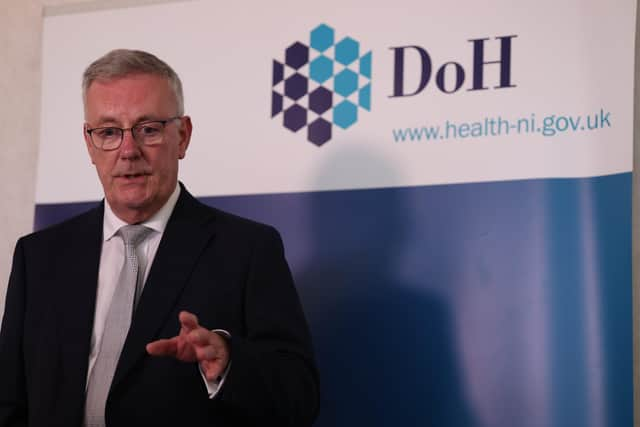

In February, the Ulster Unionist minister suspended Northern Ireland’s participation in a UK-wide puberty blocker trial – until a legal challenge to the scheme had concluded. Mr Nesbitt said he would “take the views of Executive colleagues before any potential lifting of the pause”.
The legal challenge in question was thrown out by the High Court this week, meaning the Pathways trial can now proceed. Opponents had sought to stop it on the grounds that there were insufficient safeguards in place and that the drugs could cause long term physical and psychological harm.
The judge, Mr Justice Chamberlain, said the trial had been designed with “conspicuous care” and that “each child will have been assessed over many months by specialist doctors”.
Puberty blockers have been used to halt normal physical development in children questioning their sex. Their use has been backed by Sinn Fein, Alliance and the SDLP in the past – and described as “gender affirming care”.
Despite the drugs having been used for years, no proper data has been collated about whether they are effective in dealing with gender dysphoria – or side effects.
Diane Dodds recently wrote to Minister Nesbitt, following a series of answers to assembly questions which she received nearly six months after they were tabled.
Mrs Dodds said: “There is a need for leadership and clarity on the issue of puberty blockers and the Kings College trial. In February the Ulster Unionist Party were full-throated in their support for the trial with the Minister defending it in the Assembly before u-turning just 24 hours later.
“After nearly six months, the Minister has finally responded to a series of questions I tabled. They don’t provide answers to specific questions, including any representations he has made that would lead to children from Northern Ireland being included in puberty blocker trials, but they do leave the door open to this happening.
“Puberty blockers were permanently banned outside these trials because of concerns about their impact on brain development, bone density, fertility and mental health. We should not be further experimenting on children and exposing them to this.
“It is right that any decision must be taken by the Executive, but such decisions are taken as a result of a paper submitted by a Minister. That paper will include a recommendation which is then discussed and voted upon by the Executive as a whole. We need to know what the Health Minister’s position is. The DUP’s position is clear and is unchanged, but it isn’t clear whether Mike Nesbitt and the UUP support such experimentation on children.
“Whilst the Executive must take the decision, we have a right to know where the Health Minister and his party stand.”
The Ulster Unionist Party and the Department of Health have been approached for comment.
Party leader Jon Burrows has previously publicly opposed medical or pharmaceutical interventions on children, but had also said Northern Ireland’s transgender services should be in line with the 2024 national Cass Review findings.
In a statement in February, Mr Nesbitt said: “Having taken account of the ongoing Judicial Review into the UK Government’s clinical trial of puberty blockers, I have decided to suspend Northern Ireland's agreement to participate in the UK wide trial until the legal process has concluded.
“Should the trial ultimately be given the green light to proceed, I shall take the views of Executive colleagues before any potential lifting of the pause.”
A review of Northern Ireland’s transgender service reported in February that the local health service had been making “rigorous and demanding” changes to meet minister Nesbitt’s previous commitment to be part of the scheme.
Baroness Hilary Cass said “significant staff training, changes in clinical processes, and establishment of the necessary research infrastructure” will be required – if the local transgender clinic is to be part of the trial and wider research into children questioning their gender.
Her report said the NI service is working on “two levels of compliance” with regard to the original recommendations – including “aligning clinical practice so that standards of care in Northern Ireland are consistent with those in England”.
“The second level of compliance is more rigorous and demanding, and is based on Northern Ireland’s commitment (and the support by the Minister of Health) to be a research site within the Kings College London puberty blocker trial and the wider PATHWAYS research programme”, the report says.