
'For generations, children from working-class families have used grammar schools as a ladder of opportunity': Unionists reject Sinn Fein call to abolish transfer test
Unionist MLAs have defended academic selection after claims that it is “negatively impacting children”.
Sinn Fein MLA Cathy Mason urged Education Minister Paul Givan to phase out its use during a motion debated at Stormont yesterday.
A previous state-run transfer test was scrapped by then education minister Caitriona Ruane in 2007.
However most grammar schools in Northern Ireland use a privately run transfer test to select their Year 8 intake each year.
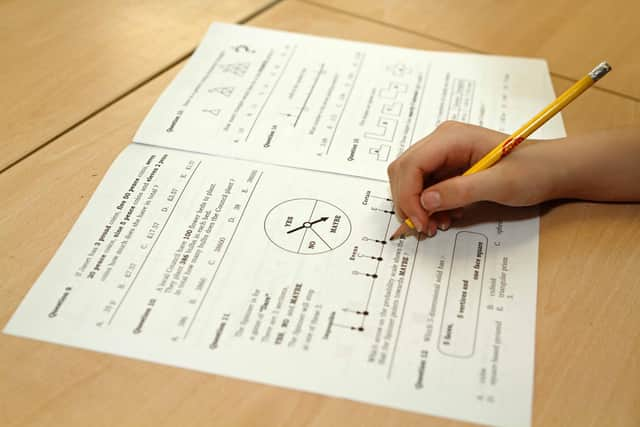

Ms Mason described a “high-stake exam” for 10 and 11-year-olds as they are already preparing for the “daunting transition to post-primary school”.
She said there is an “extensive body of evidence”, including from the United Nations Committee on the Rights of the Child, the Equality Commission for Northern Ireland, and the Organisation for Economic Co-operation and Development, of the negative impact of academic selection on children's well-being, educational outcomes, and social mobility.
Her motion called on Mr Givan to “take steps to phase out the use of academic selection and transfer tests in post-primary admissions”, and instead develop and implement a fair, inclusive and non-selective system.
However some unionist MLAs spoke in favour of academic selection, including DUP MLA David Brooks who said the transfer test allowed him personally the opportunity to attend a grammar school.
“This issue has strong opinions, and raises passions, on which views can be polarised ... but let us be honest about what academic selection is, and what it is not, it is not a judgment on a child's worth,” he said.
“At best academic selection is about matching children to the education environment where they are most likely to thrive, of course it can be stressful, such is the nature of exams.
“For generations, children from working-class families, many without an academic tradition at home, have used grammar schools as a ladder of opportunity.
“I, as the son of a fitter in Shorts and an entry grade civil servant, was able to attend one of the best academic schools in the country, and that was by academic ability, not whether my parents could afford to pay private fees or buy a house in the right catchment area.”
SDLP MLA Cara Hunter proposed an amendment to the motion which called on Mr Givan to introduce a “clear timeline for ending academic selection”. She said her party, throughout its existence, has called for an end to academic selection to “ensure equality of opportunity for young people”.
Responding, Mr Givan said it is a choice for schools as to whether they use academic selection.
“There is no agreement on the best path forward, not among schools, principals, teachers, parents or indeed young people themselves,” he said. “Schools choose to include academic selection as their criteria, they can abolish it. How many advocates here have went into those schools and said ‘you’re wrong, change your process?’.
“Every year thousands of parents choose to enter their children in the transfer procedure. It is not of course now a state test, and entry is a matter of individual choice.”
MLAs passed the motion with the SDLP amendment by 47 votes to 30.