
'GAA faces long road if it wants to build relationship with unionists' says DUP - adding it is 'incredible and unacceptable' GAA grounds are still named after IRA men
The GAA has “a long road to travel in building a relationship with unionists” said the DUP, adding that it could start by removing the names of IRA men from its sports grounds.
The party was reacting to a GAA project which saw it hold four discussion sessions across the island of Ireland involving “representatives of the pro-Union community in Northern Ireland”.
They met to “talk about identities, sectarianism and what the future holds for the island of Ireland in a post-Brexit world,” the GAA said in a statement, accompanied by a string of videos about the project.
However, it appears these meetings with “representatives of the pro-Union community” did not include any elected unionists.
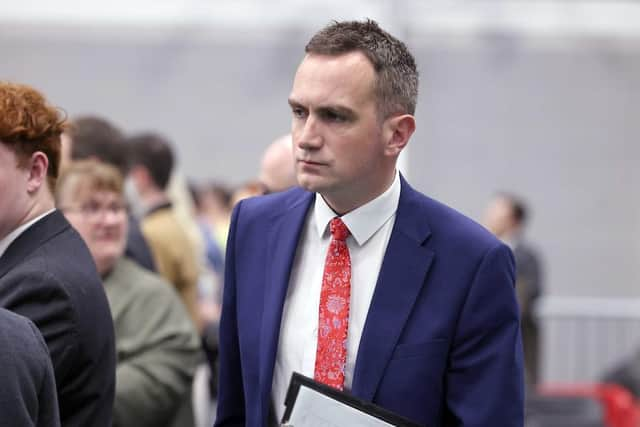

The GAA gave only four names of people “from a unionist background” who were involved in the project.
They were: Peter Shirlow (professor at Liverpool’s Institute of Irish Studies), Alison Grundle (former SPAD to Claire Sugden, the independent unionist MLA), Ian Marshall (the former Irish senator who quit the UUP last year), and Colin Coulter (professor at Maynooth University whose research interests include Marxism and the politics of punk rock).
At the very outset of the series of videos which the GAA has just released about the project, Ms Grundle was asked if she’d vote for a united Ireland.
"Tomorrow, no,” she replied. “In the long term, possibly.”
She then added that “I never really considered the national question, the constitutional issue, really of any relevance to me ever in my life” – until Brexit, when she became concerned about what might happen if a referendum “was not properly thought through”.
The DUP’s sports spokesman Stephen Dunne told the News Letter: “As part of our external engagement strategy in April, alongside the party leader I met with most NI sporting bodies including the GAA. This was at our request, and not part of any GAA-led project.
“The GAA has significant community involvement but predominantly within nationalism. It has a long road to travel in building a relationship with unionists.
“The organisation is not purely a sporting body. It has a political aspiration of a 32-county state.
"There is also the fact that some GAA clubs and some GAA competitions are named after republican terrorists. This is incredible in 2024, and it’s unacceptable.
“All these matters should be addressed if there is a sincere attempt by the GAA to engage with unionists.”
The TUV said it was not involved in the GAA project “and would have declined any invite had we been asked”.
It cited the naming of GAA grounds after “terrorists like Kevin Lynch, who died in the IRA hunger strike while serving a sentence for offences which included knee-capping a young man”.
The TUV added: “No other sporting organising that we know of would name clubs after an individual who, far from encouraging everyone to take up sport, sought to rob someone of their ability to walk.”
The UUP had not responded at time of writing.
Professor Shirlow said the GAA project was “a civic initiative – so no political parties” were involved.
As to how the unionist delegates were selected, he said they were “people who have bothered to promote pro-union arguments and I suppose in that sense they selected themselves”.
"A community includes more than politicians,” he said.
"I think ‘representative’ is simply someone who holds, in this case, a pro-union perspective, and at these events represented that perspective.”
The DUP / TUV criticisms were put to the GAA. A response is awaited.
The GAA has previously indicated that decisions on naming grounds are taken at local club level without endorsement from any governing body, and that they arise from the fact the paramilitaries being commemorated were also gaelic sportsmen.