
GAA says sex ruling by the 'highest court in the land' will have 'implications' for the sport in Northern Ireland
The Gaelic Athletic Association has told a DUP MLA that while the ‘majority of its units’ won’t be affected by the Supreme Court judgement on the definition of a woman, the ruling by “the highest court in the land” will have “implications” for its operations in Northern Ireland.
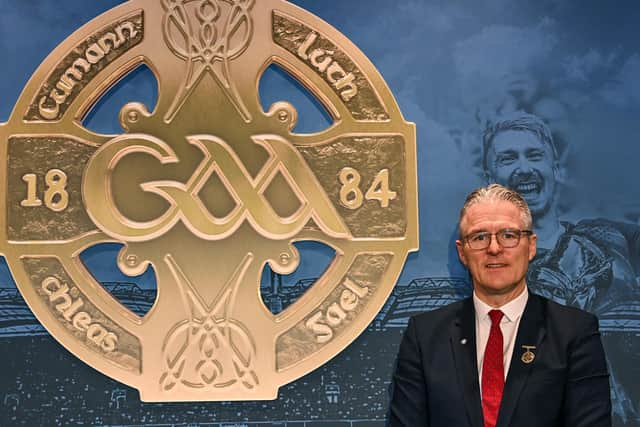
However, in its letter to the Upper Bann MLA Jonathan Buckley, the sporting body’s Ulster Council says that there are no “immediate implications” for its “existing practice or policy” as it awaits guidance from the Equality Commission for Northern Ireland (ECNI).

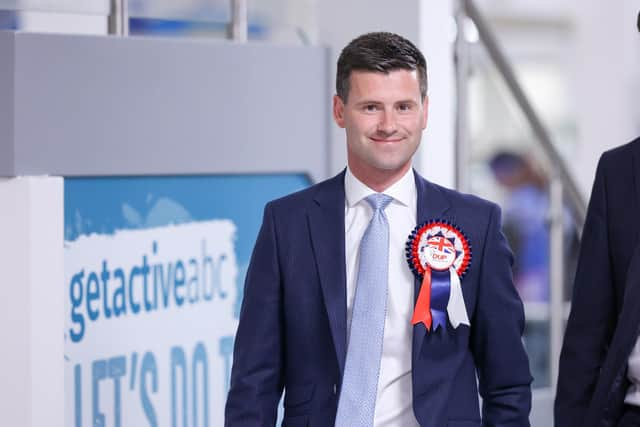
Mr Buckley says the GAA and other sporting bodies need to act “decisively to safeguard female only spaces in sport” – and not defer to ECNI.
The GAA operates on an all-Ireland basis, meaning it now has to juggle vastly different approaches to issues such as changing facilities and who can participate in women’s sport either side of the border.
The Republic of Ireland already allows legal self-identification of sex, meaning it is much easier for a man to be legally recognised as a woman. The UK has never followed that approach, and a recent ruling by the Supreme Court states that so far as the Equality Act 2010 is concerned sex is defined by biology.
That law only applies to Great Britain, however ECNI has said that the ruling is likely to be followed by courts and tribunals in Northern Ireland where similar cases arise. That means organisations who are not following the ruling could be exposed to legal risk.
ECNI will issue non-binding guidance next month, which many public bodies – as well as Sinn Fein and Alliance ministers – say they will wait for. DUP ministers and other unionist politicians have criticised that approach, saying that action must be taken immediately to implement the court ruling.
Legal advice obtained by the Northern Ireland Assembly and revealed by the News Letter said that single sex facilities should be implemented at Stormont immediately, to avoid legal risk. That advice was rejected by Sinn Fein, SDLP and Alliance.
The letter from GAA Ulster CEO Brian McAvoy says: “while the 2010 Equality Act is not law in Northern Ireland, we do recognise that a ruling from the highest court in the land will have implications here. Therefore, Equality Commission guidance, which I understand is due next month, is awaited with interest.
“There are no immediate implications for the GAA in relation to existing practice or policy. Our Medical, Scientific & Player Welfare Committee are currently developing a Gaelic Games Transgender Participation Policy and they will, undoubtedly, be aware of and give consideration to the decision of the Supreme Court as part of their ongoing deliberations”.
Mr Buckley has thanked the GAA for their response to his query regarding the UK Supreme Court’s ruling. He told the News Letter: “I welcome their recognition that this landmark decision from the UK’s highest court will have implications, in Northern Ireland.
“However, I urge the GAA and other sporting bodies to act decisively to safeguard female only spaces in sport without delay.
“The Supreme Court’s ruling clarifies existing law, reinforcing the importance of biological sex in protecting fair and safe participation for women and girls”, he said.
Mr Buckley urged the GAA to not to await ECNI guidance.
“The GAA and all sporting bodies has a responsibility to uphold robust protections for female players now, ensuring their safety, fairness, and dignity.
“I would encourage the GAA’s Medical, Scientific & Player Welfare Committee to prioritise this clarity in their Transgender Participation Policy and act swiftly to defend women’s sport”, he said.