
Government blocks Stormont Break request - saying the tests have not been met
The government has turned down an attempt by unionist MLAs to halt updated EU laws under the controversial Stormont Brake mechanism – but pledged to avoid divergence between Northern Ireland and the rest of the UK.
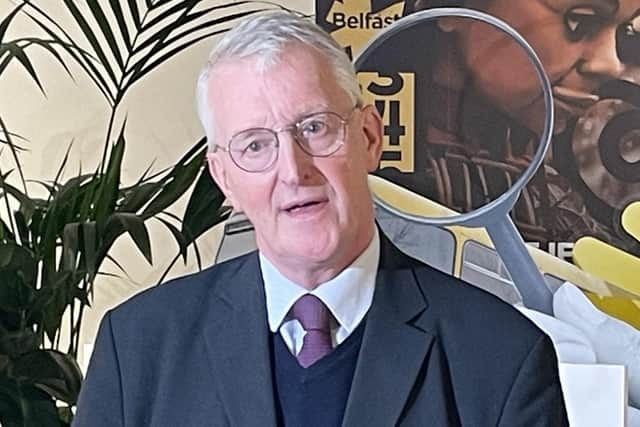
While Northern Ireland Secretary Hilary Benn believes the request made by Stormont in September was genuine, he does not believe that it meets the test of creating “a significant impact specific to everyday life of communities in Northern Ireland in a way that is liable to persist”.

It means EU laws on the labelling of products such as household cleaning products and industrial chemicals, continue in place.
However, the government may align the regime in Great Britain so that no new regulatory barriers emerge, if it deems that necessary. That will lead to accusations from Brexiteers in Westminster that it is using the Northern Ireland issue to pull the entire UK closer into the EU’s regulatory orbit.
The view of the government is also that Northern Ireland is already different from the rest of the UK in the area of chemicals labelling, because it is a devolved matter. However, it is not believed that devolution has ever caused trade barriers or divergence.
MLAs had argued that new labelling requirements would add additional costs to placing goods in the market. However, the government argues that most goods on the market which fall under this legislation are for global sale and therefore there will be less of an impact on cost against revenue for businesses.
The Stormont Brake is a mechanism introduced by the EU and UK under the Windsor Framework, in a bid to provide some level of democratic input for Northern Ireland politicians into the laws that govern trade arrangements here.
It means 30 MLAs (from more than one party) can raise an objection to amended EU laws set to be applied automatically here, because Northern Ireland remains, in effect, inside the EU single market for goods, and has no way to directly contribute to how those laws are made.
Unionist MLAs triggered the process for the first time back in December over new rules which affect products like sealants, household cleaners and industrial chemicals.
The government factored in requirements under the UK Internal Market Act – which aims to ensure Northern Ireland’s place in the UK internal market – in its decision making process.
The Secretary of State has written to Stormont’s Speaker Edwin Poots to outline his decision.
The move is likely to provoke further unionist infighting over the Irish Sea border arrangements and how best to deal with them. Some will question the value of a mechanism which has failed – from their perspective – at the first hurdle.
DUP leader Gavin Robinson accused the government of “abdicating responsibility” and said it must stand up for Northern Ireland with conviction, “rather than surrendering to EU diktats in the absence of a coherent or credible plan”.
While there is no prospect of the DUP collapsing the institutions over the issue – it is a political problem for the party that it, and Stormont, appears impotent in the face of UK and EU decisions, despite having claimed to have secured important safeguards.
But Jim Allister has said the government has thrown down the gauntlet to the DUP and it must demonstrate “that unionism will not be humiliated in this way”.
Former DUP leader Jeffrey Donaldson had claimed that his party had secured a mechanism in the Stormont Brake that means “EU law no longer automatically applies in Northern Ireland” – claiming "we have cut the pipeline” of new EU laws.
Sinn Fein, Alliance and the SDLP will be pleased with the decision – because they are supportive of the current arrangements and are content with the current ability of the EU to legislate here on trade matters without any local democratic input.
Opposition leader, SDLP MLA Matthew O’Toole, said: “The SDLP has been clear that the Stormont brake is an ill-thought-out consequence of the clandestine negotiations between the DUP and the previous UK Government.
“Rather than allowing us to realise the opportunities of our unique position with dual market access, it furthers the notion that this place is inherently unstable and actively discourages businesses from investing here, depriving us of the chance to improve our economy and create jobs”.
Last week, First Minister Michelle O’Neill criticised the DUP for using the mechanism – accusing them of doing it “without informing anybody” – and claiming “these handbrakes or whatever they’re called” serve to disrupt.