
Government vets step up industrial action in dispute over pay and grading with DAERA
Department of Agriculture vets are stepping up industrial action in a dispute over pay and grading which they say has been building for over a decade.
More than 30 vets, represented by the Northern Ireland Public Service Alliance (NIPSA) trade union, are involved in the dispute.
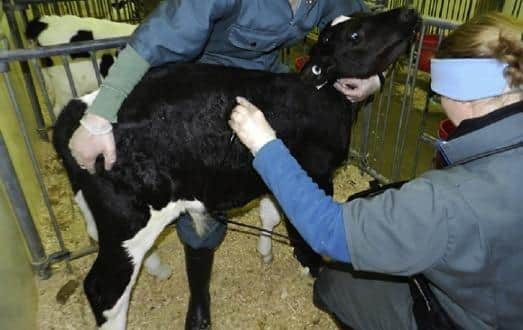

It claims repeated attempts to secure meaningful engagement have failed and that it is currently escalating industrial action in incremental stages.
The Department of Agriculture, Environment and Rural Affairs (DAERA) says the dispute is being handled through established processes and it would be inappropriate to comment.
Government vets perform controls and checks on animals and some food products entering Northern Ireland from Great Britain and are also required to perform duties at meat factories.
NIPSA says the dispute was formally notified to DAERA on 20 March, but that initial contact from the Department did not happen until 18 May, criticising what it describes as "a lack of urgency".
NIPSA Assistant Secretary, Alan Law, said: “Our members have shown considerable patience, yet DAERA has failed to engage meaningfully to resolve this long‑standing issue.
“This situation is entirely avoidable. We remain ready to enter negotiations immediately, but that requires a willingness from the Department that has so far been absent.
“The escalation is already impacting essential services, and responsibility for that disruption rests with DAERA management.
“Our priority is securing a fair and sustainable resolution while protecting the integrity of veterinary services in Northern Ireland.”
Industrial action began on 1 May, when members withdrew from on‑call duties, training activities and supervision of on‑farm TB testing.
NIPSA said that because no progress has been made, action intensified from 1 June, to include withdrawal from on‑farm TB testing and a range of certification and technical duties.
The union says escalation is expected to significantly impact service delivery, including delays in testing high‑risk TB animals, disruption to meat export certification, and potential delays for imported live animals and animal products at NI ports.
The dispute comes, NIPSA said, amid wider concerns around veterinary staffing pressures within DAERA and increasing reliance on agency staff.
The union says it has welcomed an invitation to meet the Stormont Agriculture Committee.
A DAERA spokesman said the Department “notes and very much regrets” the escalation of the notified industrial action.
"Management met with the trade union side on 1 June 2026, with further meetings planned in a continuing effort to resolve matters” he added.
“This is a staff pay dispute that is being handled through established industrial relations processes and it would be inappropriate to comment further at this stage.
"At this stage, the Department is assessing the implications of the industrial action and has established business continuity plans in place to safeguard animal health, public health and trade.
"We appreciate the patience and understanding of all parties involved as we work towards a resolution and will keep all stakeholders informed should any significant operational impacts arise.”
The vets previously went out on a five day strike in November 2023. Deputy Ulster Farmers' Union President John McClenaghan said he understood why they were striking.
However he said poultry sector functioned normally during the strike and pig factories at a reduced capacity.
The biggest effect was on the red meat sector, but rotating vets around factories had taken the pressure off, he added.