
Health minister Mike Nesbitt declines to say if controversial puberty blocker trial is ethical or necessary
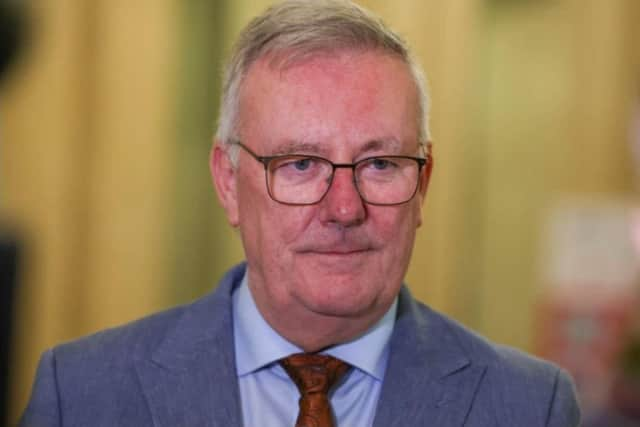
Mike Nesbitt has declined to say whether he believes a clinical trial on puberty blockers for children is ethical or necessary – but the department of health says it will “improve the evidence base” for the controversial drugs.
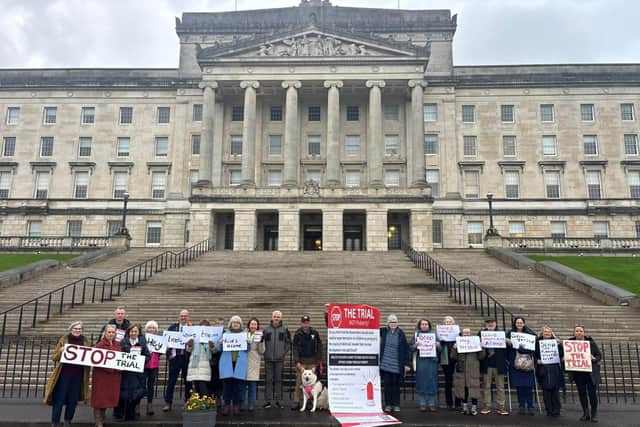
Protestors gathered outside Stormont this week to call for an end to the trial – with a gay rights group saying it is “unthinkable to subject one more child” to the drugs.

Some children under 16 – who identify as trans – will be able to take part in a UK-wide trial which will give them access to otherwise banned medications to stall normal sexual development.
It follows the Cass Review into transgender medical practices, which criticised the evidence base for their use. Puberty blockers were banned by the health secretary Wes Streeting, with Mike Nesbitt securing an extension of the ban to NI in 2024.
Earlier this month, Mr Streeting said going ahead with a trial is the “right thing to do” – and that he was following medical advice. It will involve around 226 children.
In light of the ongoing controversy over the trial, the News Letter asked Stormont’s health minister if he is confident that it is both ethical and necessary – and whether he satisfied that it is appropriate for the local gender service to refer children to it.
A department spokesperson said the Cass Review was clear that “the evidence on care for children and young people with a diagnosis of gender incongruence is lacking” – and that the scheme will “help to improve the evidence base for this important issue”.
They said participants – who must be younger than 15 years and 11 months – must have experienced gender incongruence that has persisted for more than two years, and “have participated sufficiently in other forms of care for gender incongruence”. Eligibility will be considered by medical teams.
At a protest at Stormont on Wednesday attended by DUP MLAs, Joanne Scannell from LGB Alliance said more than 2000 children had been given the drugs before they were banned, and questioned why data on them hadn’t been used instead.
She said that 81% of boys and 89% of girls who had already been given puberty blockers “were same sex attracted” – adding that no more should be subjected “to a flawed study”.