
Health Minister Mike Nesbitt says controversial gender clinic won't be 'affirming' children's wishes
Stormont’s health minister says an expanded gender identity service will place “a huge emphasis” on psychiatric care – and suggested the clinic will not continue with the practice of ‘affirming’ children who believe they are the opposite sex.
Mike Nesbitt says clinicians will try to decide what is in the best interests of each individual using the service – and says it is important that his department is “really clear” about what the service does.
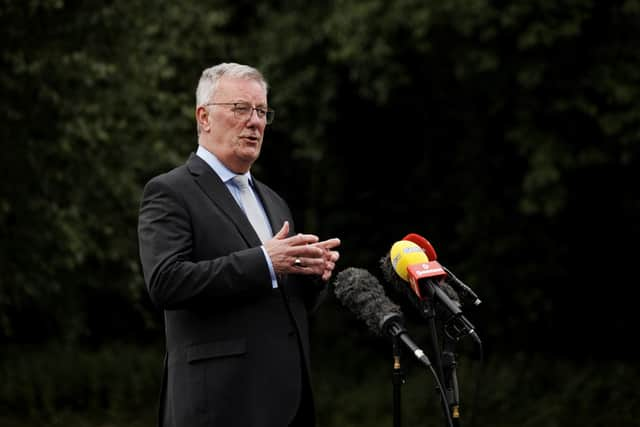

The Ulster Unionist leader has been under pressure over the past fortnight to explain why he put extra money into the service – and why there is no lower age limit on referrals. There has been little detail from his health department about what has or will change under the new service.
The health minister has also told the BBC that he is “asking questions” about how a 5 year old was let into the service “a good number of years ago”.
He had faced calls from within his own party to ensure that the service was in line with the Cass Review on gender medicine – a recommendation of which was the expansion of gender services.
However, the report was critical of an ‘affirmative’ approach – where children who present saying that they are trans are treated as such.
It stated that the existing evidence for both medical and other interventions is weak, and that clinicians could not be certain which children and young people would persist with a trans identity in adulthood – and for most, a medical pathway would not be the most appropriate.
Its recommendations included a regional network of centres to provide continuity of care for 17–25 year olds as well as extra resourcing.
Speaking to the BBC’s political reporter Brendan Hughes, Mr Nesbitt said “we have to make clear to people exactly what the service is and what it is not”.
He said: “It started in 2014 and what we've done is we have amalgamated the two services, one for children and one for adults, because often when you're moving from child services to adult services, you actually find yourself at a bit of a cliff edge, and you maybe feel you have to start again on a very long waiting list.
“We're putting a huge emphasis on psychologic and psychiatric health, so don't be thinking that because somebody comes in and says ‘I want to join this service’ that it's going to be affirming them in terms of what they want. There will be a lot of work put in to try and decide what is in the best interests of everybody who approaches this service.
“It is true that a good number of years ago, a five year old was led into the service. I'm still asking questions about how that happened and what happened there. I'm also asking about who knew what in terms of ministers over over the years, because I think it's, it's important that we're really clear about who did what and what this service does and does not do.
Asked by Mr Hughes for his response to criticism from the DUP, TUV and from within his own party, Mr Nesbitt said the service was an attempt to deal with the prescription of puberty blockers from abroad.
“Following Cass and the report from the Commission on Human Medicines, I was convinced that we should join the UK wide indefinite ban on puberty blockers. It was made clear to me that this would not happen unless we put some money to revise the gender identity service or to revive it, I should say, because it was basically lying dormant through lack of funding.
“And the point was made to me, one of the reasons people were going and getting prescriptions for puberty blockers from international prescribers over whom we have no control whatsoever, was because our service was not up and running. And when I talk about international prescribers, there is an example, for example, of a doctor who is Spanish, working out of Romania, prescribing through Singapore.
“We have no control over the safety of that operation. So that's why we decided to put some money into the gender identity service”, the health minister said.