
Home Office targeting suspected cross-border 'people smuggling' operation involving EU immigration scheme fraud
A major criminal investigation has been underway for months into an organised crime gang suspected of trafficking Roma people into Northern Ireland – with evidence uncovered of potential fraud relating to post-Brexit immigration rules, the News Letter can reveal.
Tensions over immigration erupted in Ballymena this week, with violent mobs attacking and burning homes of foreign nationals. It was sparked by a criminal investigation into an alleged serious sexual assault on a teenage girl in the town last weekend.

During the week, the MP for the area Jim Allister said that illegal immigration had been a problem in the town – a statement the Justice Minister Naomi Long said he “had no way of proving”.
The TUV leader has also highlighted concerns about the “concentration” of members of the Roma community in the area, which he said had been caused by people crossing the border with the Republic, where they are entitled to move freely within the EU.
There are concerns from those close to the Roma community in Northern Ireland that many are victims of exploitation and control by organised crime groups.
Most EU citizens who lived and worked in the UK prior to Brexit were allowed to stay if they applied to the EU Settlement Scheme (EUSS). However, certain criteria must be met – such as having lived in the UK for 5 years in a row and the application was made by 30 June 2021.
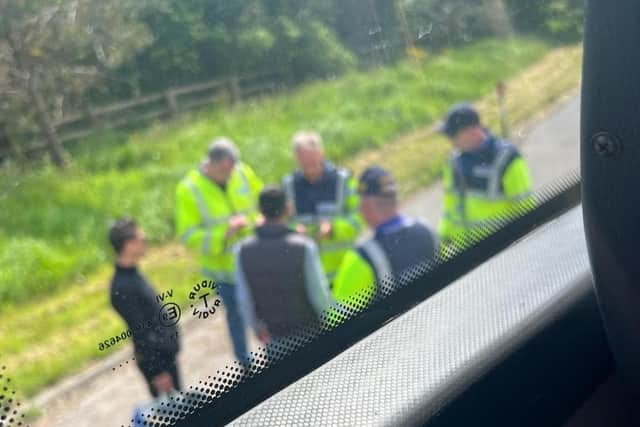
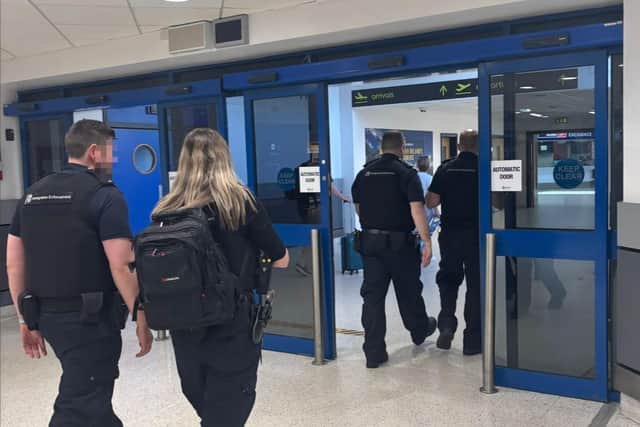
The News Letter understands that the Home Office has been investigating an organised crime gang suspected of people trafficking – and as part of that has uncovered evidence of fraudulent EUSS applications and other suspected immigration offences. A number of arrests have been made and an investigation is ongoing.
The people smuggling probe is understood to involve the trafficking of mainly Roma people into Northern Ireland from mainland Europe, via the Republic of Ireland.

Because of the post-Brexit commitment to an open border on the island of Ireland, policing immigration across the 310 mile frontier is almost impossible. The focus is largely on public transport – with busses regularly pulled over by Irish immigration officials on the southern side, and intelligence-led checks conducted by the Home Office at transport hubs in Belfast.
Racial tensions in Ballymena have been growing for some time, and while local politicians have condemned the violence outright, some have raised concerns about problems within the area over housing, anti-social behaviour and the exploitation of the Roma population by criminals – including concerns about illegal immigration and people smuggling.
The local MP Jim Allister has asked the government to make a statement to the House of Commons on “what it is going to do to constrain the flow of migrants who legitimately travel under freedom of movement from one EU country to another, in this case, into the Republic of Ireland, and then pass unchecked from the Republic of Ireland into Northern Ireland”.
The TUV leader says this has been a contributing factor – particularly in respect of Roma – to “underlying tensions produced by uncontrolled and often undocumented immigration”.
His party has pointed to “the influx of Roma, in particular into Ballymena in recent years” as having driven “rapid demographic change”.
Ballymena has a large Roma population, who have worked in various industries and attended churches here for years. Their children – many of whom were born here – attend local schools. However, there has been little in the way of social integration – and the often-transient population largely lives in a confined area of the town, which has resulted in tension in local communities.
For years, there have been concerns about the level of control over these people by powerful figures within their own community, both in the UK and across Europe. But people close to the Roma community say they are being scapegoated, with the entire ethnic group targeted over the behaviour of a few.
One source told the News Letter people are forgetting that “the vast majority are working in our factories, care homes, hotels and are washing our cars – jobs that very few locals would take”.
They said that they are victims of “exploitation, deception and control” by organised criminals.
There are believed to be more recent arrivals living here illegally – prompting the crackdown by the Home Office.
As part of its investigation, the Home Office’s Immigration Enforcement team has searched properties and seized suspected criminal cash, electronic devices and financial records. In one case, social services were called due to the squalid living conditions of a child found on the premises. The Home Office declined to comment on the ongoing investigation.