
Integrated Education Northern Ireland: Row after Education Minister Paul Givan publishes new standards for schools wishing to transform
The Education Minister has published new standards for schools that wish to achieve integrated status - with his party claiming the sector has failed to achieve balance between Catholic and Protestant pupils despite decades of work.
However, the integrated sector has hit back, calling the targets “overly rigid”.
The row came after the Department of Education (DE) published a position paper to provide “greater consistency” in applying the concept of “reasonable numbers” which are legally required for schools to transform to integrated status.
The new DE paper says schools wishing to transform must be able to attract at least 10% of Year 1 or Year 8 pupils from the minority tradition.

An alternative standard requires 15% of pupils in these school years to be both Protestant and Catholic; So if a school has 200 pupils in these years and 100 of them are neither Protestant or Catholic, then the remaining 100 pupils must include at least 15 Protestants and 15 Catholics.
Two Bangor schools started legal action this year when DE refused requests to transform, saying they could not attract enough Catholics.
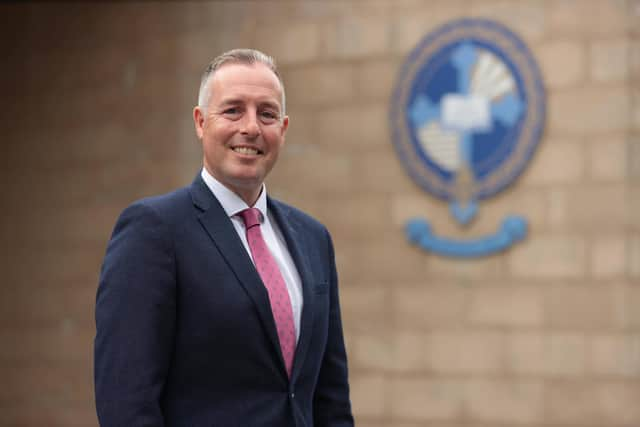
Education Minister Paul Givan said: “This position paper provides clarity and consistency for schools and communities considering transformation and reaffirms the importance of balanced representation from both Protestant and Catholic communities.”
“This approach to ‘reasonable numbers’ is grounded in the founding principles of integrated education and supported by research, which emphasises the importance of equal status and representation in fostering positive intergroup relations. It ensures that integrated education continues to deliver on its founding promise – bringing children together in a spirit of equality, respect, and shared learning.”
Mr Givan's party colleague DUP MLA Cheryl Brownlee claimed the DE paper exposes “a fundamental flaw” in integrated education and said that despite decades of work, the sector is “failing to deliver on its core promise of balanced representation between Protestant and Catholic pupils2.
The paper showed no transformed schools have come close to achieving the aspirational 40:40:20 balance for Protestant:Catholic:Other, she said.
However, the Integrated Education Fund (IEF) called for more flexibility with figures, saying that “an overly rigid approach” fails to consider the unique circumstances facing each school.
“Whilst reasonable numbers of Protestant and Catholic children are important to integrated education, so too are those of different cultures and religious beliefs and of none, as well as pupils of all abilities and diverse socio-economic backgrounds,” it said.
It also argued that an integrated “ethos” is also paramount, as is the composition of boards of governors.
However the position paper refers little to these and instead focuses almost entirely on percentages of Protestants and Catholics, it said, also failing to include any success stories.
The IEF recognised that increasing minority enrolments “can be a challenge” for newly transformed schools, but said account must be given to local contexts.