
Irish Defence Forces granted new legal powers but unable to defend infrastructure from Russia, says Aiken
Dublin has just recently realised that its defence forces did not have the legal power to defend their own territory - but with only one lightly armed vessel they are still "incapable" of defending critical infrastructure from Russia, it is claimed.
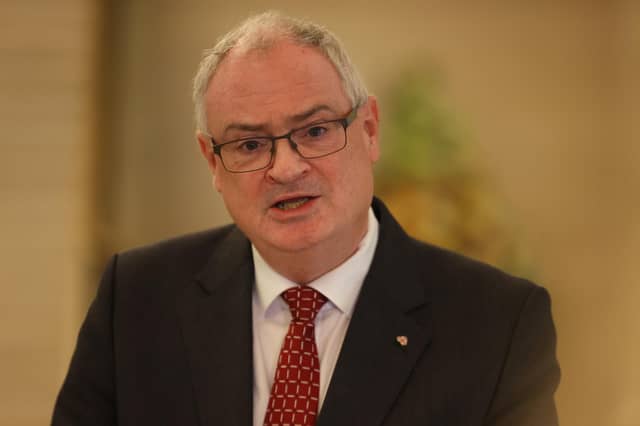

Former Royal Navy submarine commander, now UUP MLA, Steve Aiken made the remarks after the Irish Government announced that fresh legislation had been signed into law giving members of the Irish Defence Forces specific powers to safeguard Ireland's maritime domain and protect the territorial waters and economic zone.
The legislation amends the Defence Act 1954 and is intended to strengthen the Republic’s ability to respond to emerging threats at sea, including vessels linked to Russia's so-called "Shadow Fleet".
The move comes amid growing concern across Europe about the vulnerability of undersea infrastructure following incidents involving cables and pipelines in the Baltic Sea.
However, Mr Aiken argued that while the legislation addresses a legal gap, it does little to resolve what he described as Ireland's lack of military capability.
"That the ‘defence minister’ is only now realising that the Irish Defence forces don’t have the legal vires to protect the Republic's own critical infrastructure is not, for any informed observers surprising.
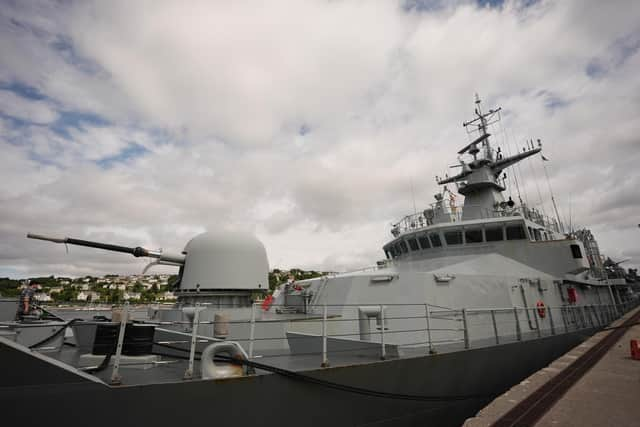
"Recently in the Dail, however, we had the worrying response by ministers that the vessels of the Irish Naval Service are not considered warships, and that the only available vessel is armed with little more than 50 year old, two 0.5 Calibre heavy machine guns, just shows that no matter how often the Irish virtue signal with the law, unless they stop freeloading on defence, they are incapable of preventing Putin or any other malign actor doing whatever they want - whenever they want.
"The Irish should be thankful that the French Navy had a spare frigate available to sit in Dublin Bay to keep EU leaders & President Zelensky safe; that commitment will come at a cost, freeloading isn’t appreciated in Paris."
Announcing the new legislation, Irish Defence Minister Helen McEntee said the new powers formed part of a wider effort to strengthen Ireland's maritime security.
“Following my launch of Ireland’s first National Maritime Security Strategy in February, one of my key priorities has been to ensure the Defence Forces have the powers they need to respond to emerging threats in our waters, particularly from vessels linked to the Russian ‘Shadow Fleet’,” she said.
“Today marks an important step in addressing threats in our maritime domain and comes at critical juncture given our Presidency of the EU and our responsibility to the defence and security of Europe.
"“Ireland’s maritime domain is of critical strategic importance. Major undersea cables that carry huge volumes of global internet and financial data pass through our waters, while gas pipelines, electricity interconnectors and planned offshore renewable energy infrastructure are also located in our maritime area.
“Recent events in the Baltic Sea and the activities of Russia’s Shadow Fleet have highlighted the importance of ensuring that we have the legal framework necessary to respond to evolving threats."
The Criminal Law, Civil Law and Defence (Miscellaneous Provisions) Act 2026 formally assigns the Defence Forces responsibility for safeguarding the State's rights in its territorial waters and exclusive economic zone. It also strengthens the legal framework governing the protection of military installations.