
Kingsmills Massacre: Ex-RUC Special Branch officer challenges claim intelligence agencies 'underpinned' IRA attack and perceptions of collusion
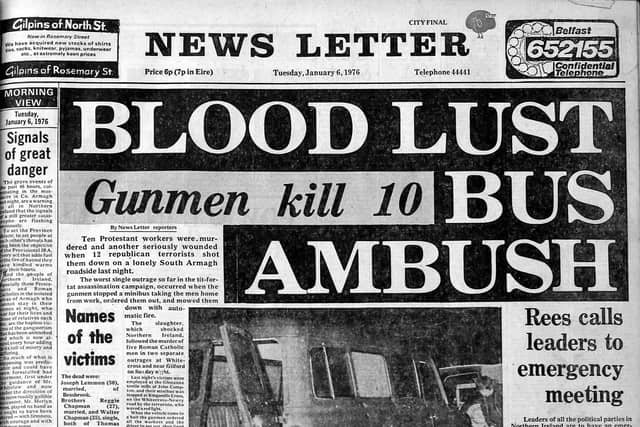

A former Special Branch officer has challenged renewed suggestions that intelligence agencies 'underpinned' the Kingsmills Massacre and its aftermath.
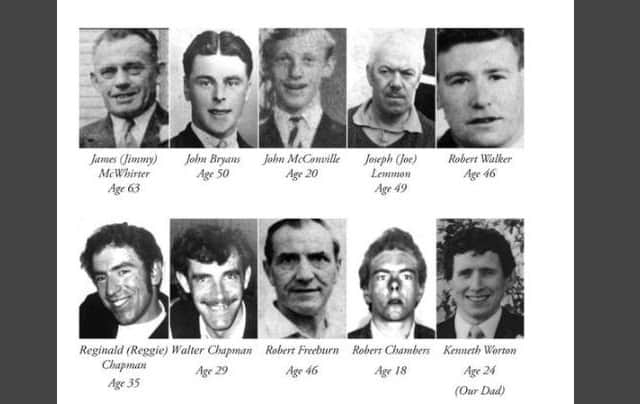
Dr William Matchett, was speaking after the Police Ombudsman Marie Anderson released her findings into the 1976 atrocity in which the IRA shot dead ten Protestant workmen near Kingsmills in south Armagh in 1976.
Ms Anderson found a wide range of failures in the subsequent RUC investigation, but also said police were under "intense pressure and strain" as that year had the second highest number of fatalities in the Troubles.
While she is legally constrained from commenting on the legal term "collusion", she found no evidence the RUC had advance knowledge of the attack or could have prevented it.
She also rejected claims the army withdrew from the area to allow the IRA to attack.
However lawyers acting for sole survivor Alan Black and the family of John McConville, who was murdered in the atrocity, were not satisfied.
KRW Law Associate Solicitor Barry O'Donnell said on Tuesday that "unfortunately the Police Ombudsman was unable to go further than the judgement she published because of a recent decision of the High Court which precludes her from making findings of 'collusion' or 'collusive behaviours'.
"In many ways today's statement rubber stamps exactly what our clients have said for decades. They are content now to reach their own conclusions on the real reasons why there was such a litany of failures around the investigative response to the Kingsmill atrocity.
"We say emphatically that taken as a whole the report supports allegations of some as yet unidentified intelligence agenda underpinning the atrocity and its aftermath."
They will now upscale their civil action on the matter, he said.
But Dr William Matchett, author of ‘Secret Victory: The Intelligence War’ that Beat the IRA' responded that when it comes to discussions of collusion, "facts do not matter - all that matters is what people believe".
As an example, he said that for decades Captain Robert Nairac was central to collusion claims about Kingsmills - until a lengthy investigation proved it wrong: "But still, people believe it".
Contrary to the presumption of innocence in natural justice, he said, "collusion presumes guilt" and some people believe the lengthy process of retired officers trying to defend their historical actions makes them appear guilty when they are really innocent.
In cases where collusion is alleged, people never believe "that police officers made an honest effort and did their best," he said.
However UUP Justice Spokesman Doug Beattie said according to the closing statement of the Coroner in the Kingsmils legacy inquest, the people who truly refused to offer transparency on the atrocity were not the RUC - but the IRA and its political representatives in Sinn Fein.
He noted that this week Sinn Fein MP John Finucane demanded a public inquiry into the loyalist murder of GAA official Sean Brown - after Secretary of State Hilary Benn refused one.
Mr Beattie said the Brown family deserve justice, but he added: "Hilary Benn was heavily criticised by John Finucane as he tried to his party as victim focused. Sinn Fein refused to cooperate with the Kingsmills inquest despite being asked by the coroner over ten years. That is not a party that want truth and justice for all."