
Legal actions brought by 'Hooded Men' over their interrogation during Troubles should be thrown out, High Court hears
Legal actions brought by the so-called Hooded Men over their treatment under interrogation at the height of the Troubles should be thrown out, the High Court heard today.
Counsel for the Ministry of Defence argued they are attempting to relitigate claims for damages which were settled back in the 1970s.
Paul McLaughlin KC urged a judge to strike out lawsuits as an abuse of process.
Surviving members of the group resisted the move, insisting new revelations about their alleged torture clears the way for them to seek further compensation.
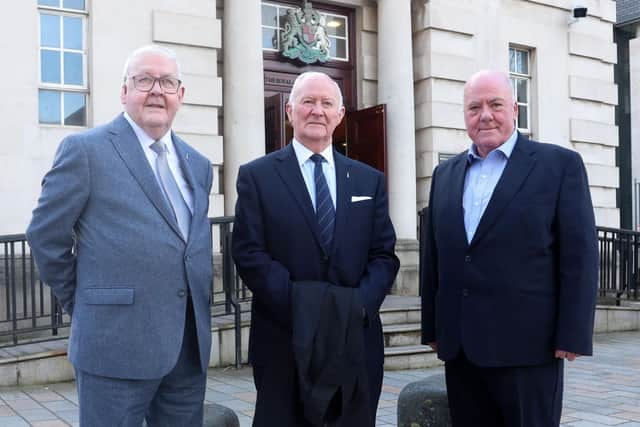

The 14 Hooded Men were arrested during internment without trial and questioned by police and soldiers at British Army facilities in Ballykelly, Co Derry in 1971.
Techniques used against them included being hooded, made to stand in a stress position against a wall and beaten if they fell, forced to listen to constant loud static noise, and deprived of sleep, food and water.
In 1978 the European Court of Human Rights held that they had been subjected to inhuman and degrading treatment but fell short of defining this as torture.
The case was thrust back into the spotlight in 2014 following the discovery of a memo from former British Home Secretary Merlyn Rees about alleged methods approved by UK ministers.
Since then the Irish Government mounted a failed attempt to have the European Court revise its earlier findings about the treatment of the men.
But a judge subsequently determined that what they were subjected to, if it occurred today, would constitute torture.
In a further development in 2023, the PSNI issued a formal apology for the actions and omissions of RUC officers who dealt with the Hooded Men while they were in custody.
Although the Chief Constable is a co-defendant in the current proceedings, police did not support the application to strike out the cases.
Mr McLaughlin argued, however, that all 14 of the men have already brought and settled claims.
“The plaintiffs are attempting to relitigate these actions 50 years later,” he submitted.
Citing finality enshrined by the legal doctrine of res judicata, the barrister added: “It is an abuse of process for a new set of proceedings to raise something that was subject to an existing judgment.”
Lawyers for the Hooded Men countered that new disclosures about the alleged extent of Ministerial involvement in authorising their maltreatment means the early settlements were fraudulently obtained.
Hugh Southey KC, appearing for some members of the group, told the court there was a focus on issues which were unknown during the 1970s.
“That means a claim for fraud can be brought,” he contended.
Master Harvey was also told that the Ministry of Defence’s bid to strike out the actions was premature.
Judgment was reserved following closing submissions in the application.
Outside court solicitor Kevin Winters, who represents two of the Hooded Men, described their treatment as a “dreadful episode of Britain’s oppression”
Mr Winters added: “After all this time our clients are so relieved to witness the latest judicial spotlight being shone on one of the darkest examples of State conflict abuses.”