
Lough Neagh algae: Eel fisherman’s legal case against DAERA likely to go ahead
An eel fisherman’s High Court action against Stormont authorities for allegedly allowing the “ecological collapse” of Lough Neagh appears set to advance to a full hearing.
Indications were given at the High Court today that Declan Conlon has an arguable case on some grounds of challenge to the state of pollution.
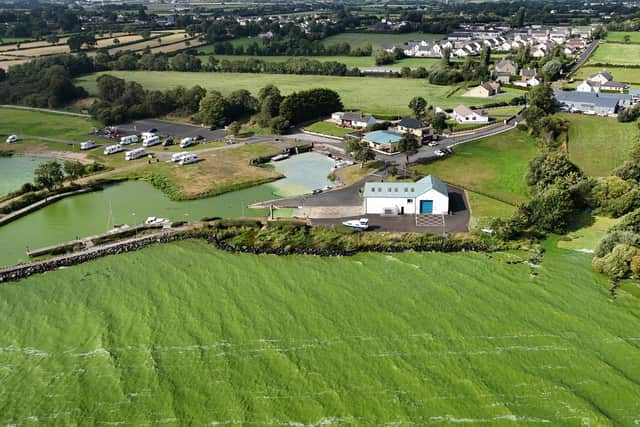

Adjourning the case until May, Mr Justice McAlinden suggested there was no clear “knock-out blow” to the case against the Department of Agriculture, Environment and Rural Affairs (DAERA)
He stressed: “There is significant public concern about Lough Neagh.”
Mr Conlon, whose family have fished the inland lake for generations, is seeking to judicially review DAERA, claiming failures to prevent the spread of toxic algae on the internationally protected site.
Lough Neagh has been plunged into an environmental crisis amid levels of phosphorus and nitrogen from agriculture and farm run off, fertiliser and animal waste.
Issues around the level of wastewater treatment facilities and septic tank leakage also form part of the threat to its future status.
Providing around 40% of Northern Ireland’s drinking water and the largest lake in the UK, the lough has suffered years of blue-green algal blooms so severe they can be seen from space.
Lawyers representing the fisherman claim DAERA is continuing to rely on inadequate plans and unenforced pollution regimes to deal with the crisis.
Clear evidence is available to show there has been a continued “ecological collapse”, according to their case.
In an affidavit lodged as part of his case, Mr Conlon also set out how his way of life is being destroyed.
“I’ve fished Lough Neagh all my life, just like my father and his father before him. Now I’m watching it die in front of my eyes,” he stated.
“This isn’t just about my livelihood, it’s about justice for the lough before there’s nothing left for the next generation.”
Backed by River Action UK and Friends of the Earth Northern Ireland, he has mounted a series of grounds of challenge to the Department.
In court today, Mr Justice McAlinden urged both sides to try to reach consensus on which legal points had a realistic prospect of ultimately succeeding.
“It doesn’t seem there are any knock-out blows here,” he said.
Following brief discussions an indication was given that an arguable case may be established on a challenge to alleged delays in completing a nitrates action programme.
Mr Conlon’s application for leave to seek a judicial review was adjourned to give DAERA more time to submit expert evidence in response to his case.
Checks will also be made to see if either Lough Neagh’s current owner, the Earl of Shaftesbury, or Northern Ireland Water should become notice parties in the proceedings.
“It’s important to make sure that no stone is left unturned,” the judge stated.
“This is going to go beyond the leave (to seek a judicial review) in some shape or form.”