
Lough Neagh blue green algae crisis: Anglers slam Northern Ireland Water for adding 900 tonnes of phosphate to drinking water every year
A body representing local anglers has challenged NI Water over the addition of what they claim amounts to almost 900 tonnes of phosphates into drinking water every year.
Phosphates are closely related to extreme environmental damage in Lough Neagh, which supplies much of NI’s drinking water.
NI Water has responded that the action is industry standard the world over, to reduce the risk of lead poisoning from old water pipes.
The claim may be startling to some onlookers in the debate about Lough Neagh because the Ulster Farmers’ Union has repeatedly argued they are being singled out for the most stringent enforcement action in a bid to reduce the amount of phosphorus entering water courses from fertiliser and slurry.
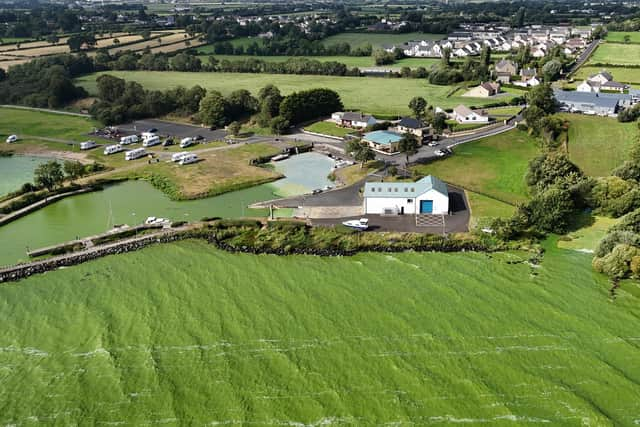

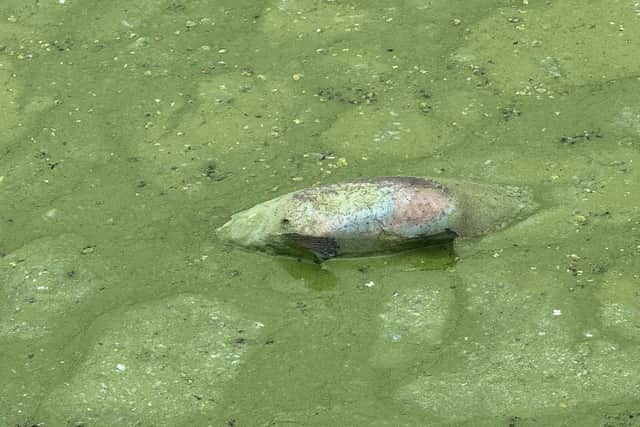
Most of Lough Neagh has been once again blighted with toxic blue-green algae this summer, primarily due to excessive levels of nutrients in the water, with phosphorus of particular concern.
Experts say the main sources of phosphorus are farming fertiliser and slurry, untreated sewage leaks, agri-processing factories and leaking septic tanks.
Invasive Zebra mussels and climate change are also cited as factors in increased pollution.
Ulster Angling Federation chairman Gary Houston believes that three things could be done “immediately” to reduce phosphorus levels in water – including banning detergents containing phosphates and replacing artificial fertilisers with slurry.
However, his number one priority would be for NI to “immediately cease putting phosphate into drinking water”.
He argued the chemical material 'lime' – or closely related calcium carbonate – could be used instead to stop lead from old pipes leaching into drinking water.
He said NI Water adds 889,505kg of phosphates annually to water supplies, equivalent to around 900 tonnes.
“If these three sources of phosphates were removed our waterways would be at 'good' ecological status, which would be a major improvement for biodiversity and water quality,” he added.
Neither Northern Ireland Water nor the Department of Agriculture Environment and Rural Affairs (Daera) challenged his claim or figures.
However, NI Water said the phosphates it uses are the most effective method available to prevent lead poisoning from old lead pipes.
A spokesperson said: “Orthophosphoric acid is added to drinking water supplies across the United Kingdom and much of the developed world, to reduce the likelihood of lead leaching from old lead pipework in private property and in the distribution system. This is considered to be best industry practice.
“Lead pipework is removed from NI Water's distribution system on an ongoing basis; however lead pipework (and lead solder) in private homes and other buildings is often left in place.
“Lead propensity testing, across NI Water supplies, and the wider water industry, evidenced that the use of orthophosphoric acid is the most overall effective measure to prevent lead leachate from pipework.”
A Daera spokeswoman said that orthophosphoric acid is an effective method to stop lead dissolving into the water distribution system “by coating the inside of the pipes and acting as a corrosion inhibitor”.
Mr Houston estimated that phosphates coming from detergents account for 950-1,900 tonnes per year, while phosphates from fertiliser account for between 3,000 and 7,500 tonnes per year.