
Lough Neagh protest as another Northern Ireland lake is hit by blue-green algae
A local triathlon group had to cancel the swimming leg of a planned tournament after it said the NI Environment Agency confirmed the presence of blue-green algae in the water at Castlewellan lake.
It came on the weekend protestors gathered to demand more action over the state of Lough Neagh, which has been plagued with the toxic sludge in recent years.
Campaigners have accused Stormont of failing to prioritise an environmental crisis they say is “killing” the lough.
On Friday, Olympic Triathlon Belfast said the swim leg of the Mourne Sprint Triathlon could not go ahead.
In a post on their Facebook page, the group said: “We have just been informed this afternoon that the Northern Ireland Environment Agency have confirmed report of blue-green algae at Castlewellan Lake.”
They added: “Unfortunately, this is totally out of our control. We are incredibly disappointed and apologise for any inconvenience and disappointment. The race will still have the same refund policies.”
The News Letter has contacted Daera for a comment.
Yesterday, environmental activists from the Save Lough Neagh group gathered at the shores of the lough in Antrim.
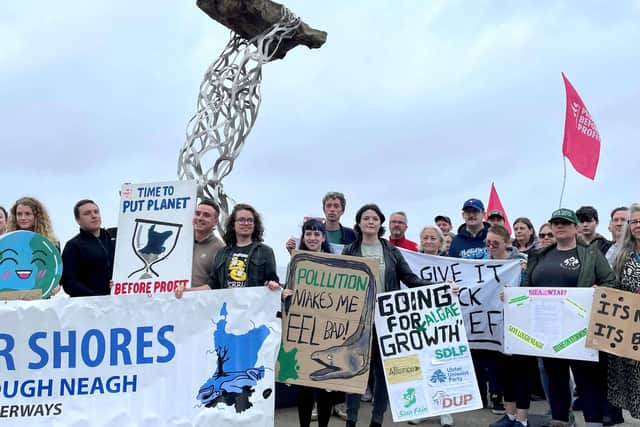

The protestors demanded a step change in the political response, as they criticised the contents of a Stormont action plan aimed at tackling the issue.
Noxious blooms of blue-green algae covered large parts of the lough last summer and also affected other waterways and beaches in the province.
The algae has returned this summer.
The UK and Ireland’s largest freshwater lake provides more than 40% of Northern Ireland’s drinking water and supports Europe’s largest commercial eel fishery.
It also drains around 40% of Northern Ireland’s land, of which three-quarters is agricultural.
In July, Stormont’s Environment Minister Andrew Muir secured Stormont Executive approval for a 37-point action plan for Lough Neagh.
At the time, Mr Muir said the approval was the first step on a journey towards the long-term rehabilitation of water quality in the lough.
Yesterday’s demonstration took place at the Statue of the Lough Protector outside Antrim town.
A series of speakers addressed the event.
Among them was a fisherman who said he put down 40 nets in the lough in recent weeks and only caught six fish.
Padraig Cairns from the Save Lough Neagh group said dead animals had been washing up along the shores of the lough throughout the summer.
He said the “immediacy of the catastrophe” at Lough Neagh cannot be “ignored” any longer.
Mr Cairn said there was a need for enforcement and deterrents to prevent further pollution.
“It’s in total collapse,” he said of the lough.
“We’ve seen it last summer, we’ve seen it this summer.
“When the algae disappears from sight and it sinks over the colder months, it doesn’t mean that the damage has been undone somehow.
“We’re basically seeing the lough being killed before our eyes.
“We can’t stress enough how urgent this crisis is really.”
Many of Northern Ireland’s waterways have been affected by the bacteria this summer.
Last month, the News Letter reported a thick scum of blue-green algae which was visible for hundreds of metres along the shoreline of the River Bann outside Coleraine, from the Crannagh towards the sea at Portstewart – and just a couple of miles from the Barmouth Nature Reserve.
The algae is a form of cyanobacteria, which exists in the natural environment without problems when nutrients such as nitrogen and phosphorous are limited.
However, if there are excessive nutrients in the environment – such as in Lough Neagh – algae growth is no longer limited and blooms form.
DAERA has said that increases in the population of the invasive zebra mussel has exacerbated the problem by allowing more sunlight into the lough.
Excess nutrients in the water are caused by runoff from wastewater treatment, agriculture and industry.
The Public Health Agency says you may be at risk when you use a body of water which contains a bloom.
It warns that contact with the bacteria can cause skin rashes, nausea, vomiting, stomach pains, fever, headaches and occasionally more serious illness such as liver and brain damage.