
Margaret Thatcher expressed her clear 'dissatisfaction' at Irish attitudes to border security just weeks after signing the Anglo Irish Agreement
Margaret Thatcher raised her “dissatisfaction” about the Irish government’s commitment to border security in the months after the signing of the Anglo Irish Agreement – and rebuked Ireland over assurances it sought about the RUC, records show.
Mrs Thatcher later came to regret the deal – signed 40 years ago today – because of Dublin’s refusal to extradite those wanted for terrorist offences, as well as concerns about its impact on UK sovereignty in Northern Ireland.
Once-classified documents from her personal archive show that within months of signing the deal, the Tory prime minister was already expressing dissatisfaction with how Ireland had dealt with security on the border.
Her concerns are recorded in notes of discussions between the British and Irish governments from February 1986 – just three months after the landmark agreement between the two countries over the future of Northern Ireland.


The 1985 deal prompted huge street protests from unionists – angry that Dublin had been given an advisory role on Northern Ireland’s affairs. It came in the wake of the escalation of the IRA’s terror campaign on the mainland, including the targeting of Mrs Thatcher herself at the Tory party conference in Brighton the previous year.
Mrs Thatcher’s primary reason for backing the deal was security – and promises from Ireland that it would improve security on the border and extradite terrorists.
The files, published as part of Mrs Thatcher’s private archive, detail a meeting with then-Irish prime minister Garret FitzGerald on 19th February 1986 – in advance of a meeting with Unionist leaders days later.
The Prime Minister raised concerns with Dublin that the “whole Agreement might flounder” unless a way forward with unionist leaders could be found – saying the situation in Northern Ireland was much more serious than the Irish government realised.
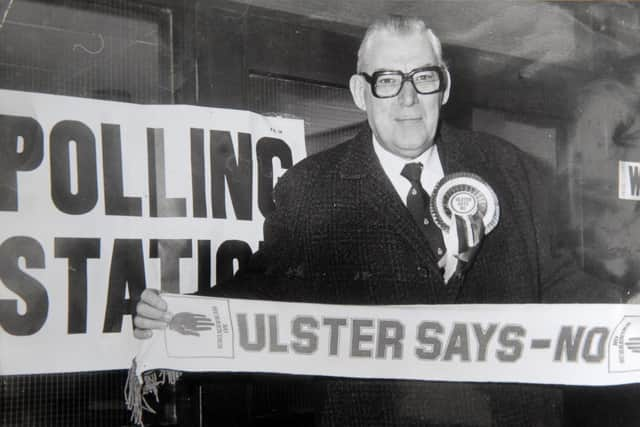
Both parties were keen to press ahead with the Anglo Irish Agreement (AIA) – and agreed to tell the press they were committed to it.
But behind the scenes, Mrs Thatcher made clear her dissatisfaction at what she saw as Dublin’s failures on security – warning there had to be “more, and more effective, activity in the security field” if the AIA was to be shown to have achieved results.
She said that an inadequate number of Irish security forces had been sent to the border, despite a promise during AIA negotiations to deploy additional forces.
Notes of the meeting record state: “The Prime Minister said we were dissatisfied with the results so far of security co-operation under the Anglo/Irish Agreement. She recalled promises which had been made during the negotiations to deploy a Standing Task Force to the border area.
“Our information was that the Irish Government had in practice deployed only inadequate forces to these areas. There were particular weaknesses in surveillance and intelligence. These were exposed by the growing number of terrorist attacks in border areas. The Republic's response had simply not been good enough”.
She said the UK was “simply not getting the security co-operation” it needed – and said difficulties were mainly “with cross border co-operation” rather than between Dublin and London.
However, the Taoiseach said the criticism was “wide of the mark” – and said Ireland had doubled the number of army units on the border, where there were 1000 police officers. However, he “acknowledged” that the Garda were “less sophisticated” on surveillance than the RUC – but said there was “no significant difference in numbers of police on each side of the border”.
Mrs Thatcher rejected that, saying the perception in Northern Ireland was very different. The minutes state the Prime Minister’s view as: “There had to be more, and more effective, activity in the security field if the Agreement was to be shown to achieve results. As it was terrorist activity had actually increased in the border areas since signature of the Agreement”.She warned that the deal risked coming “unstuck” without her concerns being dealt with – saying that it required “at least the grudging acquiescence of Unionists”.
Mr FitzGerald had announced his Government's decision to sign the European Convention on the Suppression of Terrorism in advance of his meeting with the Prime Minister – and he intended to sign it in advance of the Prime Minister's meeting with the Unionist leaders.
The aim “was to have the tightest possible extradition arrangements”.