
New legacy investigatory body dismisses concerns that its legal focus will mean that its probes are imbalanced against the security forces
A new Troubles investigatory body into past violence has brushed aside fears that its legal focus might lead to an imbalance against state forces.
On Thursday, the Independent Commission for Reconciliation and Information Recovery (ICRIR) explained its sweeping new powers. The ICRIR stressed that “state organisations, police and armed forces ... are legally required to provide all the required information in full to the commission and may not ‘redact, summarise...and cannot claim any duty of confidentiality or any other restriction to avoid providing it’”.
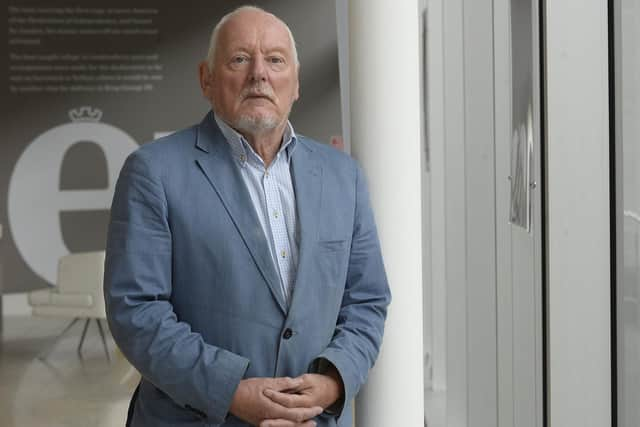

This led to the legacy campaigner Jeff Dudgeon, who has formed a group that highlights what it says is the imbalanced approach to investigating the past, to voice concern about the focus of the ICRIR. He was commenting after the press release from the new body cited the importance of Articles 2 and 3 of the European Convention on Human Rights (ECHR) in its work, which focus on the right to life and freedom from torture. Article Two is often cited to justify major investigations into allegations against the security forces.
There are concerns that the new body could end up unduly focussing on killings carried out by state forces (which amount to only around 10% of the total Troubles death toll, with 90% being down to terrorists).
Mr Dudgeon – the convenor of the Malone House Group, which aims to “find the best means to address the past” and thinks it better to draw a line under historic cases than endlessly reopen them – said “there are other articles in the convention” that are “important and equal rights; it's concerning ICRIR continues to omit mention of the rights of the other articles”. He cited Articles 8 which deals with “the right to respect for your family and private life” and Article 10, “freedom of expression”. Some observers say that these, and Article 6 (right to fair trial), are important so that ex security forces facing a deluge of investigations have their own rights respected.
We put this to ICRIR, who replied: “Whilst we have regard to all of the rights under the European Convention, as an investigative body we have particular responsibilities under Article 2 and 3. The rights under Article 2 and 3 apply to all those subject to the investigative process and include the need for investigation to be independent, effective, prompt and allow for sufficient public scrutiny and victim participation – irrespective of the identity of the alleged perpetrator. Compliance with the ECHR is one of the independent commission’s key principles."