
'No surprise' Michelle O’Neill didn’t participate in D-Day events, despite promising to be ‘first minister for all’ says TUV
It is “no surprise” Michelle O'Neill didn’t take part in D-Day commemorations - despite promising to be a first minister for all - as her party leader previously unveiled a statue to a Nazi collaborator in Dublin, the TUV has said.
The comments came after the DUP hit out at Ms O'Neill for failing to attend D-Day events in Normandy with Deputy First Minister Emma Little Pengelly.
Allied forces stormed the beaches of Normandy on 6 June 1944 to liberate Europe from Nazi occupation. However over 4000 lost their lives in a single day.
Asked why Ms O'Neill did not take part in D-Day events, having pledged to be a First Minister for all, Sinn Fein declined to comment.
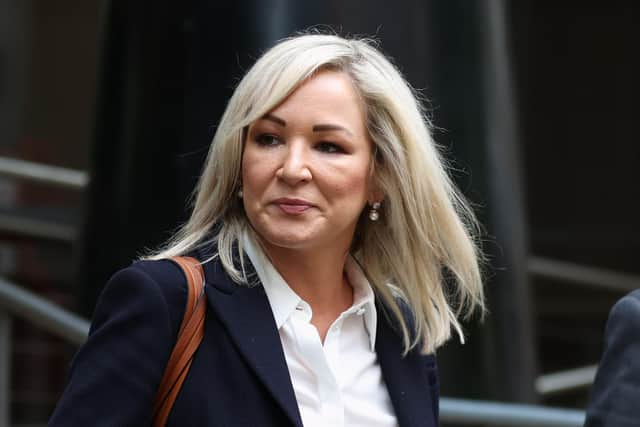

TUV deputy leader Ron McDowell said: "O'Neill, who infamously said there was no alternative to La Mon, Kingsmill and Enniskillen, never convinced anyone she could represent everyone in Northern Ireland.
"It is no surprise to me that a party led by Mary Lou McDonald should snub the anniversary of an event universally recognised as critical in preserving freedom and democracy in Europe. After all, she unveiled a statue of Nazi collaborator and IRA leader Seán Russell in Dublin 2003.”On Friday morning, the RTE website reported prominently that Prime Minister Rishi Sunak had apologised for his early departure from a major international ceremony to mark the 80th anniversary of D-Day in Normandy, in order to carry out a general election television interview.
However, by comparison the Irish government appeared to make no public acknowledgement of the anniversary. Thousands of Irish men joined the UK army during WWII to fight Germany. However the Republic was officially neutral at the time, and it later barred them from state jobs and pensions. In 2013 the Irish state formally apologised, granting 500 Irish soldiers amnesty from prosecution.
Mr McDowell added: “The Republic is still the nation which sent condolences to Germany on the death of Hitler and retained diplomatic relations with Germany throughout the war.”
Speaking at Irish soldiers’ war graves in France on Thursday, Irish Catholic Archbishop Eamon Martin said everyone owes them “a great deal of gratitude”.