
Northern Ireland Assembly finds GP services 'in crisis' and calls for radical action
An assembly inquiry has confirmed what patients across Northern Ireland have reported for years – the system for accessing a GP is “in crisis”, and it “beggars belief” that some of the fundamentals are not in place.
Stormont's Public Accounts Committee (PAC) came to the conclusions after surveying more than 15,000 patients.
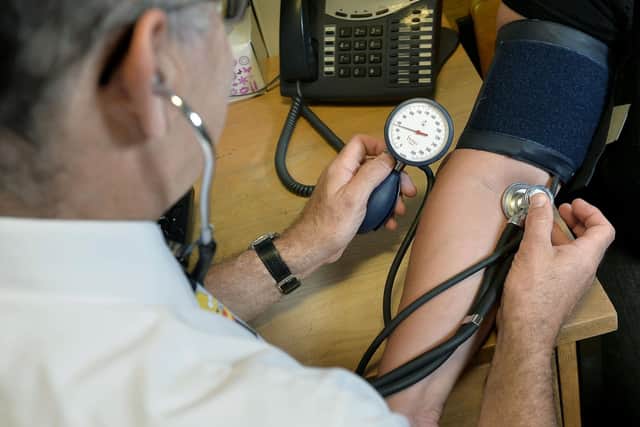

More than half of them reported repeated, unsuccessful attempts to contact their GP – with more than half rating their experience as “poor”.
The PAC heard that there was a lack of interaction between the Department of Health and the patients' watchdog, the Patient and Client Council (PCC), especially in relation to GP care.
The PCC said it has seen a 70% rise in complaints from patients about GP services between 2022-23. However this contrasted starkly with Department of Health figures – it said there had been a downward trend in such complaints for the same time period.
During the inquiry the Department of Health also admitted it did not know how many full-time equivalent GPs are employed across Northern Ireland. It also said that measuring the demand for GP services was “too difficult”.
The committee heard that there is no GP workforce strategy, which impacts negatively on GP recruitment, training and planning for the future.
MLAs set out 10 recommendations for “radical” change.
Mid and East Antrim TUV councillor Christopher Jamieson said: “I don’t think anyone will be surprised that an assembly committee has finally admitted what patients have been telling us for years – primary care is in crisis.
“Day and daily, people are caught in the 8am phone lottery, constantly redialling, sitting in phone queues or pushed towards already overstretched A&Es.
“What is truly staggering is that the Department of Health cannot even say how many full-time equivalent GPs we actually have and has no proper workforce strategy for primary care.”
DUP health spokesperson Diane Dodds said the current GP model “is clearly not working”.
She added: “There is no doubt we have to train more GPs but we have to do it sensibly and efficiently. If many are from overseas and are not interested in staying here then is that the best use of resources?
“We need to find ways to utilise the scores of qualified GPs not currently working in the specialty. Many of these are younger females unable to balance family life with the excessive expectations placed on them in GP practices.”
Unlike England, she said, GPs in NI are not measured on time taken to answer calls, triage turnaround, timely access to appointments or the number of appointments made available.
PAC chairman Daniel McCrossan said: “What we have learned from our inquiry is that the primary care sector is in crisis and requires urgent intervention and stabilisation. It beggars belief that some of the fundamental building blocks of primary care are not in place.
“Patients told us there was a confusing patchwork of approaches when it came to contacting different GP practices in different areas.”
However Dr Ursula Mason, chair of the Royal College of General Practitioners NI, said that “disappointingly, the report fails to outline or indeed address the significant impact that more than a decade of chronic underfunding has had on practice stability and capacity of GPs to deliver care”.