
Northern Ireland Troubles: Legacy Commission replacing ICRIR but UUP says Republic of Ireland terror must be probed despite amnesty with IRA imposed by Irish Government
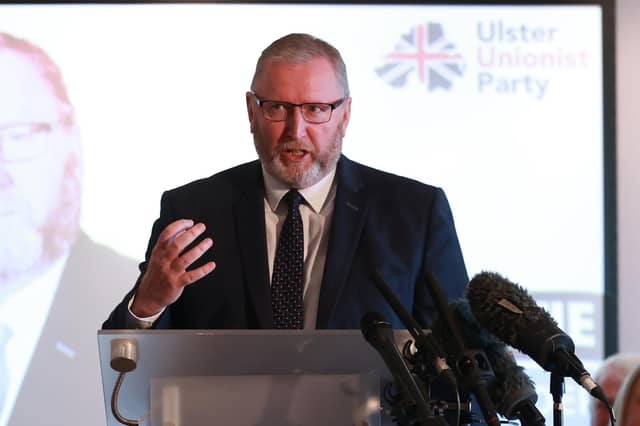

The Republic must probe all terrorist activity in its own jurisdiction with the new Legacy Commission - even if this breaches its reported amnesty with the IRA, the UUP says.
The party's Justice Spokesman Doug Beattie also said he was concerned how a de facto amnesty for IRA murders carried out in the republic - revealed by a former Irish Justice Minister Michael McDowell - would hinder any serious investigations south of the border.
He was speaking ahead of the launch of the new Legacy Commission tomorrow, in which both the Irish and UK governments will take an active role.
The new body will replace the ICRIR (Independent Commission for Reconciliation & Information), which was just launched in May last year.
Although Irish government minister Neil Blaney is on record admitting helping the fledgling PIRA get off the ground in the late 1960s, the republic's track record on legacy has left many victims exasperated.
Instead of cooperating directly with the inquest into the Kingsmills Massacre in south Armagh, it dragged the proceedings on for almost ten years before holding a closed hearing in Dublin. It then offered a confidential report to relatives of what was discussed - but they are legally forbidden from ever making the contents public.
The republic has also refused to hold a parallel inquest into the Omagh Bomb - which was built and delivered from the south - while the Northern Ireland side of the atrocity is examined in ongoing hearings in NI.
During over a decade of lobbying by victims groups, the Irish Department of Justice has also refused any meaningful engagement with Northern Ireland victims, while the Irish police watchdog says it is barred from investigating legacy cases.
However unionists protest that Dublin offers continual criticism of the UK's legacy policy and is currently in the process of taking legal action against the UK for how it is handling legacy matters.
The ICRIR drew strong criticism especially from nationalist Troubles victims, who had particular concerns about its ability to probe collusion allegations and potential immunity for terrorists.
The new legacy body replacing it was effectively signed off at a recent meeting earlier between Prime Minister Keir Starmer and the Taoiseach Micheal Martin at Chequers.
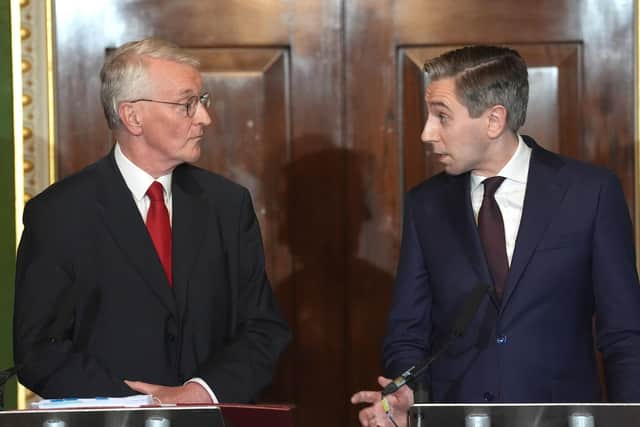
It is understood the framework for the new Legacy Commission will be formally launched tomorrow afternoon at a press conference involving the Secretary of State, Hillary Benn, and also the Tanaiste, Simon Harris.
But UUP Justice Spokesman Doug Beattie said he was concerned whether the de facto amnesty given by the Irish government would block it from investigating terrorism in its own jurisdiction.
"On Information Recovery, who will head it up, what powers will it have, will there be a cross-border element to it?" he asked.
"This raises the question of what will the Irish Government be doing on legacy apart from standing with their hands in their pockets marking the homework of the UK Government.
"It is imperative that the Irish Government begin the process of ensuring they tackle legacy and begin by ensuring they conduct article 2 investigations of those who were murdered in their jurisdiction then investigate how their jurisdiction was used as a safe haven to murder UK citizens."
The MLA said he was reminded about what former Irish Justice Minister Michael McDowell said in 2021 about Dublin having put in place an amnesty against investigating IRA murders – which the MLA said the UK has yet to challenge.
He added: “Therefore, the Irish government of which I was a member took the decision that further investigation and prosecution by An Garda Síochána of such historic offences was no longer warranted or justified by reason of the greater interest”.
Mr Beattie asked if the new commission will be geographically restricted to Northern Ireland "or will those who were kidnapped, taken across the border into the Irish Republic and murdered receive and article 2 investigations?"
CONCERNS ABOUT NEW LEGACY COMMISSION FROM SEFF:
Director of victims group SEFF, Kenny Donaldson, said they would be seeking clarification of the new joint Legacy Framework for the new commission.
He said the critical issues for victims are as follows;-
1. The role of the Irish Government - Will that State be bound into a process underpinned by robust legislation? And will they be subject to comparable levels of independence oversight as the UK Government must also be? Voluntary Cooperation must finally be replaced with full compellability powers which are actively used.
2. No political horse trading - We will be seeking assurances that there will not be an appeasement of certain cases in a form of wider political bargaining. (whether Inquests, efforts for Public Inquiries or otherwise) There must finally be honour established in how these issues are advanced.
3. Enablement by States - The days of superficial and symbolic justice/accountability must be replaced with an approach which delivers tangible outcomes, where there is maximum accountability of and from perpetrators.
4. Any new approach must be crime driven - There cannot be any two tier system: Beyond reasonable doubt vs Balance of probabilities. On this, the same rules must apply across the board for members of the security forces and for terrorists.
5. Victim and Survivor centred - To achieve this There must be confidence that this process is about delivering for victims/survivors and is not motivated by the protection of particular interest groups.
6. Persecution of those previously exonerated through various investigations - There must be no further State complicity with the retrospective criminalisation of those who acted to thwart terrorism, and ultimately to save lives.
And crucially,
7. Does what's on offer represent a better prospect for victims/survivors to obtain better outcomes? Are there clear pathways for victims of terrorism to further their needs for justice, truth and accountability?
"In falling short on any of these issues will further fail victims/survivors and that must not happen,” he said. “We will closely consider what is on the table so that our words and position is from an informed standpoint.”