
Northern Ireland's health service bureaucracy questioned amid Wes Streeting's NHS reforms in England
Health reforms in England have prompted calls for radical changes to the service in Northern Ireland – with the current levels of bureaucracy and management again under scrutiny from local politicians.
The DUP’s Diane Dodds has commended Health Secretary Wes Streeting for “at least showing a willingness to deliver reform and recognising the significant challenges facing NHS England”.
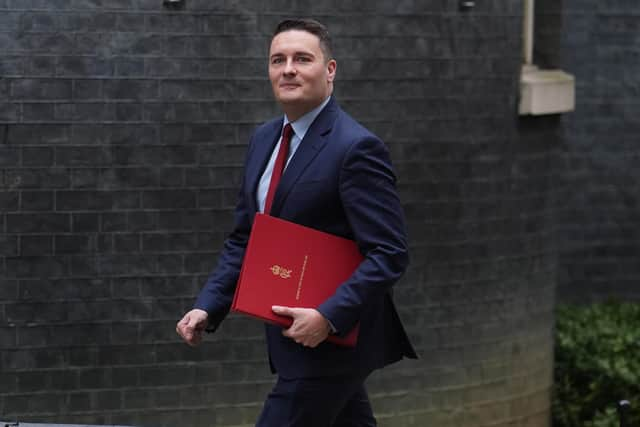

However, TUV leader Jim Allister says previous experience shows that there would be “minimal or no savings” if similar changes were attempted here.
Mr Streeting recently announced NHS England would be scrapped entirely – with around 9,000 job losses – and that management of the health service in England would come back under the Department of Health to avoid duplication.
On Sunday he said that the NHS is “addicted to overspending”, and announced the possibility of abolishing further health quangos. Integrated care boards in England will be required to make 50% cuts “with a particular focus on management costs”.
This has prompted questions about whether a similar streamlining of services should – or could – take place in Northern Ireland, where health is devolved.
In 2015 former health minister Simon Hamilton announced plans to close the Health and Social Care board in a bid to streamline the NHS here.
Last May, the News Letter revealed that a decade on many of its staff are still doing the same jobs and the health service has absorbed extra staff in roles in communications, finance and primary and social care.
DUP health spokesperson Mrs Dodds said “our health service is in desperate need of reform”. She added: “Professor Bengoa made it clear that if we continue on the current path, the entire Northern Ireland budget could be consumed by health. Yet patient outcomes are not improving. Instead, despite the best efforts of front line staff, more and more people are languishing on waiting lists.
“Reform must also extend to management. We need much greater transparency and accountability in how services are delivered and how taxpayers’ money is spent. We need only look at major capital projects and how they are mismanaged, costing hundreds of millions of additional taxpayers money, to see that change and great responsibility for decision making is desperately needed”
Responding to the changes in England, the TUV leader Jim Allister says: “Northern Ireland does not need five trusts, but the experience of removal of the HSC Board demonstrates that in the worst of Civil Service traditions staff are simply moved elsewhere with minimal or no savings”.
Like NHS England, Northern Ireland’s Health and Social Care Board (HSCB) was independent of the Department of Health, and had responsibility for organising health services here. The DUP’s Simon Hamilton announced plans to close it a decade ago, amid concerns about inefficiencies in the system.
However, all HSCB staff were moved to a new Strategic Planning and Performance Group (SPPG). Rather than posts being allowed to lapse after staff left or retired – new staff have been recruited into former HSCB positions within the health service.
At the time, a Department of Health spokesperson said: “In line with legislative requirements, all former HSCB staff and their roles and responsibilities were subsequently transferred in 2022 to a new group within the Department with staff retaining their existing HSC terms and conditions. As part of the changeover process, consideration was given to how the various functions across the HSCB and Department would work in tandem to continue to fulfil their responsibilities post-migration”.
Speaking at the time, Mr Allister said: “To discover... that it was simply an issue of the ‘migration’ of the HSCB into the NHS proper with all those involved retaining their existing contractual terms and conditions does raise serious questions about the point of the whole exercise”.