
Omagh bomb inquiry: DUP leader accuses Irish government of introducing 'needless layer of bureaucracy' to control evidence given by Gardai


The leader of the DUP has accused the Irish government of introducing "a needless layer of bureaucracy" to control evidence given by Gardai to the Omagh bomb inquiry.
DUP leader Gavin Robinson was speaking after it was revealed that legislation to allow for oral testimony of Irish police and other officials to be provided to the Omagh Bombing Inquiry has been given priority by the Dublin Government.
The proposed legislation will provide a bespoke legal mechanism to facilitate the taking of sworn testimony from State bodies before a judge of the Irish High Court at the request of the chairman of the inquiry.
The Real IRA bomb killed twenty-nine people, including a woman who was pregnant with twins in 1998.
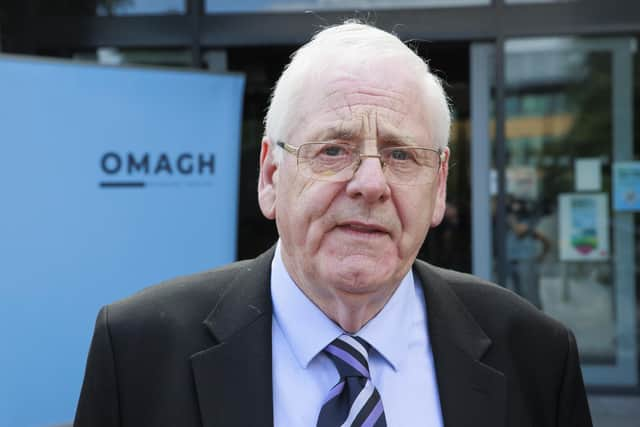
Mr Robinson responded: “This is yet another example of double standards from the Republic when it comes to legacy."
The barrister added: "Whilst demanding transparency and action from others, they are bringing forward legislation to introduce a needless layer of bureaucracy and ultimately control over the evidence Gardai officers will give to the Omagh inquiry.
"One way Dublin could have navigated the 'legally complex' issues of an inquiry established by another sovereign state would have been to institute their own parallel inquiry. That was the wish of the families which has been consistently ignored by the Republic’s authorities. Instead, they will only be giving evidence on action which could have been taken by UK authorities to prevent this atrocity.
"Whilst we may be dismayed by this approach it unfortunately comes as no surprise from Dublin.”
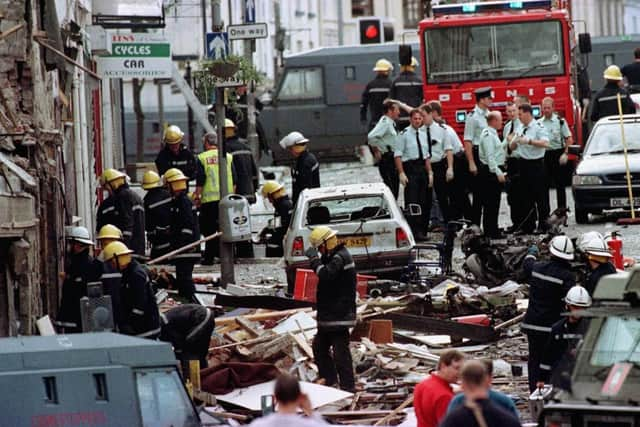
The Irish government has previously come under fire from Omagh relatives after it refused recommendations from Belfast High Court to hold a parallel inquiry into the Omagh Bomb.
Omagh bomb victim Michael Gallagher, whose son Aiden was one of those killed, has previously expressed concern that the Irish government could take a similar approach to withholding information from the NI inquiry as it did with the Kingsmills Inquest.
The Troubles inquest into the Kingsmills massacre ran for ten years, as it took so long to secure cooperation from Dublin aauthorities.
The IRA murdered ten Protestant civilian factory workers on their way home from work in 1976 near the border at Kingsmills in south Armagh.
The attack was executed from the south, the gang fled there afterwards, weapons used were later seized in the south, and the top three suspects served time in the south for terror offences.
Lawyers for the Kingsmills families accused Irish authorities of delaying tactics when Dublin argued that Garda officers could not give evidence about the attack to the inquest in Belfast because there was no legislation to force them to do so.
However lawyers for the Kingsmills families countered that RUC officers gave evidence to the Smithwick inquiry in Dublin without any purposely drafted legislation - because they did so voluntarily.
Irish authorities went on to draft special legislation which they said facilitated Gardai giving evidence for Kingsmills.
In the end, some 60 questions from the Kingsmills families were put to a Garda witness at a secret court hearing in Dublin. The families were allowed sight of a redacted version of their answers but are still legally forbidden from discussing its contents. The Gardai answers to their questions were not disclosed to the public during the Belfast inquest.