
'One-sided propaganda': Unionists rubbish report claiming life expectancy, wages and standard of living leap up over the Irish border


Unionists have lambasted a report produced by Dublin that claims quality of life leaps up as soon as the border is crossed, with one senior figure slamming it as “one-sided propaganda”.
Made by the Department of the Taoiseach and Dublin-based body the Economic and Social Research Institute, the report finds life in the Republic is better on almost every metric than in Northern Ireland.
Over the border, it claims, wages, living standards and disposable income are all higher, as is participation in the labour force. Even life expectancy is greater - on average men live two years longer in the Republic, the report states, and women an extra 18 months.
Just about the only measure on which Northern Ireland does better is unemployment; the rate here is roughly a quarter of that over the border.
Published today, the report finds “Ireland outperforms Northern Ireland across several measures of living standards” – but its conclusions have been rubbished by unionists.
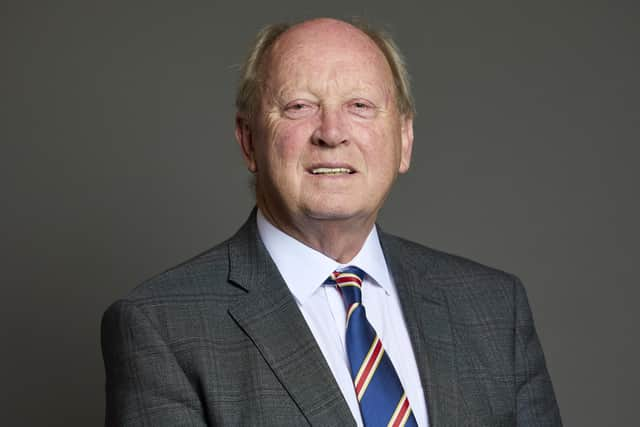
TUV leader Jim Allister MP branded it “one-sided propaganda” that the Irish government is trying to “pass off as an objective report”.
He said: “It compares a sovereign state with a UK region, funded by a major fiscal transfer from London, and then presents the difference as if it were an argument for constitutional change. It isn’t.
“The Irish Republic is a standalone state, with full tax-raising powers. Northern Ireland is one region of a much larger UK economy. Every nation has wealthier and less wealthy regions; comparing the Irish Republic to Northern Ireland is no more meaningful than comparing London to the north-east of England, and claiming that proves the UK should break up.
“Higher wages sit alongside far higher taxes, housing costs, childcare costs and user charges. A young family in Dublin pays a very different price for those higher wages than a family in Lisburn.”
The Republic’s higher life expectancy, claims the report, is a reflection of the effects of income, education and access to health services.
For the DUP’s deputy leader, MLA Michelle McIlveen, that’s glossing over the fact that the Republic charges for health care, unlike the UK where it’s free at the point of use to every man, woman and child.
Some pensioners qualify for free medical care in the Republic, but not all; everyone else is expected to open their wallets if they need to see a GP or use an ambulance, while hospital stays accrue per-day fees.
Ms McIlveen told the News Letter: “It is not surprising [this report] selects metrics which attempt to portray the Republic in a favourable light.
“When discussing quality of life, it is only fair to consider the realities the report ignores – people in the Republic must pay for GP visits and hospital care, parents face significant school-related costs that families in Northern Ireland do not, and housing costs in Dublin remain among the highest in the world. These are key pressures which cannot simply be airbrushed out of the conversation.”
The UUP’s economy spokeswoman, MLA Diana Armstrong, argued the Republic’s financial success has been Dublin-centric and driven by US corporations, which she suggested leaves it vulnerable.
“It’s exposed to global risks like tariff threats or tax policy changes, both of which we’ve seen from the US and EU in recent years,” she said.