
Pat Finucane public inquiry will make many nationalist and unionist victims feel ‘collateral damage’ says retired senior PSNI officer
A public inquiry into the murder of Pat Finucane will cause both nationalist and unionist victims to feel that unless a loved one was 'politically elite' then they were just "collateral damage" in the Troubles, a retired senior police officer has said.
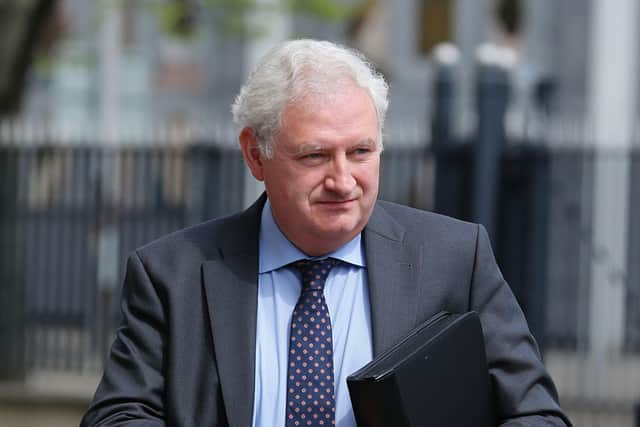
Retired Det Ch Supt Norman Baxter was speaking after the government announced a public inquiry into allegations of collusion in the murder of solicitor Pat Finucane in 1989.
"A Public Inquiry into this murder is another example where political influence interfaces with the justice system," Mr Baxter told the News Letter.
"All families have the right to justice and to understand the circumstances surrounding the death of their loved one including the Finucane family.
"However, few families have access to the political leverage required to achieve a Public Inquiry. In this respect the announcement will once again raise the perception of a biased tiered approach to dealing with our past. It will reignite a real sense of hurt within the victims community and a feeling from the relatives of both nationalist and unionist victims, that unless a loved one came from within political or social elites, they were second class citizens and therefore collateral damage."
Former Special Branch officer Dr William Matchett said the largest volume of unsolved murders remains those carried out by the IRA.
"Given the reality of the day, I’d say the investigations and procedures [into Finucane's murder] were as good as it gets, imperfect as they were," he told the News Letter.
"I’ve seen no similar armed conflict that shows otherwise. Quite the opposite, in fact.

"Some murder investigations in the early seventies would have been inferior [to Finucane] by a long way.
"There was a lack of resources, knowledge and a breathless pace of violence at that time."
He said that in that era "there was only so much a police investigation could achieve in what was a situation just short of civil war".
He added: "The largest pool of unsolved murders is not loyalist, but republican, specifically those carried out by PIRA."
According to reference work Lost Lives, republicans were responsible for almost 60% of murders in the Troubles (IRA – 1781) and loyalists 30%. The security forces, which alone had lawful authority to use lethal force, were responsible for almost 10%.