
Praise for annual ‘Boyne Day’ education event at Museum of Orange Heritage at Schomberg House in east Belfast
Over 100 adults and children attended an educational fun day in Belfast where they learnt about the Battle of the Boyne and its role in the formation of modern democratic politics.
The annual ‘Boyne Day’ event is hosted by the Museum of Orange Heritage at Schomberg House in east Belfast.
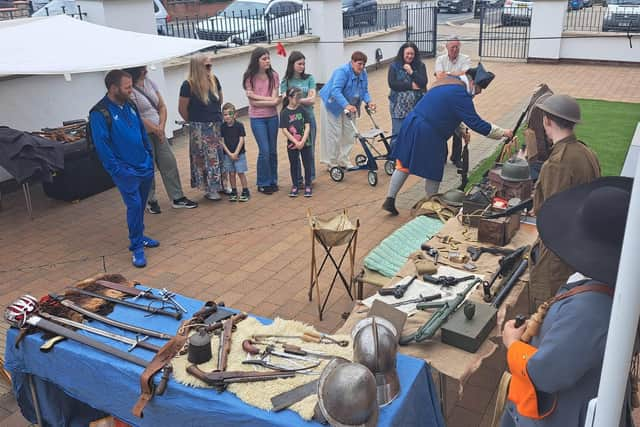

Those attending enjoyed a range of reenactments, historic artefacts, crafts and games.
Museum Curator, Dr Jonathan Mattison, who organised the event, said: “It was fantastic to see young and old enjoy the event and the range of activities we put on every year.
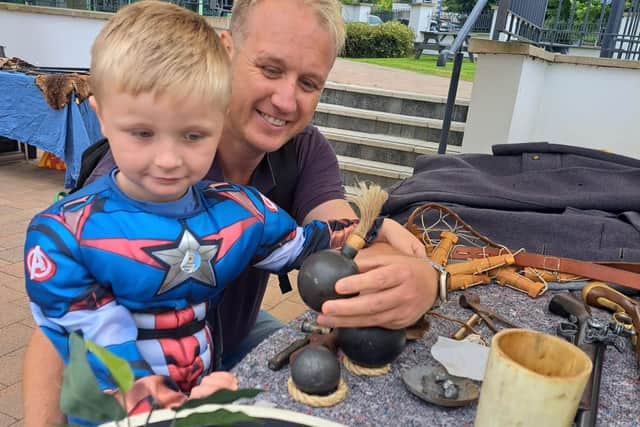
"The weather was great, and we were able to have our team of re-enactors outside showing some replica items from the Williamite wars alongside artifacts from the Great War”.
He added: “Boyne Day is our way of bringing the legacy of the Battle of the Boyne to life. This was one of the most seminal battles and indeed moments in the history of the British Isles and was integral to the Glorious Revolution.”
“Boyne Day helps young and old delve into the history of the period through living history, games, arts and crafts, and you can also have your face painted!”
“We are very pleased that every year our audience gets bigger, new faces turn up and it’s a chance for them to see what the museum is all about.

The adults enjoy the day as much as the children do!”
“Boyne Day helps young and old delve into the history of the period through living history, games, arts and crafts, and you can also have your face painted!”
The Glorious Revolution of 1688-1689 replaced the reigning catholic king of England, James II, with the joint monarchy of his protestant daughter Mary and her Dutch husband, William of Orange.
The events of the revolution itself were bloodless and established the supremacy of parliament over the crown, setting Britain on the path towards constitutional monarchy and parliamentary democracy.
King James was deposed and exiled after William’s landing in England. He sought to retake his throne through an alliance with Ireland and France, but suffered a swift but indecisive loss on the Boyne River near Drogheda in 1690.
His army of 14,000 Irishmen and 7,000 Frenchmen were no match for William's much larger army, in what became known as the Battle of the Boyne, so he fled to live in exile in France, leaving William and Mary in power.
The developments are widely seen as laying the foundation for constitutional monarchy and modern representative government.
Given that this year marks the 80th anniversary of the end of World War II, the exhibition Orange Voices of World War II, was also on display, highlighting the service and sacrifice of Orangemen and women during this awful conflict.
Visitors can still see the history, ideas and legacy of the Glorious Revolution through the continuing Liberty Exhibition at The Museum of Orange Heritage, at Schomberg House, 368 Cregagh Road, Belfast.
Opening hours are Monday – Saturday from 10.00am with last admissions at 4.00pm.
A second Orange Museum is located at Sloan’s House in Loughgall, the birthplace of the Orange Order, formed there in 1795 following the Battle of the Diamond.