
PSNI 25th anniversary: Brian Rowan on the dawn of new policing era
I remember the lights in an otherwise dark building; remember the long hours pacing back and forward, watching for movement in that office complex not far from the Belfast docks.

It was Headquarters to a new Policing Board - part of a ‘new beginning’ which proposed sweeping reforms as part of a transition from the RUC to the PSNI.
As I think about it now, the lights in the building represented energy, enthusiasm, effort; perhaps even a sense of emergency in the critical work of getting this right. Represented also the long hours of argument, negotiation, discussion, agreement and disagreement as complex and
contentious issues were debated from day into night.
That building never turned completely dark. Somehow, some of the lights stayed on until there were decisions on a new police uniform and badge, on recruitment and achieving a police service representative of the community, appointing a new chief constable and managing the fallout from the Omagh bomb investigation.
I have a diary entry from March 1 2002 on a recruitment phase then - showing almost five thousand applicants, with 38% from the Catholic community.
There is a line in my accompanying news script quoting the SDLP Policing Board member Alex Attwood describing this as further confirmation that policing was being got right and that people had accepted their responsibilities.
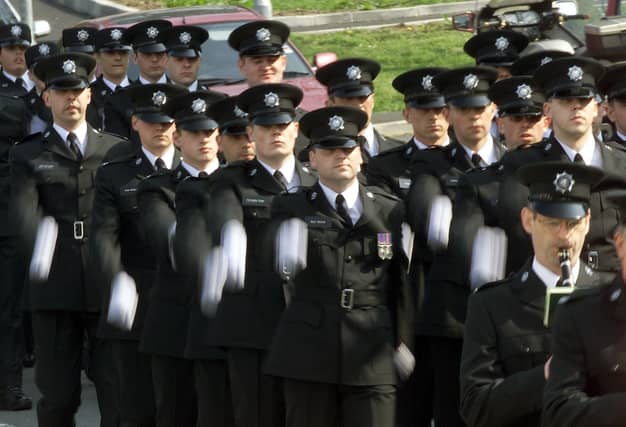
Just weeks later, on April 5 2002, applicants from an earlier recruitment phase stepped out in the first PSNI graduation ceremony. I was there at the Garnerville training college - there to witness this class of 2002 on a new day for new policing dressed in a new uniform and with a new crest. It felt different. It seemed better.
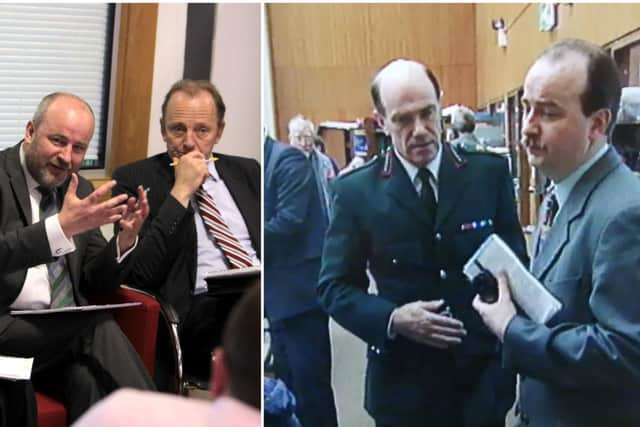
Colin Cramphorn was Acting Chief Constable then, but it was Sir Ronnie Flanagan who had managed and delivered the RUC into this process of change, when many felt hurt and betrayed. In 1999, as policing waited for the report of the Patten Commission - tasked with shaping that new beginning - Flanagan, then Chief Constable, described ‘tremendous’.
Change, he said, would ‘have to be implemented very carefully following a
consultation period and in the light of the prevailing security situation’.
There was a battle to try to save the RUC title, and there is a sentence in a Police Federation speech at that time that encapsulated the mood: ‘Changing the name of the RUC is an act of appeasement to terrorists...The key to Catholic recruitment is peace: not a change of name.’
Flanagan’s management of that mood has never properly been acknowledged. Not just his role in the change process, but his understanding of that wider transition from conflict to peace.
More than Prime Ministers and Secretaries of State, he better understood issues such as decommissioning and the importance of republican leaders Gerry Adams and Martin McGuinness being able to bring the ‘critical mass’; of their movement with them.
I consider Flanagan to be one of the leaders in the peace. His successor Hugh Orde was the right Chief Constable at the right time. He had no emotional attachment to this place. He was from the outside.
At times he displayed all the subtlety of a sledgehammer, had investigated the ‘dark side’ of policing and was here to begin that programme of change.
It was in his time, that Sinn Fein eventually joined the Policing Board - part of the making of a once unthinkable political deal that would see Ian Paisley and Martin McGuinness in the lead roles in politics here.
That was then, and this is now. There is a different mood as we assess this 25th anniversary of ‘new policing’.
And it is worth remembering what Chris Patten said at the beginning of all of this, in his report of 1999 that opened the path to the PSNI two years later: ‘We believe it is possible to find a policing solution to the policing problem but only if you take the politics out of policing.’
In this place, politics involves itself in everything. There is a political majority on the Policing Board.
The issue of the Past - what we call legacy - is unresolved. Politics seeks to control what should happen - and not happen - on this issue. And in the play out of this, new policing gets dragged into old arguments.
There is a sense at times that we have become bored with peace. A sense of laziness - not enough lights on in those buildings where big decisions on politics, policing and the past still need to be made. That energy and effort - the sense of emergency that I described earlier - has gone.
So, we need a ‘re-beginning’ - a wide ranging review on all of this; the politics, the policing issue and how we find some way to put the past to rest with respect.
We need to talk about MI5 and its relationship with policing. And we need a generational shift to bring new thinking to the table.
Twenty-five years on, there is a question for all of us: Do we really support what we call new policing?