
PSNI 25th Anniversary: Reforms were ‘example for divided societies elsewhere’ says Bob Peirce
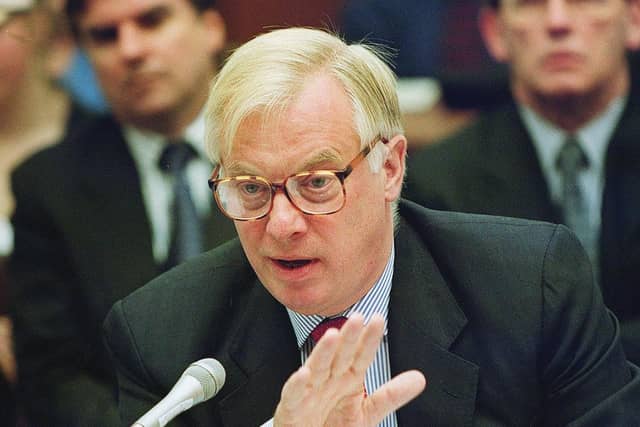
Soon after the Good Friday Agreement was signed, Chris Patten asked me to go to Northern Ireland to direct the work of the commission that he was to chair – the Independent Commission on Policing in Northern Ireland.

I agreed without hesitation.
I had worked closely with him in Hong Kong and looked forward to doing so again.
I had no background in Northern Ireland, which was probably a good thing.
I had no dog in the fight, and I was not put off by people telling me we could not possibly succeed where the peace negotiators had failed because policing was too toxic an issue.
We were lucky in the composition of the Commission.
Chris Patten commanded respect in both London and Dublin and was about as close as one could get to a chairman acceptable to both nationalists and unionists.
Of the seven commissioners, two were Northern Irish, one from a nationalist background and one unionist; two were former police chiefs, from London and Boston; two were from academia, American and South African; and one was a business leader.
Crucially, all were acting in their personal capacities, not as representatives of any constituency.
The word ‘independent’ in the Commission’s title meant what it said.
This, and the standing of its chairman and membership, meant that the findings of the Commission would be hard to brush aside.
Two decisions taken at the outset of the Commission’s work were vital to its success.
The first was that our aim should be to create the finest police service in the world.
We had specific terms of reference laid down in the Belfast Agreement, and we worked to meet all of these; but we found this encapsulation of our overarching mission to be helpful both internally as a lodestar and also in our consultative process.
It would have been impossible to strike a political compromise between parties advocating on one side for the complete abolition of the RUC and, on the other, that we should not touch a hair on their heads.
No-one, however, could object to the proposition that Northern Ireland should have the best policing in the world.
The other foundational decision was that we should have the most thorough possible consultative process, including town hall meetings in every district council area.
Sceptics said we were wasting our time; no one would come.
But over 10,000 people did come and more than 1,000 spoke.
Everyone who wanted to say something to us had the opportunity to do so, whether in public or private.
The town halls gave them a public forum to speak if they wished, and an opportunity to hand us submissions and letters.
Added to those sent by mail, we received, and read, over 2,500 written submissions.
We had hundreds of meetings with political parties, clerics, organizations of all kinds, and individuals, some in public and some privately.
By and large, when we were able to cut through the politics, we found that most people, whatever their political views, wanted similar things from their police service, and their expectations were not very different from those in the rest of Ireland and the United Kingdom, or the United States, Canada and the other countries we studied, looking for best practices and new thinking.
Commissioners also visited every RUC police station and spoke to police and staff of every rank. Many police officers, notably many on the front line, were eager for change and several had helpful ideas that made it into our report. (Kathy O’Toole and I found the same to be true in the Republic of Ireland, when we worked on a similar commission for policing reform there ten years later).
The extensive consultative process gave the Patten Commission a visibility and a legitimacy that a top down ‘white paper’ exercise could not have done.
No-one could say that they had not been heard, and many could see their thoughts reflected in the Commission’s report and recommendations.
The Patten report and the subsequent replacement of the RUC by the PSNI attracted considerable attention around the world.
In matters such as accountability, policing with the community, public order policing, and the widening of the recruitment pool, Northern Ireland provided an encouraging example for divided societies elsewhere, includinghere in the United States.
This a very far cry from the attention that Northern Ireland attracted in the past.
The Patten report was at the leading edge of policing best practice when it was published in 1999.
Much of its content remains pertinent today.
But Northern Ireland is a different place now – politically, demographically, and in other ways.
Policing challenges have changed. Social media did not exist when our Commission did its work; email was in its infancy.
Cybercrime, cyber security and cyber bullying now loom large on the policing agenda.
AI, drones and other emerging technologies are adding to the complexities of keeping society safe.
It is time for another comprehensive review of policing for the next 25 years.
Arguably, complex organisations like police departments should be thoroughly re-examined more frequently than once a generation.
Sadly, it usually takes a tragedy or a pattern of failures to trigger a review.
That is certainly the case here in America.
Perhaps Northern Ireland could once again show the way.
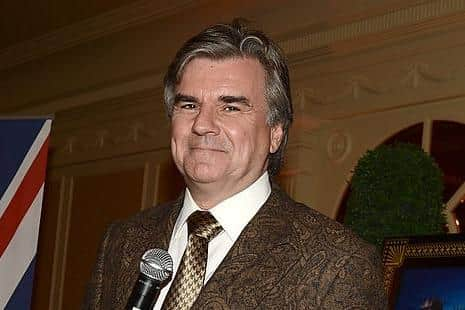
• Bob Peirce is a British diplomat that now lives in US, and was secretary to the Patten Commission and drafter of his eponymous report