
PSNI 25th anniversary: ‘The best roadmap for reform I have ever seen’ says Barbara Stephenson
Now, more than 20 years after serving as American Consul General in Belfast, what I find most remarkable about the new beginning to policing is how well it actually worked.
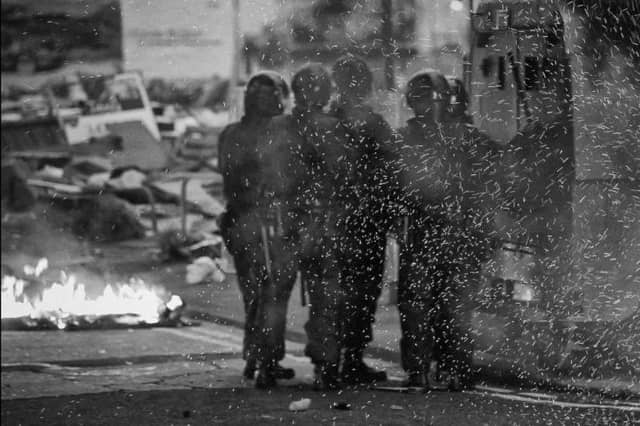

When I arrived in Belfast in 2001, I often saw members of the RUC in full riot gear, faces obscured, no name badges visible.
By 2004, as I prepared to bid Northern Ireland farewell and return to Washington, I was regularly delighted to see PSNI officers in my neighbourhood on bicycles, wearing name tags, chatting with pedestrians.
We at the American Consulate saw ourselves as champions of the peace process in general and of the new beginning to policing in particular.

As we reported back to Washington and worked to convince sometimes skeptical members of Congress that the reform was real, we tracked how members of the nationalist/republican community viewed the new PSNI by following responses to this question: Do you agree with the statement, “The PSNI protects me and my community”?
Once we saw more than 50% of nationalists agreeing with that statement, we celebrated that milestone and deployed that data to fuel confidence in the ongoing reforms.
When I returned to Belfast in 2024 to do a panel discussion with former Chief Constable Hugh Orde, I prepared by reading a recent report on the state of policing in Northern Ireland.
I dug through the survey data to see how big the gap was, twenty years later, between nationalist and unionist views of the PSNI.
At first I was confused, and then I was stunned to realize that the gap had essentially disappeared.
Nationalists said in overwhelming numbers that, when a crime occurs, they call the police.
That was certainly not the case for residents of West Belfast when I was Consul General.
As an American diplomat, I was repeatedly a witness to post-conflict efforts at police reform.
In El Salvador, the security forces were disbanded as part of the 1991 peace agreement that brought an end to the civil war there.
During the gap before the UN could stand up a new police force, gang members returned from Los Angeles and set up operations largely unopposed.
I learned an enduring lesson about the dangers of creating a post-conflict policing void in which criminal gangs prey unchecked on the weak, the poor, the old, the women and the children.
Despite the far-reaching changes involved in transforming the RUC into the PSNI, never was there a breakdown in law and order.
I always walked the streets of Belfast freely, enjoyed long, solo bike rides, and marvelled at the overall low crime statistics in Belfast and Northern Ireland more broadly.
When I have discussed the transition from the RUC to the PSNI with fellow American diplomats, no one can think of a case of “security sector reform” that worked as well as Northern Ireland’s.
Why such success? Certainly not because policing was an ancillary issue to the conflict in Northern Ireland.
To the contrary. I came to see policing, including nationalist grievances about “crown justice,” as central to the conflict.
The difficult, divided history is recounted elsewhere—and eloquently—in these pages, by authors who felt it deeply and personally.
I will, as an outsider, one known for bringing optimism and a can-do spirit to my work, address instead why the reform, the new beginning worked.
The Patten Report was the best roadmap for reform I have ever seen, in part because it understood the nature of bureaucracies and how to get action items to the top of inboxes so that the next incremental, but ingeniously interlocking steps toward reform actually got implemented.
Even as Stormont collapsed and the politics raged and so much remained contested, the recommendations in the Patten Report were steadily being implemented.
Hugh Orde was also the right Chief Constable for the task at hand.
He believed in the power of training to shift a culture.
He plugged away at the reforms, and he refused to give in to doubts about whether reform was really possible.
The Policing Board also exceeded all expectations.
I remember the Consulate organizing a study visit to the United States for the new members of the Policing Board to learn about community policing.
Everyone said it was a lost cause, with the Policing Board having (with Stormont collapsed and no other outlet) to carry all the weight of the fraught politics of the post-Agreement phase.
I am pretty sure the members of the Policing Board learned something about community policing on their study trip to America, but I am certain that, with Brendan McAlister requiring them to write letters to each other, they learned a whole lot about each other and their shared duty to carry this reform project forward.
Everyone said the members of the Policing Board would never clear the hurdle of having to produce a new badge for the new PSNI.
And then they surprised us all by designing a badge with room for the harp and the shamrock as well as the scale of justice.
I smiled when I saw the new badge, but then paused when I saw the crown.
How would nationalists, with their rejection of “crown justice,” ever accept a crown on the badge?
I treasure the reply I got from a nationalist friend on the Policing Board.
He winked and said, “It looks like a Bishop’s crown to me.”
• Barbara Stephenson was Belfast US Consul-General 2001-2004