
PSNI 25th anniversary: ‘The most difficult job I have ever done’, said Chris Patten
“This is by far the most difficult job I have ever done,” Chris Patten remarked on publication of his report into policing reform in September 1999, more than two years before the actual creation of the Police Service of Northern Ireland took place.
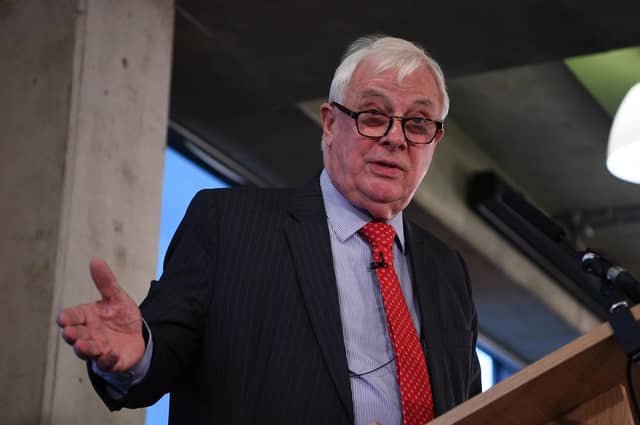

He wasn’t kidding. Neither was it a cakewalk for the other members of the Independent Commission on Policing for Northern Ireland, as it was formally titled.
The publication of the Patten Report and the actual formation of the PSNI 25 years ago were momentous and truly historic occasions but what I sharply remember is reporting some of the town hall-type meetings that the Patten commission held to assess the public mood about police reform.
That mood was febrile, sometimes sectarian and occasionally vicious.
The first public meeting was in early October 1998 in Belfast at a time when the Democratic Unionist Party branded the commission “bankrupt” and lacking independence.
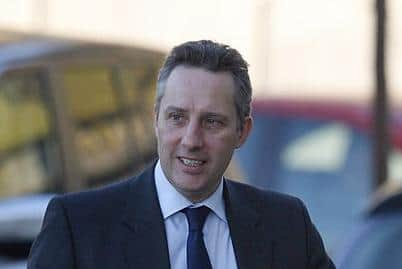
Ian Paisley junior led the robust defence of the RUC and accused the commission of being a “puppet” of the Belfast Agreement.
Commission member Sir John Smith, a former deputy commissioner of the London Metropolitan Police, perhaps unfamiliar with the antagonistic nature of discourse in Northern Ireland was offended, snapping back that the claims about lack of independence raised his hackles.
“I have never considered myself a puppet,” he said.
“Anybody who suggests that we lack independence doesn’t know us. If they don’t know that we are fiercely independent, I don’t suppose I, or anybody else, can convince them.”
Still, they had convincing to do. Early the following month we were in the further education centre on the Whiterock Road in the heart of west Belfast with 500 people crammed into the hall, all clamouring for the disbandment of the RUC, not its reformation.
Patten, mindful of his big previous governor’s job, attempted to lighten the electric atmosphere by describing himself as “the last colonial oppressor of Hong Kong”. That raised a laugh or two but the light-heartedness did not last long.
The meeting opened with a locally-made video depicting scenes of alleged RUC harassment, intimidation and killings of nationalists and Catholics.
Several speakers complained about what they described as the long-standing sectarian history of the RUC.
“The RUC has never been accepted in west Belfast and never will be accepted,” said one local man, reflecting the general opinion of the hall.
The late Fr Des Wilson was in characteristic firebrand form, to loud cheers declaring, “As long as even one member of the RUC is a member of a new police force, that force will not be acceptable.”
Cosmetic changes would not be tolerated, he thundered.
“And even if those changes were approved by the highest church leaders in the land, they would still not be acceptable,” the cleric added, holding firm to his maverick credentials.
It was rough and rowdy but Patten maintained his composure. He cited an Andersonstown News editorial which called for a “new dialect of reason and respect” and spoke of the need for a “lot of reconciliation and generosity of spirit”.
This prompted grumbles that he was labelling the entire hall as disrespectful and unreasonable. That was not his intention, Patten apologised, concealing his exasperation.
Afterwards Patten felt the meeting had gone “rather well”. One couldn’t but admire his English “sang froid”.
At the end of that month it was equally hostile and visceral, but from the opposite perspective, when the commission travelled to Ballymena to hear what the people of north Antrim thought about police reform.
William Wright had serious doubts about the independence of the commission. He noted that Patten and former Northern Ireland ombudsman Dr Maurice Hayes were Catholics and, the surname perhaps a giveaway, wondered if a third member of the commission at the meeting, American criminologist Dr Gerard Lynch, might be a co-religionist.
He wanted assurances that their Catholic disposition would not result in prejudiced decisions. Very suspicious of the Patten body’s overall intention he lamented, “I honestly believe that good honest people fear this commission more than they fear the IRA through 30 years of violence.”
Some SDLP speakers who argued for change were heckled and booed by the predominantly unionist and loyalist gathering.
One man feared the commission would disband the RUC leaving the community “open to wholesale murder and slaughter”. The people, he added, once again would be helpless as they were when the B Specials were disbanded almost 30 years previously.
Another speaker captured the majority opinion, “We want a Northern Ireland police service that is called the Royal Ulster Constabulary.”
That didn’t happen. In the end after all the combative town hall meetings and all the chastisements the Patten commission boldly opted for a radical overhaul of policing where the RUC transitioned into the PSNI.
It was difficult for unionists, particularly for many police families, but it was necessary to help anchor the peace and create a police service that has widespread support - notwithstanding that greater all-embracing Catholic/nationalist buy-in still is required.
The Patten Commission took grief and gyp getting to that transformative point a quarter of a century ago but they stuck to their task. All I can do here is salute their commitment and their thick skins and give them their honourable roll call: Chris Patten, Maurice Hayes, Peter Smith, Kathleen O’Toole, Gerald Lynch, John Smith, Lucy Woods and Clifford Shearing, and their secretary Bob Peirce.
• Gerry Moriarty writes for the Irish Times and was previously its Northern Ireland editor