
PSNI chief Jon Boutcher 'slapped down' by Supreme Court - as it backs Government in Troubles legacy case
A bid by the Chief Constable “to become the arbiter on decisions around national security” has been “slapped down by the courts” a legacy activist has said – after the UK’s top judges ruled that decisions about releasing sensitive security files are a matter for the government.
The landmark judgement says that national security assessments on the disclosure of documents relating to national security are a matter for the Secretary of State, not PSNI chief Jon Boutcher.
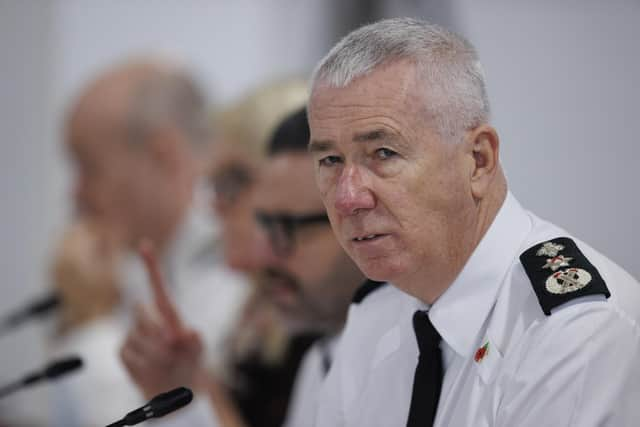

The Supreme Court ruled in favour of the UK government after it challenged a decision by coroner Louisa Fee to disclose summaries of evidence in a sensitive security force file related to an inquest into a Troubles murder – a decision backed by the courts in Belfast.
The chief constable had backed some intelligence information being released, and has publicly opposed the government’s policy of not naming state agents.
The ruling relates to the case of West Belfast man Liam Paul Thompson, 25, who was murdered by loyalists in a taxi in April 1994. His family believe that police knew that the taxi firm had been under a credible threat from loyalist terrorists.
The Malone House group – which campaigns on legacy issues – has welcomed the judgement, saying it “has clarified the law on national security and curtailed the secessionist tendency in Northern Ireland with the High Court and the majority in the Court of Appeal being overturned”.
Veteran campaigner Jeff Dudgeon said Mr Boutcher “was effectively slapped down by the judges for his temerity in trying to seize control of national security policy from the Secretary of State”.
Responding to the judgement, Mr Boutcher says he wants a “process that works to the satisfaction of the courts and our partners, and has regard to the proper disclosure of information to victims and their families”.
TUV leader Jim Allister says the ruling is “crystal clear” – and shows that the chief constable and the local courts were “simply wrong”. The UUP said a balance should be struck between full disclosure for victims and safeguarding national security.
Northern Ireland Secretary Hilary Benn said the ruling on Wednesday had “wide-ranging implications” – and the government will consider how it is relevant to calls for it to reveal the identity of the agent Stakeknife.
Overturning the coroner’s decision to disclose summaries of the security file, the supreme court said that while it has “considerable sympathy” with the desire of PSNI chief Jon Boutcher to be transparent, responsibility lies with the Northern Ireland Secretary over assessing risks to national security.
It also said the “national security interest in attempting to meet the threat of terrorism in Northern Ireland should not be underestimated”.
The ruling reverses decisions by the courts in Belfast – both the High Court and Court of Appeal – who had backed the decision of he coroner to disclose summaries of intelligence files.
The issue relates to the use of Public Interest Immunity (PII) certificates. They are requests from the state to withhold sensitive information from the courts where it believes that is in the public interest – in this case in terms of national security.
The Supreme Court judges said that while “it is of course open to the Chief Constable to adopt his own position in relation to any PII claim”, it is “highly desirable” that he should consult with the Secretary of State on the matter.
The ruling says that the national security interest “should not be treated as a point of dispute between the Chief Constable and the Secretary of State to be brought to a court for resolution”. Instead, their role should be to “inform the court about the nature and extent of the national security interest”.
It said that where the parties disagreed – the “ordinary position” is that the court will “look to the Secretary of State for the relevant assessment”.
The Malone House Group said the Supreme Court “has clarified the law on national security and curtailed the secessionist tendency in Northern Ireland with the High Court and the majority in the Court of Appeal being overturned”.
It said Jon Boutcher's “bid to become the arbiter on decisions around national security and disclosure issues has also been blocked”.
“This means the strength of NCND (Neither Confirm Nor Deny) is effectively maintained despite the Chief Constable's and Kenova's political efforts.
“The Secretary of State has been vindicated and it will remain his decision to assess the national security implications in legacy disclosure such as the names of agents. Whether Hilary Benn likes it or not, there will be no change in policy being determined by the Northern Ireland courts. Whitehall remains in charge.
“We await the forthcoming Supreme Court judgement in the Dillon case which will decide whether Northern Ireland is to be subject to EU law on immigration, human rights and equality matters by virtue of the Windsor Framework.
“The Thompson case suggests the Supreme Court will not follow the Dillon decisions of the Northern Ireland judges and the human rights and equality commissions in creating a separatist jurisdiction here”.
The PSNI said it “acknowledges” the UK Supreme Court judgement “and the clarity it brings to some complex legal issues”.
Chief Constable Jon Boutcher said: “We will now take time to study today’s judgment in detail and will carefully consider its implications. Our written evidence and submissions in this case are published on our website.
“This case arose out of a Public Interest Immunity (PII) claim made on national security grounds. As referred to in the judgment, PSNI has taken steps to reform its approach to such claims and we published new in-house guidance on the subject on 12 December 2025.
“If we are to build a safe, confident and peaceful society, then we must find a way of dealing with the legacy of our past and we are committed to playing our part in that process.
“We are very much looking forward to meeting with the NIO and other stakeholders in the New Year to discuss the judgement. We need a PII process that works to the satisfaction of the courts and our partners, and has regard to the proper disclosure of information to victims and their families”.
The ruling is likely to have implications for other inquests and investigations where there have been calls for the disclosure of sensitive material relating to national security.
Amnesty International said the judgment could allow the Government to “conceal the involvement of state agents in Troubles killings”. Doug Beattie said he found it “difficult to take Amnesty International seriously” on this point.
“This same organisation said nothing about the failure to release the names of those 16 IRA members who were given Royal Prerogative of Mercy between 2000 and 2002” – adding that he had not seen the group “make any representation on the [on the run] letters that have delayed and denied justice”, the Upper Bann MLA said.
The judgment also said the coroner had made a number of errors in her decision to disclose the summaries.
Lord Stephens said: “The Coroner failed to apply the correct test before departing from the assessment by the Secretary of State as to the nature and extent of damage to national security which would flow from disclosure.”
He added: “The Coroner wrongly failed to obtain the views of the Secretary of State before making any decision to disclose the gist of the information.”