
'Questions about the culture of the BBC' in how it dealt with IRA street chanting on evening news, says TUV
The TUV says there are "questions about the culture of the BBC" in how it has dealt with an incident in which IRA chanting was broadcast.
Its councillor David Clarke says the corporation has "frankly ignored the key issues" around the incident in deciding not to apologise for it.
The episode occurred on Monday's evening news on BBC Northern Ireland, during a segment about the return of Ireland's Olympic medal-winners.
In a live bulletin from the streets of Dublin, a reporter was surrounded by children aged roughly nine-to-12, and they began to chant "ooh ahh up the Ra" in celebration before the reporter cut back to the studio.
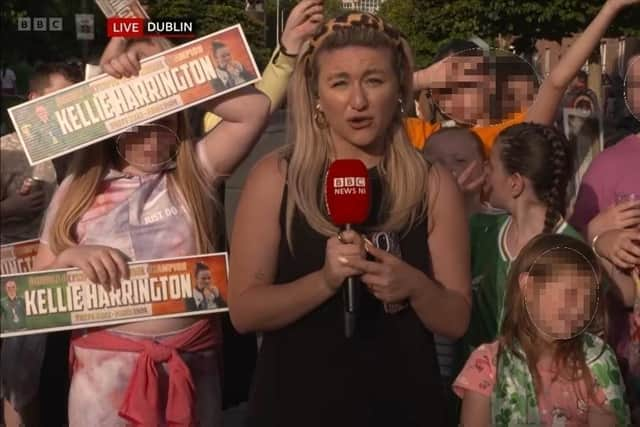

The BBC said "we dealt quickly and effectively with this live broadcast situation” but asked if it would apologise (as happens when swearing is inadvertently broadcast, for example) it said: "We have nothing further to add."
Mr Clarke had complained to the BBC about this, and has now shared the response he got.
The BBC told him: "We concluded our report quickly and effectively, recognising the potential offence caused by some of the chanting that could be heard in the background. None of this was expected…
"We think that our handling of what happened in this instance was editorially appropriate.
"It foreclosed on any further risks and did so in a way that didn’t amplify/draw further attention to what some of the children could be heard singing.
"We understand the hurts, legacies and continuing effects of the Troubles period. And we’re mindful also of societal divisions in Northern Ireland.
"We report these realities and facilitate discussion about them - something that we approach with care and integrity and alert to all the sensitivities involved."
Councillor Clarke remains unconvinced.
"The BBC response to my complaint frankly ignored the key issues," he said.
"Either the BBC believes chants in support of a proscribed terrorist organisation is acceptable or it doesn’t. If it is the latter then there should have been an apology on air. There wasn’t.
"If bad language had been broadcast inadvertently during the early evening news there would have been an apology.
"Why not when victims of the most murderous terrorist group in Western Europe are openly insulted?
“This is a matter I have pressed the BBC on further and intend to take all the way to the regulator, OFCOM, if I do not get satisfaction.
“There are questions here about the culture of the BBC and the role they are playing in the normalising and glamorisation of the IRA campaign.
"Just a few days ago my colleague Councillor Allister Kyle had occasion to write to the BBC about their coverage of the group Kneecap. His request to arrange a meeting between the BBC and IRA victims to discuss their concerns remains unanswered."
So what does OFCOM say about what can and can’t be broadcast?
OFCOM regulates the UK TV industry, and people can complain to it about TV programmes.
It has a set of rules for broadcasters to follow called the "broadcasting code".
Section 1 says "material that might seriously impair the physical, mental or moral development of people under 18 must not be broadcast".
Section 2 says "generally accepted standards must be applied to the contents of television" to protect viewers from "harmful and/or offensive material".
If a broadcaster does show "offensive material" (including "offensive language" and "discriminatory language") they must ensure it is "justified by the context".
It also says "programmes must not include material" which "condones or glamorises violent, dangerous or seriously antisocial behaviour and is likely to encourage others to copy such behaviour".
Meanwhile Section 3 says "material likely to encourage or incite the commission of crime or to lead to disorder must not be included".
This "may include... material promoting or encouraging engagement in terrorism" and "hate speech" against people based on political views, national background, or religion.