
Scottish IRA victims hold protest against SNP leader John Swinney at Holyrood after 'move on' remarks
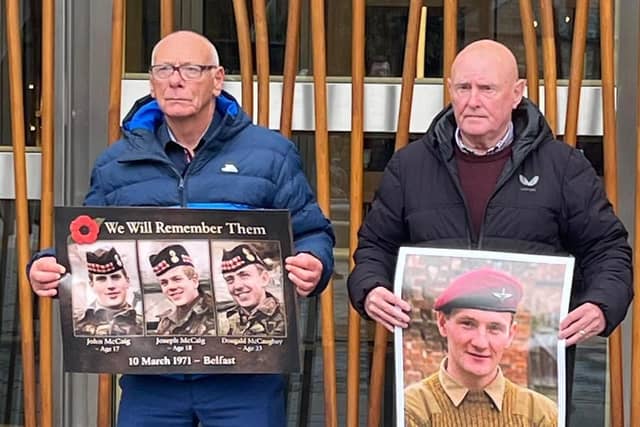

Families of Scottish soldiers murdered in the Troubles have protested at the Scottish Parliament after their First Minister said "people have got to move on" from concerns about IRA terrorism.
Speaking after his party’s election victory this week, SNP leader John Swinney acknowledged that his talks with Sinn Fein had caused "a media consternation" in Scotland.
However, he said the DUP and Sinn Fein have both backed the Good Friday Agreement.
"So, the world's moved on, and I know that my dialogue with Sinn Féin caused a media consternation in Scotland, but I really do think people have got to move on."
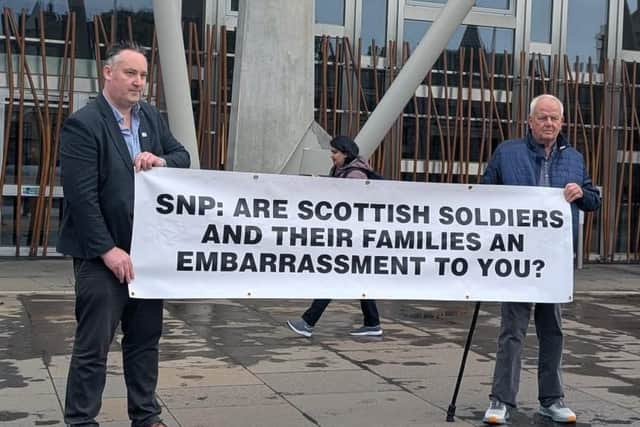
During the election, Mr Swinney said he would "enjoy the co-operation” with nationalist parties in Wales and Northern Ireland.
However a cross-community victims group based in Northern Ireland has since organised a protest with Scottish victims outside the Scottish Parliament to mark opposition to his "move on" comments.
Earlier this week, SEFF called for Mr Swinney to meet with their members to hear about the impact of his words.
SEFF Director Kenny Donaldson said they have sought engagement with SNP representatives on such remarks for “at least a decade - and it’s been constant stonewalling”.
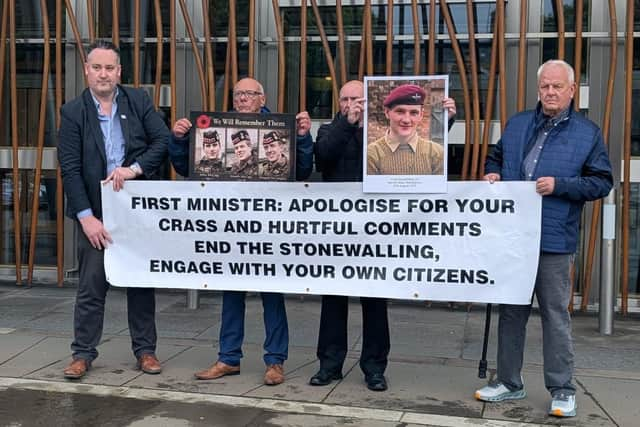
He added: "We felt compelled to organise this protest at the home of the Scottish Parliament, and to stand with the families of bereaved Scottish soldiers and others deeply impacted by the events of The Northern Ireland Troubles.”
“The First Minister John Swinney does not understand the gravity of his recent remarks, but these remarks of course cannot be taken in isolation, they form part of a worrying trend for the SNP and its' lack of relationship with a constituency of people impacted by Provisional IRA terrorism.”
He said the families of the Three Scottish soldiers and the family of Donald Blair, who was killed in the Narrow Water bombing, were amongst those represented at the protest on Thursday.
Off duty Scottish soldiers John McCaig, 17, his brother Joseph, 18, from Ayr and Dougald McCaughey, 23, from Glasgow were enticed to ‘a party’ by the IRA and shot dead by the side of the road in north Belfast in 1971. The following mass outrage helped trigger internment. Eight years later two IRA bombs killed 18 soldiers at Narrow Water near Warrenpoint.
Mr Donaldson added: "The families of these atrocities and so many others do not appreciate being told to 'move on' when justifying his rationale for entering deeper ties with Sinn Fein.”
Mr Swinney’s comments infer, he said, that victims and survivors are “somehow the challenge to Peace when in fact the families left behind are the embodiment of Peace”.
And he asked: “How does the SNP leader believe his representatives will be received when they stand at cenotaphs across Scotland at Armistice?”
“To flippantly suggest that the horrors of ‘The Troubles’ need to be moved on from illustrates his gross naivety on these issues.”
He challenged the SNP leader to say whether, like Sinn Fein, he believes there was “no alternative” to IRA violence.
SEFF stand “with and for all innocents” of the Troubles – including Scottish soldiers who were serving in “a legitimate Army” he added.
Mr Donaldson closed in asking why Mr Swinney refused to meet with those who have “consistently stood against” criminal violence for political ends?