
Sinn Fein's all-island strategy 'looks distinctly implausible' after general election performance - Ulster academic
A leading Ulster University academic has said Sinn Fein’s attempts to run an all-Ireland political strategy “looks distinctly implausible” given the very different directions the electorate on either side of the border are going.
Duncan Morrow, a lecturer in politics, was reacting to the party’s poor performance in the Irish general election, which has ensured a continuation of a Fianna Fail - Fine Gael government, and a significant drop in support for Mary Lou McDonald’s party.

Posting on social media platform X, he said: “SF's all-island strategy looks distinctly implausible now. The political contexts on each side of the border seem to be running in very different directions, demanding two very different strategies tbh”.
Mr Morrow said Sinn Fein “has to play government politics in one context and opposition politics with other issues in the other. Pretending that has a single structure is not really plausible” – arguing that the republican party has “lost their dominance of the left as populism pulls their base in different directions”.
Sinn Fein failed to capitalise on a difficult five years for Ireland’s governing parties, which saw a series of crises including Covid, the war in Ukraine, a cost of living crisis and unprecedented immigration.
Fianna Fáil finished with a 21.9% vote share, with Fine Gael on 20.8% and Sinn Féin on 19.0%.
Sinn Fein’s share of first preference share dropped by 5.5% – down 116,968 votes – from 2020’s general election – compared to a fall of just 0.1% for Fine Gael and 0.3% for Fianna Fail.
In their manifesto, Sinn Fein had promised, if successful, to “commence planning for and actively working toward the holding, by the end of this decade, of the referendums on Irish reunification provided for in the Good Friday Agreement”.
The party also pledged to establish a ‘Reunification and One Ireland’ unit and appoint a Minister of State for Reunification and One Ireland.
Derek Mooney, a former government advisor for Fianna Fáil, told the BBC at the weekend that a Sinn Fein-led government is not an option. “There's no possibility whatsoever because the simple basic fact – and no amount of spinning is going to change it – and no amount of talking and no amount of saying ‘this is change’… is going to change how those ballot papers are marked”, he said.
“It looks like three out of every ten people who voted Sinn Féin in 2020 have not voted Sinn Féin this time. They've actually turned against Sinn Féin, they have gone to other parties and Sinn Féin cannot talk that away”, Mr Mooney added.
He also said the electoral trend for the republican party is going downwards. “What I think I'd be more worried about if I was Sinn Féin is turn out is down, this isn't just localised, this isn't just in one area, this is right across the board”.
Fine Gael’s Paschal Donohoe told the BBC that Sinn Fein is now “one of the weakest opposition parties in Europe”.
The minister for public expenditure said the party wasn't able to answer “the most basic questions” during the election campaign.
“Sinn Fein were the largest opposition party by some way in the outgoing Dail and they were unable at any point in this election to be able to outline what a credible alternative government would look like and answer the most basic questions that were put to them by other political parties by the media”, he said.
The Dublin TD added: “I think Sinn Fein are on track to be one of the weakest opposition parties in Europe. They were not able to answer any of the questions that were put to them, not able to outline what an alternative government could look like, and not able to outline how they would deliver the vision of change”. He said Fine Gael were part of a government that's had to deal with a cost of living crisis and “many, many challenges” over recent years.
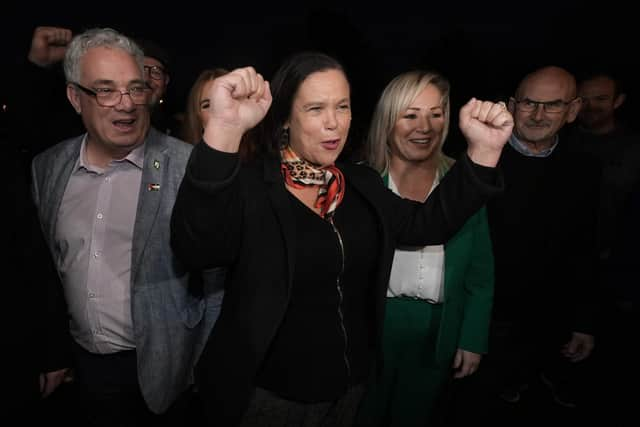
Mary Lou McDonald, who replaced Gerry Adams as Sinn Fein leader in 2018, said “I think we need to collectively now reflect and consider how we collectively best leverage the politics of change. I don't think it's good news to have another five years of Fine Gael and Fianna Fail. I don't think that's the outcome from this election that most people would favour”.
She said that her “first and primary concern is to ensure that we that we have the politics of change and that we have the changed government. So the logical first step is to talk to people who share common cause with us in that regard. So we're going to have to go off and reflect on all of those things”.