
Stormont Brake decision puts focus on Protocol 'protections' - with one currently in limbo
The government decision to reject a unionist request to halt new EU rules in Northern Ireland has been described by Lord Dodds as the “latest blow” to the UK internal market – so what protections do local politicians have against Brussels trade rules they can’t influence?
The Stormont Brake mechanism has been in the news this week after the Secretary of State announced that he would not grant a request made by unionist MLAs to halt updated regulations on chemical products.


It is one of four ways to provide some sort of democratic input for local politicians in the laws governing trade here – and one of the safeguards the DUP leadership said had “cut the pipeline” of EU law in the wake of their deal with the government last year. But it has been branded “beyond unworkable” by the UUP and “useless” by the TUV.
There are differing perspectives within the DUP about how useful it is. This week Emma Little-Pengelly credited the Stormont Brake for forcing the government to address regulatory divergence by suggesting it might align GB rules with EU rules here – while Lord Dodds said it wasn’t a Stormont brake at all, with the government retaining the final say.
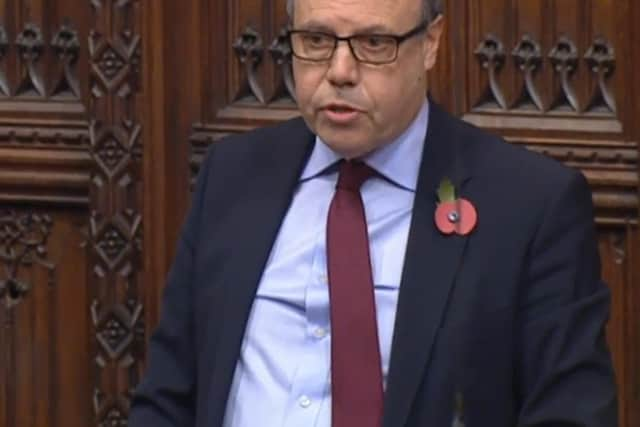
He described the situation as “extremely serious” and criticised the “spin” from Rishi Sunak that it would be a “means of controlling the pipeline of EU legislation”.
The effectiveness of the other mechanisms in giving the unionists a veto varies – leading to allegations the arrangements undermine the cross-community consent on which Stormont is built.
The first and most significant safeguard is the ability of Stormont to block the continued application of the arrangements entirely. However, cross-community support is not needed, meaning it was voted through over the heads of every unionist in the Assembly.
The second is the Assembly’s Windsor Framework democratic scrutiny committee. Its effectiveness has been questioned, with one of its own members, Steve Aiken, calling it “comatose”. An inbuilt Sinn Fein and Alliance majority has meant numerous unionist requests for inquiries to examine the impact of new Brussels laws on the UK market have been rejected.
The often discussed Stormont Brake is the third – and then there’s another Stormont mechanism – the applicability motion.
It has been used to halt just one EU law out of the constant stream flowing from the Protocol – but it’s still one more than the Brake. As with the others, it is ultimately a call for the UK government – but has so far worked in unionists’ favour.
A month into devolution, the DUP and other unionists refused support for an entirely new EU law on geographical indications (GI) for craft and industrial products. A lack of unionist support meant the law couldn’t proceed, however, the final decision rests with the government. Unlike with the Brake, there is no timeline for a decision to be made – so it has drifted in the background.
Ultimately, the EU runs Northern Ireland’s goods trade – and if it becomes an problem for its single market it is bound to put pressure on the government to override the unionist veto. In the interim, it suits both the government and the DUP not to draw too much attention to the lack of a decision on the matter.