
Stormont on track to meet Treasury's £113m funding target without any new revenue-raising measures
The executive is on course to generate its target of £113 million in added revenues in two years without the need for any new cash raising measures, a budgetary plan has confirmed.
The target set by the Treasury was a precondition of a £3 billion-plus financial package offered by the UK government to accompany the return of devolution in February.
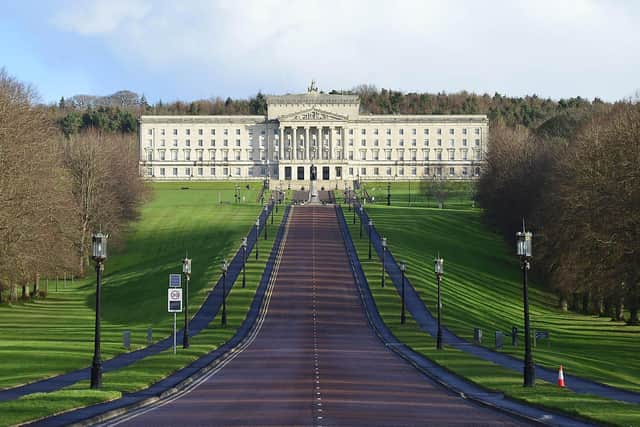

Finance Minister Caoimhe Archibald published a Budget Sustainability Plan on Thursday that set out details on how the £113 million could be delivered by the end of 25/26 financial year.
The executive already generates more than £1 billion a year of its own revenues. The Treasury asked local ministers to increase that amount by £113 million. It originally gave them one year to achieve that goal but later agreed to extend that to two years.
The Treasury financial package included the write-off of a £559 million debt owed by the executive. However, ministers in London made clear that failure to raise the £113 million in extra revenue would have seen that £559 million bill reactivated.
The sustainability plan, the publication of which was another condition of the Treasury package, shows Stormont departments will collectively generate £80 million in extra revenue in the current financial year, leaving them requiring to find an added £33 million in the following 12 months.
The £80 million has been achieved without any new revenue raising measures or any dramatic hikes in existing charges or local taxes.
More than half the total (£43 million) was raised with the 4% increase in the regional rate element of householders' rates bills in 24/25.
If the regional rate was to rise by 4% in 2025/26 then a further £47 million in additional revenue would be collected by the Stormont Executive.
The remainder of the £80 million in 24/25 was achieved by relatively modest increases of other revenue raising measures, such as Translink travel fares, hospital car parking charges, client contributions to nursing and residential care, water charges on non-domestic customers and court fees.
The sustainability plan does not specify how additional revenues should be achieved in 2025/25 but outlines what totals could be generated with further incremental increases in existing charges.
The plan includes five broad commitments made by the executive, one of which is undertaking regular, strategic consideration of income generation measures.
Others include the implementation of multi-year budgets where possible; and the routine publication of supplementary financial tables for in-year monitoring rounds to promote transparency and accountability.
Commenting on the publication of the plan, Dr Archibald said: “With increasing demands on our public services, it is crucial that we use our limited resources in a sustainable manner. We need budgeting and financial management that looks at tomorrow as well as today.”
Ulster University senior economist Esmond Birnie welcomed the plan, but said the Executive had swerved the challenge of more radical revenue raising measures.
He told the News Letter: “The Sustainability Plan is the product of a lot of detailed and useful work about how the Executive will plan and deliver public expenditure into the medium and longer term futures.All this immensely important for the long future well being of NI.
“Of rather more immediate importance is the fact that in this document the Executive appears to have successfully submitted its required ‘homework’ as set by HM Treasury . During 2022-23 and 2023-24 the Executive had built up an over spend of about £550m. In the financial package agreed back in January 2024 the Treasury said it would write off that “debt” of £550m provided the Executive indicated where it could raise an extra £113m of revenues (NI based taxes and charges).
“In Thursday’s document the Executive is indicating it can find such monies, mainly through the extent to economic recovery is boosting the Rates base alongside prospective relatively small (up to 4%) increases in the actual rate of the Rates.
“So, for the time being the Executive has swerved round the challenge of more radical revenue raising measures but I strongly suspect those questions (all the many exemptions from Rates, absence of domestic Water Charges ) will return as we try to maintain fiscal sustainability”.