
Supreme Court finds Christian focused worship and RE unlawful in Northern Ireland schools in JR87 case
The Supreme Court has granted an appeal by parents who argued that their child’s human rights were breached by mandatory Christian worship and Religious Education in a Northern Ireland school.
In May the Supreme Court heard an appeal on the legality of religious education in NI schools.
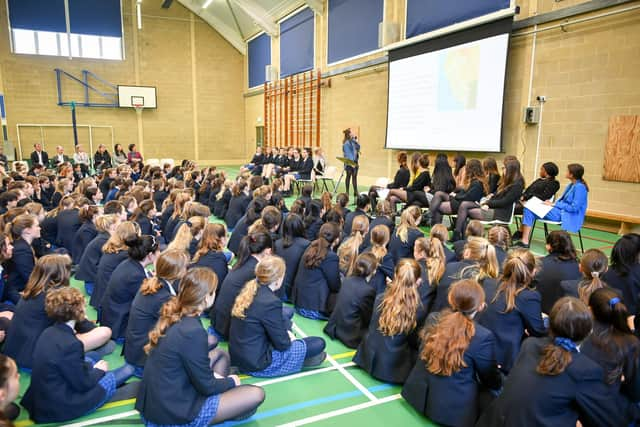

A young girl, JR87, and her father, sought to challenge the mandatory Christian religious education and collective worship in schools. She attended a primary school in Belfast.
Their case was won at the Northern Ireland High Court, but then lost at the Court of Appeal.
The family then appealed to the Supreme Court.
They expressed concern that the focus on Christianity meant their child might adopt a Christian worldview, claiming there was no meaningful alternative teaching in state-funded primary schools.
Today the Supreme Court upheld their concerns as valid.
POLITICAL AND RELIGIOUS REACTION TO JUDGEMENT:
Delivering the judgment, Lord Stephens said: “The Court of Appeal was wrong in its application of established principles of ECHR law and should not have departed from the (High Court) judge’s finding that the parents had valid concerns in relation to withdrawing JR87 from religious education and collective worship.
“Furthermore, the Court of Appeal fell into error in making a distinction between indoctrination and the state conveying information or knowledge in a manner which was not objective, critical, and pluralistic.
“The concepts are two sides of the same coin: conveying knowledge in a manner that is not objective, critical, and pluralistic amounts to pursuing the aim of indoctrination.”
Lord Stephens also said the Court of Appeal ought to have found that having to withdraw JR87 from religious education was “capable of placing an undue burden” on her parents, in breaching their human rights to an education for their child while respecting their religious and philosophical convictions.
On the cross appeal, the Supreme Court rejected the Department of Education’s argument that the parents were able to withdraw their children from this teaching, and that there is already scope for teaching on other religions and worldviews in the existing curriculum.
The judgement carried a summary of the concerns of the girl’s parents.
"They stated that neither of them professed any religious beliefs and they were not Christians,” it said. “They were concerned that by the time JR87 had commenced Primary 2 she had absorbed and adopted a religious (specifically Christian) worldview which was not consistent with their own views and beliefs.
"By way of illustration G [the father] states that, in the absence of any religious exposure at home, his daughter now believes that God made the world, and she repeats and practices a prayer/grace that she was taught at school at snack-time. His concern is that his daughter is learning Christianity and not learning ‘about’ Christianity in a school context that effectively assumes its absolute truth and which encourages her to do the same.
"They stated that they were aware that it was possible to exclude JR87 from both collective worship and religious education. They did not feel this was an adequate answer to their concerns but rather exposed that the root cause of the problem was the complete lack of religious and belief diversity within the education system.
"The solution was an objective, critical, and pluralistic religious education rather than exclusion from religious education.”
Darragh Mackin, solicitor for JR87 and her father, said the decision was “a watershed moment” for educational rights.
"The Supreme Court has confirmed that all children are entitled to an education that respects their freedom of thought, conscience, and religion,” he said.
"The judgment makes clear that the State cannot rely on withdrawal mechanisms to justify religious instruction. Schools must not place children in the impossible position of being singled out or stigmatised simply because their families do not share the religious worldview embedded in the curriculum.”
Similarly, Northern Ireland Humanists Coordinator Boyd Sleator described the judgement as “a historic win for the rights of children in Northern Ireland”.
He added: “The Supreme Court has concluded that the RE syllabus is ‘indoctrination’ and the right to withdraw from RE and mandatory collective worship is insufficient to deal with this.
"This ruling should also prompt the governments in England, Scotland, and Wales to revisit the requirement for mandatory collective worship. We hope it is now repealed.”
The Transferor Representative Council (TRC), which represents the Church of Ireland, Presbyterian and Methodist Churches in the Northern Ireland education system, said it would reflect on the ruling.
Rev Andrew Forster, the Bishop of Derry & Raphoe and Chair of the TRC, said: “The Transferor Representatives Council (TRC) notes the judgement from the Supreme Court and will take some time to consider the ruling.
"The judgement brings a long court process to a conclusion and once the ruling is considered, we hope it will provide clarity and direction in respect of both the teaching of religious education and collective worship in schools.”
Full details of the case can be read here.