
Supreme Court hears appeal on the legality of Religious Education in Northern Ireland schools
The Supreme Court has today begun hearing an appeal on the legality of Religious Education in Northern Ireland schools.
A young child, JR87, and her father, seek to challenge the mandatory Christian religious education and collective worship in schools.
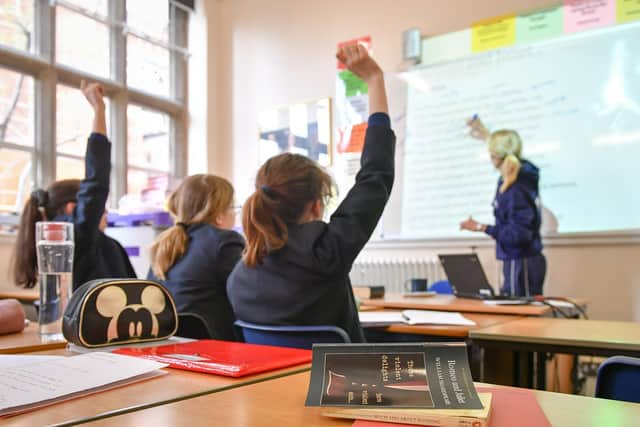

In May last year the Court of Appeal found that exclusively Christian religious education in Northern Irish primary schools was legal.
The parents of the child had argued that excluding other worldviews breached their child’s human rights.
The non-religious family said they were concerned the focus on Christianity meant their child might adopt a Christian worldview, and said no meaningful alternative teaching is available in the Province’s state-funded primary schools.
In July 2022 a High Court judge ruled in their favour.
The Department of Education had argued that the parents are able to withdraw their children from this teaching, and that there is already scope for teaching on other religions and worldviews in the existing curriculum.
While the senior judges upheld the earlier ruling that there is a lack of pluralism in the core curriculum, they said no human rights had been violated because parents had the “unqualified statutory right” to withdraw their children from both RE lessons and collective worship – which they had not done.
Speaking ahead of yesterday's hearing, Darragh Mackin, solicitor for JR87, said: “It is difficult to envisage a more important case for the education system in NI in recent times. Over 100 years ago, despite widespread reform in England and Wales, the four main churches decided to maintain their influence in the education system. Now, 100 years later, the UK Supreme Court is asked to correct this interwoven indoctrination.
"Interweaving religion and education only seeks to further segregate and indoctrinate in a society which already struggles to recover from division.”
The Department of Education is opposing the appeal by JR87 in the case.
In the mid 20th century, churches owned and ran many of the schools across NI. They later passed hundreds into the trust of the Northern Ireland government, on formal conditions that they maintained an influence in their ethos, which they do up until today.
The Transferor Representatives’ Council, which represents the Church of Ireland, Presbyterian Church in Ireland and Methodist Church in Ireland, said it welcomed the opportunity to intervene in the case.
In a statement to the media, Dr Andy Brown, Chair of the Transferor Representatives’ Council said: The teaching of RE is "a vital component of the primary curriculum in Northern Ireland, an area in which children are able to explore and consider life’s big questions, in preparation for life outside the classroom.”
He added: "Legislation already allows for the teaching of other topics beyond the Core Syllabus and many teachers use this to facilitate their pupils’ learning about the beliefs of other groups within their community and indeed, in many instances, their classmates."
Boyd Sleator, Northern Ireland Humanists Coordinator, told the News Letter: "The RE curriculum and assemblies in Northern Ireland are unobjective, uncritical, and non-pluralistic. But a large and growing share of Northern Ireland's population is not Christian. Students deserve an education that reflects the diverse religious and humanist beliefs of our modern nation but currently they are denied it."
The hearing will conclude tomorrow, although a final judgement will likely be given after months of consideration.