
Supreme Court ruling: Sinn Fein wants 'trans protections' in Northern Ireland's sex discrimination laws
A Sinn Fein member of the Stormont committee looking at the future of equality law in Northern Ireland wants MLAs to look at inserting ‘trans protections’ into 1970s legislation which protects men and women from discrimination on the basis of sex.
Carál Ní Chuilín urged colleagues to revisit the decades-old laws in light of the Supreme Court ruling which said that sex in UK law is binary and based on biology – and that sex discrimination laws in Great Britain do not allow men, regardless of how they identify, to use female spaces.
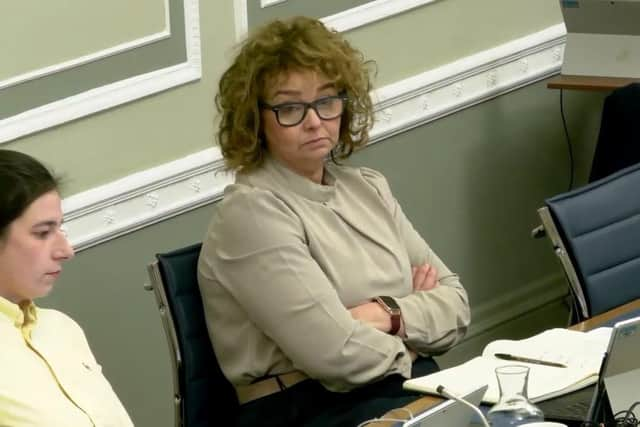

The North Belfast MLA wants the Northern Ireland’s equality laws – such as the Sex Discrimination (NI) Order 1976 – to be looked at again “to ensure that trans people are protected”.
While she did not elaborate on what precisely she wanted to change – she has argued in the past that transwomen (biological men) should have access to single sex spaces.
Her comments came as MLAs on the Executive Office (TEO) committee agreed to seek advice from the Equality Commission on how the ruling will impact Northern Ireland.
During Wednesday’s meeting, committee chair Paula Bradshaw said that she “wasn't trying to undermine” the Supreme Court ruling during a speech in the Assembly during the week.
TUV MLA Timothy Gaston questioned the Alliance politician on a speech in which she said courts could “clarify” any new equality act for Northern Ireland “once it is produced”.
The North Antrim MLA told Ms Bradshaw that the comment related to the work being carried out by the committee – and said that MLAs “don’t wait on the courts making the ruling, we need to make sure that before we get to that stage… it’s within the legislative competence of the Assembly”.
The chair said that her party’s position on a single equality bill has not changed. “What I’ve taken from the Supreme Court ruling last week is that we need to have protection in law for women. We need to have protection in law for transwomen”.
She said protections need to be “up to date” – and said she was not trying to undermine the Supreme Court.
“What we need is tidied up equality legislation here in Northern Ireland that gives clarity to individuals and public bodies alike”, she said.
Responding to a request from Mr Gaston that the committee seeks legal advice to ensure that the Supreme Court ruling applies in Northern Ireland, Carál Ní Chuilín said she had no issue with that.
She added: “But at the end of the day, I imagine at this stage, the implications of here, because it doesn't include here, will need to come from the Equality Commission and perhaps others.
“So certainly, even if legal advice was to come in to say that I've no issue, what I do have an issue in is the variations of interpretation of what happened on the 16th of April. And if we are inviting some legal advice in, I would also propose that we look at the sex discrimination order and other legislation that we have, to ensure that trans people are protected”, she said.
“The the issue around all of this, and even in the Assembly, has become quite toxic. What I would just appeal to people is that just to remember that there are human beings in the middle of all these debates, who are loved, and we just need to approach this with sensitivity and compassion.
“But I have no issue getting legal advice, because like any other bit of advice it's given to us, what we do with that advice is a different day’s craic”, the North Belfast MLA said.
Although the Supreme Court’s judgment concerned only the Equality Act in GB, it said that the effect of the Gender Recognition Act (which allows people to legally change their sex) on the many other statutes that refer to men and women must be carefully considered.
Feminist campaigner Maya Forstater of Sex Matters has said that the principle behind the ruling will also apply to the relevant legislation relating to men and women in Northern Ireland, such as the Sex Discrimination (NI) Order 1976.