
Timothy Gaston in legal bid over Sinn Fein minister's controversial Irish language signage policy
TUV MLA Timothy Gaston has been granted a hearing about whether he can intervene in a court case brought by the loyalist Jamie Bryson against Stormont’s infrastructure minister.
It comes after the Irish language group Conradh na Gaeilge also sought to intervene in the case – in which Mr Bryson is challenging a decision by Sinn Fein’s Liz Kimmins to approve the installation of Irish language signs at Grand Central Station in Belfast.
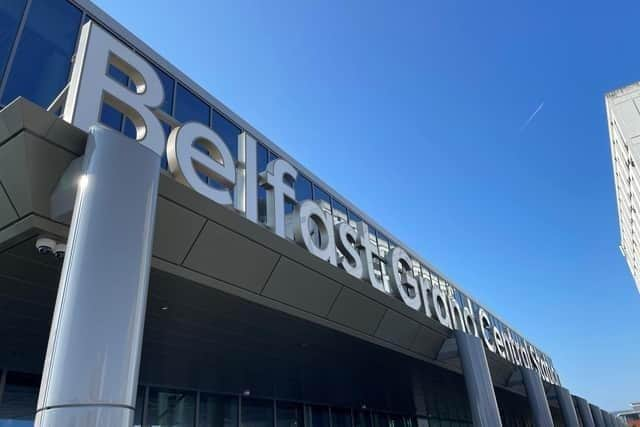

The challenge rests on the argument that the decision was controversial, and therefore should have been brought before the Northern Ireland Executive for approval. It also has the support of the DUP and Orange Order.
Now, Mr Gaston has been granted an oral hearing on Thursday after he lodged a High Court application in relation to the case.
The North Antrim MLA said: “As was evident from the ‘leave’ hearing of this case, the Sinn Fein minister sought to take refuge in the outcome of the section 28B petition that I lodged seeking to have the controversial and divisive decision referred to the Executive.
“Whilst Unionism should have united politically to sign this petition and send a clear message that the increasingly supremacist decisions of Sinn Fein ministers would be not tolerated, it is regrettable that such a political approach was not adopted by all unionist parties.
“However, the legal import of that process suggested by the Sinn Fein Minister is plainly incorrect and a misstatement of the law.
“I look forward to having the opportunity to argue this discrete point through counsel.
“It is also notable that the minister has recruited Irish language activist groups to try and wade into these proceedings, on the footing of trying to establish that nationalists and republicans do not think Irish language is controversial.
“They would obviously say that, but it is of no relevance to the case before the Court.
“The cross community safeguards cannot be wished away by Sinn Fein or wider nationalism simply because they provide an inconvenient impediment to their aggressive political agenda”.
He described the case as “a seminal constitutional moment” and the most important case since Jim Allister’s Protocol challenge.