
Tom Elliott: Security force protections must not lead to a terrorist amnesty
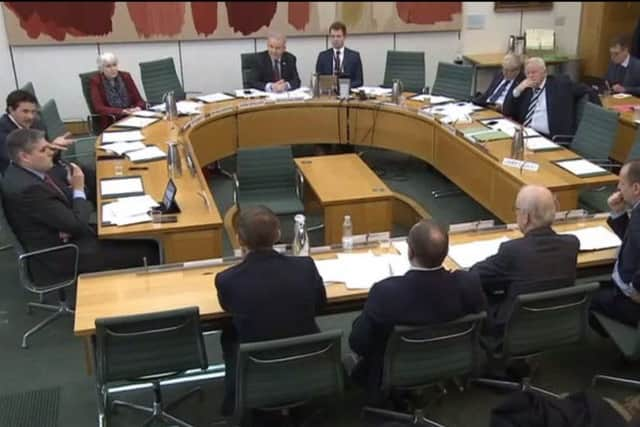
The Defence Select Committee's report into '˜Investigations into fatalities in Northern Ireland involving British military personnel' was prompted by concerns at the ways in which the past was being investigated.
It is clear that steps must be taken to protect the troops and police who risked their lives to defend the people of Northern Ireland from the threat posed by ruthless and dedicated terrorists during the Troubles.

However, such protections should not open the door to a de facto amnesty for terrorists.
The Ulster Unionist Party has long been concerned that the current mechanisms are imperfect, incomplete and imbalanced, and are serving to re-write history, painting the state and its security force personnel as the villains.

We have always been clear that no one should be above the law.
However, we must arrive at a system, as the Secretary of State has said, which is fair, balanced, impartial and proportionate in dealing with the past.
For some time now the feeling has been growing amongst many people that the process for investigating legacy cases has been unfair, with an undue focus on former soldiers who have served in Northern Ireland.
The basic facts of the Troubles are that 90% of killings were caused by terrorist groups, both loyalist and republican, while only 10% were the responsibility of the security forces.
The Defence Committee has recommended that there should be the enactment of a statute of limitations, covering all Troubles-related incidents, up to the signing of the 1998 Belfast Agreement, which involved former members of the Armed Forces.
This should be coupled with the continuation and development of a truth recovery mechanism which would provide the best possible prospect of bereaved families finding out the facts, once no-one needed to fear being prosecuted.
The committee also said it would encourage the government to extend this provision to cover former members of the RUC and other former security personnel.
While I welcome moves to protect those who risked their lives to defend the people of Northern Ireland from the threat posed by ruthless and dedicated terrorists I do not want to see anything that resembles an amnesty for the terrorists themselves.
This is why I am concerned at the suggestion that: “It would also be a matter for the next government to decide, after appropriate consultations, whether the statute of limitations should cover all Troubles-related incidents.”
I believe this to be a potentially dangerous development as it could open the door to a de facto amnesty for all terrorist crimes committed prior to 1998, and the terrorists responsible can already avail of letters of comfort, Royal Pardons and maximum two year sentences.
The problem we need to address is not an issue of unfairness for terrorists, but the need to ensure that former soldiers and security force personnel who were merely doing their duty, and trying to protect innocent lives, are not unfairly treated by the judicial system and legal processes.
• Tom Elliott is the Ulster Unionist Party MP for Fermanagh and South Tyrone