
UFU calls on Northern Ireland farmers to be alert after Bluetongue detected in Wexford
The Ulster Farmers' Union (UFU) is urging farmers to remain alert to the threat of Bluetongue disease following the confirmation of the first case this 2026/27 season in the Republic of Ireland, in Co Wexford.
While Northern Ireland remains free from confirmed cases this season, the UFU said, the disease has emerged as one of the most significant animal health challenges facing the UK livestock sector this year.
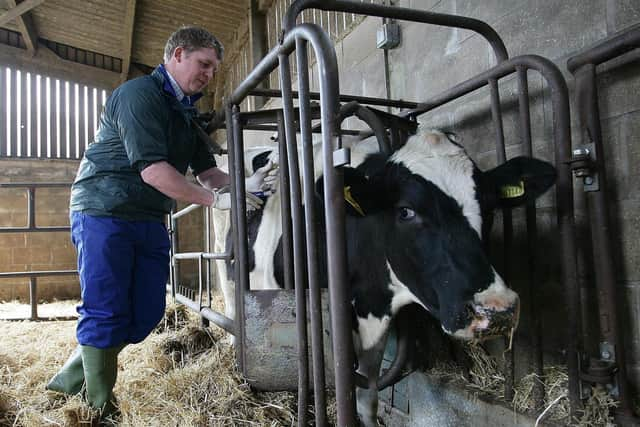

The Irish Department of Agriculture confirmed on Friday that the disease has been detected in a herd in Co Wexford.
An unvaccinated 16-month-old heifer tested positive for bluetongue virus serotype 3 (BTV-3) on post-mortem examination.
The department said no clinical signs were detected prior to the animal’s death.
The case comes as instances of bluetongue in Great Britain continue to rise sharply – there have been around 800 cases in England, Scotland and Wales since the 2026/27 season began in July.
Control zones and trade restrictions were imposed in Northern Ireland late last year after several cases were detected.
The virus, which is typically spread by midges, affects ruminant livestock such as sheep and cows and can be fatal. It does not affect human health and does not pose a food safety risk.
The detection of a bluetongue case in Co Wexford at the start of the year prompted China to suspend the import of Irish beef.
UFU deputy president Clement Lynch said, "Even without cases in NI, farmers are already feeling the knock-on effects. Restrictions across parts of Great Britain have made livestock movements more complicated and added pressure through extra paperwork, testing requirements and uncertainty around trade.
"Northern Ireland's livestock industry is closely connected with Great Britain, the Republic of Ireland and international export markets, so developments elsewhere can have a direct impact on local farms.”
Veterinary authorities have reported that the 2026 outbreak has been considerably more severe than last year's, with significantly higher levels of clinical disease, particularly in sheep, the UFU said.
Mr Lynch called on farmers to be particularly vigilant and to implement good biosecurity and regular monitoring of livestock remain.
"If farmers notice anything unusual they should contact their private vet or the Department of Agriculture.
The symptoms can include a high temperature, lameness, swelling around the head and neck, excessive salivation and nasal discharge. Affected animals may also develop sores in the mouth and become stiff or reluctant to move due to swelling around the hooves.
The Scottish government said this week that the bluetongue virus is “not going away any time soon” and will likely spread further among Scotland’s livestock.
The Scottish Government has made the area a temporary control zone, which will be replaced by a “restricted zone” from September 10.
Last week in England the The Liberal Democrats called for an emergency bluetongue taskforce to be set up to secure vaccines and get them to farms as cases of the disease spread among UK livestock.
It should speed up procurement of jabs and and coordinate targeted rollouts in far-flung areas, the party said.
Lib Dem leader Sir Ed Davey said: “British farmers are facing a terrible perfect storm this year. The bluetongue outbreak is devastating our livestock sector, yet farmers are being left to navigate this crisis without the fundamental backing of their own government.”