
UK human rights group accuses Equality Commission of diminishing women's rights under Windsor Framework
One of the UK’s most prominent women’s rights campaigners has hit out at Equality Commission legal action seeking a High Court ruling on whether the legal definition of a woman is different “in Belfast than in Birmingham”.
Maya Forstater says the case is a “crazy way to spend public money” and says that instead of “raising the idea of uncertainty and asking for judicial direction” the commission should publish “simple guidance in ordinary language”.
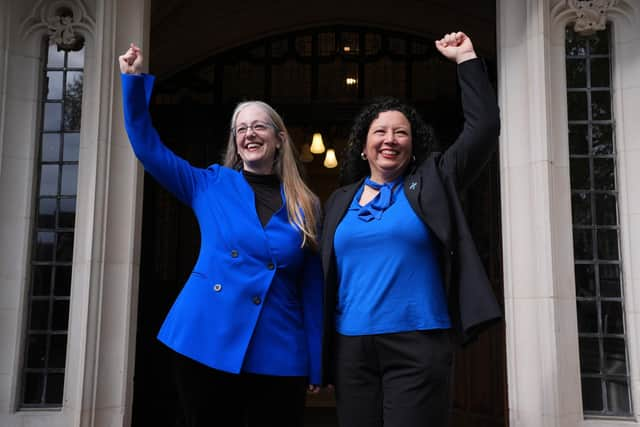

The comments come after the commission (ECNI) wrote to interested parties – including Ms Forstater’s Sex Matters – asking if they wish to intervene in a legal case in which they’re asking the courts to clarify the law in Northern Ireland, arguing that it may be impacted by the Windsor Framework’s equality provisions.
A Supreme Court judgement earlier this year ruled that sex is defined by biology, after a Scottish women’s rights group took the Holyrood government to court to clarify the meaning of sex in the Equality Act 2010. The SNP administration had treated males with a gender recognition certificate as women for the purposes of gender balance on public boards.
Last week, Stormont’s education department said it will not assist or encourage the “improper” legal action by ECNI – branding it a waste of court time and public resources. Minister Paul Givan has already pressed ahead with advice to schools based on biological sex, and policies based on gender ideology have been scrapped.
Ms Forstater – Sex Matters’ CEO – has now rejected ECNI’s position that the Windsor Framework (which protects people in Northern Ireland from “diminution of rights, safeguards or equality of opportunity” post-Brexit) creates “a more ambiguous and uncertain picture” about the meaning of sex in Belfast than in Birmingham.
In an email to supporters, she says: “We say that, on the contrary, any interpretation of the law that leads to an ‘ambiguous and uncertain’ position with regards to the protection of women (and men) against sex discrimination would itself be a diminution of rights contrary to the Windsor Framework. The For Women Scotland judgment protects everyone’s rights and should be applied clearly and simply across the UK”.
ECNI has said it will “keep its strategy under review” and that minimising costs to the public purse “is always a key factor” in its decisions. However, it says without “addressing the uncertainties” it could expose employers, service providers and public authorities “to years of costly litigation”.
Chief Commissioner Geraldine McGahey has said that sex and related terms might not mean the same thing in Northern Ireland as in the rest of the UK, and the province’s equality laws “use terms like ‘sex’, ‘men’ and ‘women’ without providing comprehensive definitions” of what those words mean.
ECNI now wants the High Court in Belfast to rule on how the Windsor Framework affects the legal situation in Northern Ireland, and Ms McGahey has said that if it were not for the post-Brexit deal, the Supreme Court ruling would apply here.
It has issued an interim view on “practical ways” that organisations “can create facilities which allow all people to feel comfortable”.
For example, on the provision of toilet facilities they suggest two options. Firstly, that employers or businesses could “provide facilities for showering, toileting and changing which consist of entirely self-contained lockable rooms to be used by one person at a time”.
Secondly, that organisations could provide separate facilities according to biological sex (i.e. the existence of a Gender Recognition Certificate and / or a transgender identity is irrelevant) whilst also ensuring that there are additional universal facilities which are to be used by all people (regardless of biological sex or transgender identity).
In June, ECNI set out a “roadmap” for what it will do next. It is currently undertaking a consultation in which it says all stakeholders will have an opportunity to respond and comment on the issues – as well as sending “pre-action protocol letters” to people and organisations that they “consider have a direct interest in resolving the legal uncertainties identified”.
It will then ask the High Court for a declaration on the “correct legal approach” – before providing draft guidance which will then be subject to a consultation. When that is complete, ECNI will finally produce guidance for employers and service providers.
Last week, the Department of Education sent a letter to the equality watchdog, seen by the News Letter, which rubbished the legal basis for the body asking the High Court to clarify the judgement – accusing it of misunderstanding the law.
ECNI’s position has been backed by Alliance and Sinn Fein ministers, who had initially claimed that they would take no action within their departments until the guidance had been released – and are now awaiting the outcome of the proposed legal action.
However, DUP-run departments have pressed ahead with changes based on the Supreme Court ruling.